The Festival of Stocks -Magical Penny Edition

by Magical Penny on May 10, 2010

Hello and welcome to The Festival of Stocks –Magical Penny edition for 10th May 2010.

The Festival of Stocks is a blog carnival dedicated to highlighting bloggers’ best articles on stock market related topics. This will include research and commentary on specific stocks, industry analysis, ETFs, REITs, stock derivatives, and other related topics.

This week Magical Penny is hosting!

If you’re new here, Magical Penny is a UK-based personal finance blog written by Adam Piplica to help you grow your pennies. Its mission is twofold:

  1. To ensure readers really comprehend the power of the exponential curve when it comes to saving and investing.
  2. To help people actually take action on what they have learnt to grow their pennies to meaningful sums that can empower and transform lives.

You should sign up for my free money tips, join the Magical Penny community and have useful content sent directly to your inbox. I’d love for you to also send an email!

Now on with the carnival!

Magical Penny UK InvestingA note for regular Magical Penny readers:  most of the submissions are US centric but if you’re in the UK there’s still a lot of value in these posts.


The Winning Post

Mike at The Oblivious Investor presents “Dave Ramsey Gives Bad Investment Advice”:

Mike argues that: “while Dave Ramsey has successfully helped many people get out of debt, his investment advice is downright awful”.

I love that Mike has called out this financial ‘guru’.

As Dave Ramsey believes debt is wrong, he thinks that bonds are too, and so suggests investing purely in stocks.

In simple terms a bond is a company debt that you can buy with the promise that the company will ‘pay you back’ with interest. They tend to return better than cash but less than stocks. They can be very good at helping ‘balance’ a portfolio so when stocks go down your bonds protect you from huge losses –something that becomes increasingly important as you get closer to retirement.

Magical Penny readers tend to be young so we don’t have to worry about bonds yet as we can ride out the highs and lows on the stock market, but for people in their 40s and 50s, Dave Ramsey’s advice to stay away from bonds and keep a 100% equity portfolio could cost them huge amounts, as Mike respectfully explains.

Second Place

Madison at My Dollar Plan has an article discussing: “Can you have a 401k and an IRA at the same time?”

A few people that I’ve talked to recently thought that because they had a 401k at work, they couldn’t open an IRA. Not true! Let’s take a closer look at investing in both an IRA and a 401k at the same time.”


My favourite part of the article was the helpful breakdown of the order you should fill your investing accounts, taking into account factors like taxes, contribution limits and flexibility:

A 401k is an US specific retirement account –the equivalent of a UK ‘defined contribution work pension scheme’

An IRA is an US specific “Individual Retirement Account” (IRA)

  • The traditional IRA is the equivalent of a  UK’s  SIPP (pretax saving)
  • The Roth IRA is the equivalent of the UK’s stocks and shares ISA (post-tax saving)

Both UK equivalents are much more flexible than the US versions though. More to come in future Magical Penny posts.

  1. Contribute the minimum to the 401k to get the full match.
  2. Contribute to a Roth IRA until you hit the income limits.
  3. Contribute any additional IRA contributions to a traditional IRA, with plans to make a Roth IRA conversion.
  4. Max out the rest of the 401k.
  5. Finally, save the rest in a taxable account.

Madison’s order of investing for retirement could work in the UK too, with a few tweaks:

  1. Contribute the minimum to an employee pension plan to get the full match
  2. Contribute to a Stocks and Shares ISA (limit is £10k)
  3. For tax diversification consider increasing your employer pension contribution
  4. For more control put any additional long term savings to a SIPP
  5. Finally, save the rest in a taxable account.

Note this only my UK specific interpretation of Madison’s plan–this is not Madison’s advice

Third Place

I’m a sucker for tax-efficient retirement planning (that’s right ladies!) so I also enjoyed reading Silicon Valley Blogger’s article on Is Your Retirement Investment Portfolio Tax Efficient? over at The Digerati Life. The post breaks down three critical factors to retirement fund success: asset location, tax diversification, and spending philosophy.

Other Favourites

Bob at Christian Personal Finance went to see the richest man in the world last weekend and wrote about it in: “Notes from Warren Buffett & The Berkshire Hathaway Meeting“.

“I didn’t take as many notes as I had planned, but I mostly picked up nuggets of wisdom”.

My favourite two ‘nuggets’ that Bob highlighted were:

“Don’t ever underestimate human’s abilities to solve the world’s problems.”

“We aren’t particularly brilliant; it is just that we work hard to avoid stupidity”

This is inspiring stuff so thank you Bob for sharing. 🙂

Patty at Alpha Profit has been writing about “Investing in Emerging Markets ETFs and Mutual Funds”. He cites fiscal fitness, growth prospects, and corporate profitability as the three main reasons to be investing in emerging markets.

I agree that investing in emerging markets (investing in stock markets of less developed countries) can be a useful way to grow your pennies over the long term and personally have made some great returns over the last year. However Patty reminds us of an important point: not to be too greedy:

“Limiting emerging market exposure to less than 15% of one’s assets may not be a bad idea for most individual investors.”

–because a higher potential return also means a higher risk of losing your pennies too.

Vahid at Forexoma has written a reflective post: “Trade or not to trade: That is the question”.  It’s core message is that a trader is not someone who clicks on the buy/sell buttons. A trader is someone who knows when he should be out of the market and waiting for a better chance.

Ryan at Cash  Money Life poses the question: “What Percentage of Assets Allocated to US Based Investments?” It’s an interesting question but the real gold of the post is actually in the comments.

When you first begin investing most people suggest  investing in your ‘home’ market –it’s cheaper and you are more familiar with what you are investing in. The advantage for US investors is the USA is the largest stock market in the world, is highly diversified and has performed very well over the years. Be sure to head on over to the post and add your own comments.

Best of the Rest

D4L at Dividends Value has a fascinating analysis of a specific dividend stock: Abbott Laboratories . The post is a detailed analysis and commentary of the stock of Abbott Laboratories, a company engaged in the discovery, development, manufacture and sale of a diversified line of healthcare products including: drugs, nutritional products, diabetes monitoring devices and diagnostics.

Steve at Magic Diligence writes: “Magic Formula Stock Review: CF Industries (CF)”. It’s an analysis of CF Industries, one of the largest nitrate fertilizer producers in the world after their merger with Terra Industries. It also has a sizable phosphate fertilizer business. Steve concludes that the near-term outlook for fertilizer business metrics continue to look pretty good.

Editor at Double My Net Worth presents: “Analyzing Dividend Stocks: Dividend Model Price, an article that shows you how to analyze your dividend stock pick using the dividend model price to keep yourself from paying too much for a stock. The post even includes a handy spreadsheet with all the calculations in. It certainly would help you stay on track if you’re trying to do what every investor wants to do: buy low and sell high!

Sun at The Sun’s Financial Diary gives a detailed breakdown of the process involved for withdrawing money from a Brokerage Account (US specific).

David at Money Under 30 submitted a guest post written by Mark Riddix, founder and president of New Horizons Financial Management, an independent investment advisory firm: “Why Now’s a Good Time to Add Financials to Your Portfolio”. The article explains that the financial sector has taken its fair-share of beatings over the last few years, but with the worst of the recession behind us, it may be a good time to load up on certain financial stocks.

Praveen at Simple Trading System has written about  “Three Good Stocks Made More Attractive By The Recent Market Activity”, a particularly timely piece given the recent market drop in the last few days.

The legend that is PT, of PT Money fame, submitted a guest-post written by Michael, a contributing editor of the Dough Roller, a personal finance and investing blog:Why I Just Bought 1,000 Blockbuster Shares”. It’s an interesting article going through a more fundamental analysis of the company (looking at the industry and company as a whole).

Jay at Market Folly presents “Value Investing Congress: Notes From Day One”, an aggregation of all the news from the event.

Manshu  at One Mint posted his “List of Gold ETFs”, a comprehensive list of all gold ETFs traded on the US stock exchanges. It’s  a useful resource if you want to invest in gold without buying actual gold itself.

In Closing

As someone who has never engaged in individual stock analysis, this week’s Festival of Stocks has been a huge learning experience for me so thanks for submitting so many interesting reads.

I especially enjoyed hearing some new perspectives and reading how investors trading individual stocks evaluate the value of a company or an industry.

I would love to hear what is your favourite post in the carnival this week, so leave a comment below.  I’d also appreciate if you could spread the word about the carnival on Facebook, Twitter, Stumble-upon, Tipd etc…

Thanks for reading. As well as signing up for my free money tips, be sure to follow Magical Penny on Facebook and Twitter too.

Submit your blog article to the next edition of Festival of Stocks using the carnival submission form. Past posts and future hosts can be found on our Festival of Stocks index page for those of you interested in reviewing the archives.

{ 13 comments }

Save Early, Save Often

by Magical Penny on May 7, 2010

As I write this it’s Election night in the UK. Whilst it makes exciting viewing, the official Magical Penny view is that you should channel your excitement and energies into making positive changes to their own life instead of channelling your energies into the external promise-makers that are politicians. It doesn’t stop it being fun to watch though.

save early, save often Google does it. IBM does it. In fact many successful businesses owe their success to it.

It is the mantra: “Release Early…Release Often”

Google didn’t build their vast indexes overnight.

Their algorithm approach was largely untested when it began as a small start-up. But they got there. They maintain this ethos in the development of aspects of their business. Email was nothing new when Google released Gmail. But they did have a new approach to email and were eager to release it to the world. It would be far from perfect: Gmail couldn’t even send attachments when it was first released, but Google understood the importance of the release early mantra.

In fact the whole of Silicon Valley is built on this belief. But tech companies building market share are not the only ones who can benefit from this approach. You can too.

The key message is starting. You can always improve with time. Want to lose weight? Start early and keep at it. Need to revise for a exam? Make the first step. Think it’s too early or late to start saving for retirement? Start small and you’ll be surprised how fast it can build up.

Like tech start-ups releasing products, saving works best when it’s early and often:

As Ramit Sethi writes:

“The single most important factor to getting rich is getting started, not being the smartest person in the room.”

There’s a reason why Magical Penny keeps coming back to “getting started”. It’s because getting started is the hardest thing in personal finance.

If you are going to be successful in growing your pennies, knowing about the best ways to invest and what to avoid will certainly help but the key element of money management and financial success is not  how much time you dedicate to reading personal finance blogs and investment prospectuses.

No.

It’s about saving early. It’s about saving often. You can research money strategies all you want but learning how to save early and often is key. And that’s an answer you can’t necessarily find on Google!

Have you started yet?

Related Posts:

Open a Cash ISA regardless of interest rate

Why You Should Be Investing

Start the Journey To Grow your Pennies

Next week is a big week for Magical Penny: We’re hosting a blog carnival (the Carnival of Stocks); featuring a great guest-post from a huge UK financial site; and getting specific with the most important step in beginning your investing career: using a Stocks and Shares ISA (Or Roth IRAs if you’re in the US)

So stay tuned, and if you haven’t already, be sure to subscribe by RSS or sign up for free post updates directly to your inbox by clicking here.

{ 3 comments }

Five ways to make your budget work

by Magical Penny on May 3, 2010

If you’re in the UK I hope you are having a great bank holiday weekend. Finish reading this article and then head outside and enjoy the sun OK?

How many of you actually have a budget?

OK, but do you actually use it?

Thought not.

‘Budgets’ are like home-exercise machines. They sound great, and just having one around make you feel better at first, but then ‘life’ comes along and it sits in the corner gathering dust.

However if you want a sexy beach-body growing pile of pennies, you really should dust off that budget and try again.

But this time let’s make it work.

Really work.

Here’s five ways to make sure it does:

1) Remember that no month is the same

It’s only the start of May and if you’re in the UK you  may have already spent quite a lot of money over this May bank holiday weekend –I certainly have.

There will always be months where you spend more than ‘normal’, particularly as we head into summer with holidays and parties.

If you’re trying to stick to that budget you put together a few months ago you may be finding it difficult.  The most important thing to remember is a budget is merely to help you spend consciously: it’s not about depriving yourself.

For this reason it’s important to make a fresh budget every month –because no month is ‘ordinary’. By customising a budget each month, you’re more likely to be able to stick with it and give yourself some control over your spending.

2) Be realistic

How many of you have written an amazing budget that, if followed, would allow you to save lots but by the end of the month the plan was a forgotten memory?

Everyone has.

It’s easy to write a budget, but sticking to it is completely different. The trick is not to be too ambitious when you’re starting out. Once you have gained a bit of experience at estimating your spending, you can begin to trim away any of the ‘excess’, or increase your savings rate, but don’t worry about this at first.

3) Have some flexibility

A budget should not be set in stone: it’s a tool for helping you stay on track with your goals but accept that it can’t solve everything –sometimes you’ll need to break your budget to take advantage of opportunities or do something you simply can’t miss.

That’s fine and don’t feel bad about it. Every time you break your budget, you have an opportunity to improve it so it’s more realistic and you can tailor your savings goals accordingly.

4) Have some non-negotiable categories

Being flexible on your budget is really important if you’re going to keep at it, but don’t be too flexible– have some non-negotiable categories that you can’t rationalise away when you need a bit of extra money in the ‘spending’ part of your budget.


For me, it’s the money I put into investments each and every month for my long term goals. I’ve made it simply unacceptable for me to not save for my future: because that’s important to me.

When I do need to have extra money for the ‘spending’ part of my budget I find it easiest to sacrifice my medium-term goals –like my car savings. Of course your priorities will be different.

It’s important that you think about what really matters to you, and doesn’t matter as much, so when you need ‘extra money’ for expensive months you know where it’s coming from.

5) Don’t worry about every penny

Tracking every penny is a popular tip amongst personal finance writers –it works because we often lose track of the little things we spend money on every day and before you know it you’ve spent everything you’ve earned:

“A small leak sinks mighty ships”

“Many small strokes will fall a mighty Oak.”

Etc…

However, have you ever actually tried this?

I have, and it’s exhausting and for me, makes budgeting more of a chore than it should be. A budget should be empowering.

Ideally you should work towards having a little wiggle-room in your budget so you don’t have to worry about a few miscellaneous expenses. Easier said than done but if you focus on what really matters to you and cut back on as many things that don’t mean as much, then you’ll get there.

Good luck,

And while you’re at it, why not break out that exercise equipment too –because health is the ultimate wealth 🙂

Magical Penny around the web:

Best of Money Carnival #49

Magical Penny is #3 out of almost 50 submissions!

Carnival of Personal Finance: The Origin of the Piggy Bank

Hilarious story with links to the best personal finance writings this week.

Now, stop reading UK and go and enjoy the rest of the bank holiday!

—> Yes that’s me -just some bank holiday fun! —>

{ 1 comment }

Why Do Not Need an Investment Advisor

by Magical Penny on April 30, 2010

Magical Penny continues with the theme of barriers to investing. Click to read part 1 and part 2.

The world is full of investment opportunities and when you start looking for places to grow your savings, it can quickly get overwhelming.

Not knowing what to do stops many people from making any return on their savings and this ‘decision inertia’ runs the risk of you missing out on huge returns over the course of a lifetime.

Traditionally, there was a solution to the dizzyingly array of investment choice: An investment advisor. A investment advisor can help you to make the best investment choice and make sure you are considering the implications of investing like taxes, risk, and asset allocation.

However, you probably don’t need one.

Here’s 4 and a half reasons why:

1) A Simple Life

An investment advisor can save you thousands of pounds if you have a complex investment portfolio already or have tens of thousands of pounds lying around.

Hands up if you do?

Thought not!

Of course, investment advisors have the potential to provide a great service as they work with money for a living:

  • They know the tax code
  • They know the ‘tricks of the trade’
  • Most importantly they can suggest a good asset allocation (the amount of money you put in each investment) personalised for you: your needs and attitude to risk.

However, as 20 and 30 somethings more of us don’t have or need such a complicated portfolio and can work out our attitude to risk and a good asset allocation from free resources available on the Internet.

If you think that you need an investment advisor it’s likely to be just another barrier in your mind stopping you from making a start.

2) The Information Revolution

As children of the information age, we have more access to information than any other generation, including information about investing and money management. Books are great sources of information but the real breakthrough has been in the explosion of easy to read, free content available online.

In the 21st century if you have an internet connection it’s incredibly easy to learn about anything, including investing. But where to start?

If you wanted to learn more about investing in an easy to understanding way you can’t go far wrong by having a browse through some popular personal finance blogs. I’ve found them invaluable over the years as they give you new perspectives and snap-shots of what real people are doing today with their money. Click the Wisebread logo to view any of the top personal finance blogs  to continue enjoying financial blog goodness:

Top personal finance blogs

Despite the disclaimers on blogs (as we can’t tailor advice to specific circumstances nor do most writers have financial qualifications…yet) there’s still a great deal of information available for all of us to make more informed choices.

caution3) Investment Advice is mostly expensive or not impartial

If you have a complex or highly specific iinvestment issue, then an investment advisor can be a huge help, but if you are just starting out with investing then using a financial advisor can be unnecessarily expensive, or worse: biased.

Investment advisors can make a living either by a fee you pay directly for their time, or by getting a cut from the companies they get you to invest with (or a combination of the two payment methods). When advisors get paid by investment companies this is known as an affiliate fee or a commission.

The accepted wisdom is you should always choose a ‘fee-based’ advisor because they can be completely honest with you –they will recommend what is best for you because there is no financial incentive to suggest something else. However if you are like most 20 or 30 somethings, you are likely to not have much to invest at this stage, so an advisor fee could cost you several months of investing money that you’ll never see again.

As you can learn so much more about investing (for free online and in books from your library) than at any other point in history, the free content already available  really is all you need to get started.

Save your financial advice money for when you have a complex financial issue that needs to be resolved once you’ve built up a few hundred thousand pounds worth of wealth!

4) Take Control -You don’t need a baby sitter for your money

One situation where it is worthwhile to have a financial advisor is when you need someone to baby-sit your money. If you’re nervous about investing you may feel comforted to know that an ‘expert’ looking out for you and can hold your hand through the process.

However, this should not be you!

Investing isn’t as daunting as you may think and whilst having a baby-sitter might stop you panicking, you should realise that the cost can be enormous. When you first start investing you may feel a little scared –naturally heading out into the unknown isn’t easy, but I assure you that you will quickly feel empowered that you are taking the future into your own hands and beginning a journey to grow your pennies. And such a journey will have a profound effect on the choices available to you for the rest of your life.

And finally:

The easiest way to get prepared and learn about investing is of course to simply keep reading Magical Penny.

I’ve been reading books, blogs and research papers on the subject for over four years and actually investing for almost three so I’ve been through the process and started the blog for this very reason: to empower people to begin investing, cheaply and simply, and most importantly on their own terms.

magicalpenny@googlemail.comIf you’re new reader, or even if you’re not, you should sign up to my free email newsletter for blog updates and extra cool stuff like competitions and additional money tips. Click here for details. It’s completely free and your email address will not be used for spam.

Follow Magical Penny on Twitter and Facebook too!

Learn more about investing and money management with these great money carnivals (and featuring Magical Penny this week)

Carnival of Personal Finance

Festival of Frugality

Festival of Stocks

{ 1 comment }

What’s the Best Investing Style for Me?

by Magical Penny on April 28, 2010

Monday’s post outlined reasons for not investing and why you should overcome them. Most people have a certain view on investing based on the they perceive ‘investors’ to be and how they act.

What’s your perception of stock market investing? Do you think of the shouting traders of the New York Stock exchange shouting “Buy Buy Sell Sell”?

Do you think it’s all about lots of charts and numbers flashing across a ticker tape screen? If you are thinking this then you’re likely thinking about “Day trading”.

The Day Trading ‘Gambler’

Day-traders spend their time buying and selling shares for profit (or at a loss if it doesn’t work out) –often in the same day, hence their name. They make money by taking calculated risks on the direction of the price of a certain stock, currency or commodity (commodities are real materials like iron, gold, and even foods like sugar and chocolate).

As prices tend to be volatile they can ‘buy low and sell high’ –if they do it right. But doing it right consistently is very hard, and very high risk: You can earn you thousands in minutes, but equally you can lose it all too.  Rather than ‘investing’ it’s really ‘speculating’ (educated guessing) and the practice must certainly make the term ‘investing’ seem taboo and in many ways day-trading can be compared with gambling at a casino.

The Committed Investor

Another perception of investing is that it involves lots of reading and calculations. You may think investors all read the Financial Times and spend their free-time looking at company balance sheets and annual reports.

And some do!

The philosophy of this type of investor could be called: “Buy and Homework” –the investor buys shares of companies that they have thoroughly researched and then keep up-to-date with how the company is doing, hoping to glean any information that might tell them when to sell and when to buy more shares.

The “Buy and Homework” approach can be a very profitable strategy. In fact the richest man in the world, Warren Buffett, does exactly this. In contrast to the day trader, Warren has famously said:

“Only buy something that you’d be perfectly happy to hold if the market shut down for 10 years.”

It may well be profitable when done right but the research involved takes a lot of time and it doesn’t always yield results. If you enjoy the process it can be a fun, intellectually stimulating and profitable hobby or career but from the outside it can seem dull and boring. And if you’re finding it a chore you’re unlikely to grow your pennies with this method.

Buy and Hold

‘Buy and Hold’ means exactly that. You buy investments and hold them over the long term. You don’t need to care about the daily ups and downs. Instead you hold onto your investments with the assumption that, as shares in profitable businesses, the value of them will go up over time. The strategy has been under attack in recent months but over the long term ‘buy and hold’ has allowed people to grow their pennies considerably with many studies demonstrating that it beats the performance of many committed investors (who can make mistakes or get greedy), whilst avoiding having to make frequent and costly trades, or reading company reports.

Boring and effective? It certainly is a strategy worth exploring.

Magical Penny is updated 3 times  a week: Monday, Wednesday and Friday.

Don’t miss a post: Sign up with the free newsletter and free ‘posts to email’ feature by clicking here or simply grab the RSS feed.

{ 7 comments }

The Taboo of Investing in the Stock Market

by Magical Penny on April 26, 2010

There’s a taboo attitude towards investing

It is particularly prevelant in the UK and it’s certainly there amongst my friends. For example, most would feel more comfortable buying a house worth more than they will earn in 10 years, than putting any money in the stock market. You may be able to see your investment right in front of you with a house but if you are not investing in equities (i.e. stock and shares where you buy part of the company and therefore get ‘equity’) you are missing out on a great way to grow your pennies over the long term.

Here are 4 reasons why people don’t invest and why you should:

1) I don’t have enough money

Quite simply most 20 some-things (and even older) never get around to saving let alone using savings to invest. Over the last few weeks Magical Penny has explored this subject in depth so hopefully you should be well on your way to being in control of your money rather than allowing money control what you do. (New readers click here and here)


2) I have other priorities for my money

Once you have passed the stage of not saving at all you’ll realise that having savings gives you lots more options.

It’s great.

But it brings with it more questions:

  • Do you spend your savings on a better car?
  • Do you pour it into a house?
  • A business?
  • Or do you save it and not touch it?

Finding the right balance is personal to you but if you knew the impact of what a few pennies can grow into over the long term, I’m sure you’d reconsider spending as much on the things you want today. You would appreciate that today’s choices could cost you vast sums of tomorrow’s pennies.

Even if you decide to spend most of your savings on other things, perhaps starting a business or buying a house, investing is still a great thing for you to do because it offers diversification –by spreading your money around you help lower your risk: You are less likely to lose it all whilst giving your pennies the best possible chance to grow.

Spreading your money around a few different goals means you will have less money going towards each goal but thankfully that’s not a problem…

3) You don’t need huge savings to invest

When I first started reading about investing I imagined it was the reserve of the rich. I imagined trades involving thousands of pounds moving in and out of the next hot stock. This still does happen but there have been considerable advances in the financial markets in recent years that have made it far easier for everyone to invest: you don’t need huge piles of cash to invest in the stock market.

If you take away anything about investing from this article I hope it’s this:

You can begin investing with zero transaction costs and zero fees for as little as £50 a month.

(The no-fee part is important as of course you could buy shares in individual companies for a few pennies each but you pay a huge amount in fees by doing this)

If you’re completely new to investing the first thing you’ll notice is the industry is full of fees. Stock brokers and investment bankers need to afford their sports cars and tailored suits somehow!

However, there are investments you can make that have minimal fees and allow you to start investing without a huge pile of cash. Championing this type of investing is the core message of Magical Penny so naturally you’ll be reading how to do this in up-coming posts on the blog.

4) Investing is scary and overwhelming

Much of the taboo about stock investing is because the investment world is unknown to most of us. And the unknown can be scary. However, stock market investing is worth learning about – and the basics are not as complex as you may think either.

Investing in equities simply means you become a fractional owner of the businesses of the world. There are good businesses and bad businesses but collectively they create value each and every day as people wake up, head to work and make their contribution to the planet.

The value of those businesses goes up and down all the time as the world is never the same place from one moment to the next. But over the long term people recognise value and pay accordingly for it. Investing gives you a chance to be part of the value-creation system, and therefore tends to lead to increasingly growing pennies over the years.

As a side-note, some people think the stock market is simply a money making machine. In some ways it is but it’s not magical: the money the companies get from selling shares to investors is used for business development and growth; helping them develop efficiencies in production. Businesses can therefore grow by selling shares and they give you a chance to take advantage of that growth. Make sense?

Ultimately if you think investing is overwhelming though, you’re right.

Like all unknowns: it can be.

But if you keep reading Magical Penny, it might just become a little less overwhelming and a little less taboo.

I’m happy to answer any questions in the comments too so thanks for stopping by.

{ 9 comments }

Tracking your Net worth

by Magical Penny on April 23, 2010

If you’ve been following any of the Magical Penny’s advice you should hopefully have managed to save some of your pennies in recent weeks. If not, don’t worry: review your spending plan (you have one right?) and begin one simple step:

magical pennies growing?Are your pennies really growing?

How do you know if you’re moving in the right direction with your finances? You could be moving money into savings accounts occasionally but does it stay there or does it get spent? Do you find yourself moving money around rather than leaving it alone?

When I started automating my savings, setting up a standing order to send money regularly into a savings account, I thought I was doing well.

And in many ways I was: automation takes the will-power out of saving.

However automation doesn’t stop you from raiding your savings when something expensive comes along!

Spending part of your short-term savings is fine -it’s what an instant access account is for-but it can be all too easy to spend any other savings you have. There is a way however to alert you if this begins to happen:

You need to track your net worth

Your ‘net worth’ is a personal finance term for the sum of your assets (things with a positive value like your savings) minus any liabilities (things with a negative value like credit card debt or a loan). Calculating your net worth is a really useful way of understanding your total financial situation.

Whilst there is much debate on what to include and what not to include in your ‘net worth’, the actual number isn’t that important (at least at this stage for those of us in our 20s and 30s). The important thing is how the number changes over time as it gives you an idea of of whether you’re moving in the right direction with your growing pennies.

Consistency

Don’t underestimate the power of keeping  a regular log of your net worth. Don’t worry about what to include or what not to include at this stage. Just make your list to include what seems right for you: perhaps your net-worth would include simply the total of the balances of your current account and  a savings account and then taking that away from your credit card balance. Whatever you choose make sure you keep it consistent over time.

You need to make sure you do the calculation at the same time each month as any income payments and out-going bills can drastically change your net-worth in the short-term. Personally I do it on the last day of each month: I add up the total of all my accounts and I’m left with a number. If you had debt you would take your debt away from this number to calculate your number.

caution

Note: personally I don’t include my student loan debt (my only debt)  in this calculation: not because I am in denial about the debt, but because the balance is only updated by the Student Loans Company once a year rather than each month when I pay it off so the balance would not accurately reflect my true debt level.

If you find the idea of checking all your accounts every month a bit overwhelming then you can do it quarterly or half-yearly. However, if you wait too long between checking your net-worth you may find that you have not made any progress in several months and were not aware you needed to change your spending and saving habits to reach your goals.

Ignore the noise

Financial ‘noise’  is all the volatile fluctuation of values and figures in your bank accounts and investment valuations.  If you are self-employed your net worth number is likely to be very inconsistent day to day but even those with a monthly salary will have a fluctuating net worth as income enters your bank accounts and money goes out when bills are paid.

Your account balances can fluctuate even more if you hold investments as the price of your stocks and shares go up and down almost constantly when the markets are open. These fluctuations however are not meaningful (unless you are selling at the immediate moment) so should be ignored on a day-to day basis. Once a month is fine to view your net worth number to determine the trend to see if you’re on-track to meet your savings goals.

Be Honest

“Whatever happens to your number month to month, you need to be honest with yourself”

When you look at your net worth each month the numbers won’t lie. If you have been spending your suposed savings the number will be lower. If you have been truly saving, the number should be higher. Whatever happens to your number month to month, you need to be honest with yourself. If your number was lower this month, was there a good reason? Had you gone on holiday or perhaps simply had an expensive month with lots of birthdays for example? And if your net worth had gone up was this the result of real saving?

I may write a blog about personal finances but I’m not perfect. Doing this exercise myself each month has helped me realise that I’ve been off-track for some months recently. For example, my net worth has been going up for the past few months but some months have only been higher because of some recent investment returns. By calculating what my net worth number would be if my investments hadn’t gone up I could see that I had not saved my target figure in real terms. This gave me the perspective I needed to ensure I fixed this in the following months.

The great thing about this journey is that each month we have a chance to start afresh: to decide which direction we will take with our net worth. Willpower however works best when accompanied by short, medium and long-term goals. These can be invaluable at keeping up motivation and forcing us to be honest about our financial priorities.

A genuine chart of my 'net worth' (and a stretch target) over the last year

Net worth is not Self-worth

Finally it’s important to remember: your net worth does not define you.

Whilst growing your pennies is a worthy goal that will give you flexibility and freedom in the years to come, it’s important that you do not define yourself by how much money you have at any given time. It can be fun watching your magical pennies grow but remember a high ‘net worth’ is not an end in itself.

If you’re not writing down your net worth every month you will find it difficult to know if you are making consistant financial process. Once you do then it’s a simple as being consistant and checking if your net worth is moving in the right direction. Be honest with yourself about your spending and you will, in time, catch the thermals of wealth.

In other news

The Magical Penny Facebook page now has a new ‘Welcome’ tab so be sure to join the fun @Facebook

{ 6 comments }

“It Starts When You Save”

by Magical Penny on April 21, 2010

And now for something a little different…

I have a confession.

I write poetry.

  • I love playing with the structure of language.
  • I love how in poetry often less is more.
  • And I love things that rhyme. Who doesn’t?

The last few posts on Magical Penny have caused quite a stir in the comments (read them here and here). I’ve loved the debate and heard some new perspectives. Sometimes though, it’s worth looking above the minutia that comes with financial decisions and priorities and instead take time to reflect.

And what better way to reflect than to read some financial inspired sonnets?!

I challenge you to find poetry any elsewhere in the financial blogosphere. Well…apart from this!

Beginnings

There really is no time like now, today.

To do what you ask? Just read this right through:

An introduction of sorts and my way

To present my manifesto to you.

Let’s make small steps on a journey to learn

Knowledge that won’t cost you a monthly fee

I hope to inspire you to plan and yearn

For change in your life, To be happy, free.

Magical Penny entering the blogosphere

Yes, another finance site’s what you need.

Its UK based message will soon be clear

In fact it’s the personal finance creed

Freedom? Contentment? Options that you crave?

It starts right now. It starts when you  SAVE.

The Road AheadLong and winding road of life

It’s time now: your money plan to compose

So listen to my financial insight.

This is the sonnet, condensed from my prose

Follow it and your prospects will be bright.

Start with your dream: and think for a few hours.

Then write a plan to stay on track daily

Saving pennies with compounding powers

To go from small wealth and grow it slowly

Over time: more magic pennies each day!

Investing should not be a mystery.

Start today and your cash foundations lay

Learn of investing and the history.

Happiness and spending should be disjoint,

But don’t save too much: or you’ve missed the point.

Other mid-week reading

Magical Penny has been featured in two blog carnivals this week.

As always there’s many quality articles to be found, and definitely one or two for everyone. If poetry’s not your thing, or even if it is!) I certainly recommend digging into some of the articles lovingly compiled by other finance bloggers:

Carnival of Personal Finance: @PunchDebtInTheFace

Festival of Frugality @BeatingBroke

Post Script

Poetry fans will be pleased to hear the sonnets above conform to the rhyme scheme of a Shakespearean sonnet:  a-b-a-b, c-d-c-d, e-f-e-f, g-g; the last two lines are a rhyming couplet. Back to normal programming on Friday 🙂

{ 4 comments }

The UK Loves Their Houses…but Should We?

by Magical Penny on April 19, 2010

Last week’s post exploring a house as a asset caused an interesting stir in the comments and I thought it definitely worth-while exploring it further as I make the case to find space in your budget for investing before showing you how to actually do it!

We all have only so much money to spend each month. Food, utilities, shelter and a host of other expenses all come out of accounts and sometimes it’s a balancing act to afford everything we need and want. So when it comes to growing your pennies the first challenge to having enough to live the life you want to lead and have any left for the future. One big monthly expense that can make or break your financial life is your housing. Naturally then, it’s a topic worth exploring if you are to successfully grow your pennies in the best way that works for you.

house sizes across the world‘Real Estate’: Britain Vs US

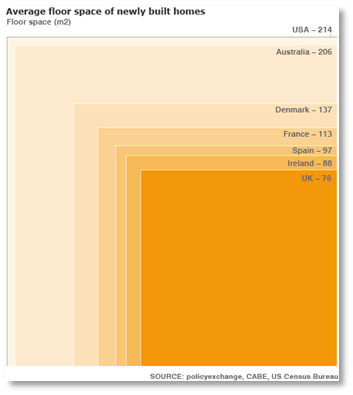
‘Real Estate’ is an America term for housing property and land. And in the UK we have less of it than larger countries like the US. As Britain is a tiny island and a growing population our land therefore comes at a premium. When it comes to Real Estate this means that most US houses are cheaper per square metre, but also are larger than most British houses – although this is not hard as, according to the government’s adviser on architecture, Britain has the smallest newest built houses in Europe. Therefore for a comparable home UK houses are generally more expensive than in America.

The rush to being ‘priced out’

I make reference to this because with more expensive housing already and  house prices in the UK growing considerably over the last few decades it’s a wide-spread belief certainly amongst my friends that you should get on the housing ladder as soon as possible to avoid being  ‘priced out’ of the market.

“We surely must buy now before house prices rise further and become truly unaffordable”

This rush to buy has lead to some interesting demographic patterns as explored by a study by the Institute for Fiscal Studies in University College, London:

“As a proportion of their total wealth, British households hold relatively small amounts of financial assets – including equities in stock – compared to American households. In contrast, British households appear to move into home ownership at relatively young ages and a large fraction of their household wealth is concentrated in housing. Finally, the age gradient in home equity appears to be much steeper in the UK while US households exhibit a steeper age gradient in stock equity.”

You can read the full study here

A Cultural Difference?

This conclusion certainly seems to be case amongst my peers. As I prepare to enter my mid 20s more and more of my friends are moving towards home-ownership yet I don’t know a single one of my peers who own any stocks or shares (but I can’t wait to inform with Magical Penny!) In contrast, Americans begin to invest earlier and in greater number, and it is generally before progressing to home ownership. The study reveals a telling statistic:

“British households hold 62% of their total household wealth as home equity: the comparable percent for American households is only 34%.” Page 7

This is partly because British houses are more expensive but I suspect too that the culture of investing in equities (stocks and shares) is much bigger in America than in Britain. By investing in stocks and shares a larger proportion of the US population are putting their money into value-creating businesses of the biggest economy of the world, thus, over the long-term they are accumulating market returns, growing their pennies into surprisingly large sums.

Britons meanwhile have almost 2/3 of the wealth in property, which, while having the ability to grow in value, also has added costs and fees like maintenance, repair and stamp duty (the tax paid every time a house is purchased).

The Right Priorities?

The study found that:

for almost all of the younger age-income groups UK households have at least as much wealth, if not slightly more, than their US counterparts…[yet looking across the full population] the top fifth of American households have considerably more financial wealth than the top fifth of British households do [?] page 8.

Why do British and American age-income groups start out equal but then begin to divide? Is it because the Americans have more likely invested their money into value-creating businesses rather than property?

To be frank, I can’t be sure as there’s many factors involved. But I do think more of us should be directing own pennies to build different asset classes (types of investment) rather than focusing so much on purchasing a house.

What this mean if you want to grow your pennies?

In real terms for me this means saving less aggressively for a house deposit (although I still am) by directing part of my ‘savings’ pennies into stock market investments for my long-term future. We all have only so much money to spend each month but balancing your budget to include a monthly contribution towards ‘investing’ is absolutely a ‘need’ if you truly do want to grow your pennies over the long-term (and Magical Penny will be here to show you how).

What you do you think?

Before you comment I want to remind you that this article is not saying  property is a bad investment – like any investment it can be both good and bad -but that the view that property should be your first financial priority should not simply be accepted: It may be the ‘default view’ of many people when they begin their adult lives but have you really considered your options?

Essential reading:

  • Ramit cuts through the myths that buying a houses is always a good thing to do. You can even his chapter on the subject from his book for free too: Buying a  House
  • Is “What Works For You” really working? @Magical Penny
  • Your Home is not an Investment@Magical Penny

{ 17 comments }

I had planned on continuing with the ‘Introduction to Investing series here at Magical Penny but given some recent comments on the blog I’ve been prompted to intervene current programming with an important announcement.

Money is a complicated topic.

  • How you make it.
  • How you spend it.
  • How you save it.

Money is simply an invention to store value and because naturally everyone values their time and materials differently, views on money and value are of course different too.

Each day we make hundreds of choices, many of which have financial implications. We approach each choice with the sum of our past experience and quickly calculate if the options provide us with enough value for our efforts. We live each day the best we can using the sum of knowledge each of us have gained from our days on the planet.

Money is of course only a means: don’t put off life for money

My mission with Magical Penny is to raise your consciousness when it comes to money. It is not to encourage people to avoid spending money or to ‘delay life’, but rather to encourage people to spend money deliberately and with thought.

Do what works for you…

When it comes to reading financial advice we will all come from different perspectives and have different experiences. Some ideas may seem alien to you, or inapplicable to your situation. For example, my recent post on the pit-falls with considering housing as an investment may have seemed to challenge the decisions of someone in a different life-stage who feels owning a house is best for them. But equally another reader may read the article and then re-evaluated their situation and come to the same conclusion that I did: that owning a house in my particular life-stage is not the best thing to do, and that people should not buy a house simply because it’s supposed to be a ‘good investment’. There will always be countless strategies and ‘tips’ to help you grow your pennies but you always have to do what works for you.

Make sure your plan really is working.

That said, there is a danger however of doing “what works for you” –it’s very easy to rationalise your spending patterns by convincing yourself that it ‘works for you’. Examples could be:

  • “I should spend money on this because it makes me happy”
  • “I should buy a house because I’m raising a family”
  • “I need a new car because I value reliability so much”
  • “I don’t need to worry about the little things because I concentrate on the big wins”
  • “Living in squalor now is worth it because of the long terms gains I’ll achieve if I save”

These are all totally valid reasons to justify spending patterns and lifestyle choices. But are they still really valid for you now? Have a think about what you do and don’t spend money on at the moment. Have your values changed?

Sometimes reading different perspectives on money and spending can challenge you to think beyond your own life experiences to better assess the value of a purchase or lifestyle choice. If you have found any Magical Penny article completely off-base as some commenters may have done (*cough* Rightly Knightly *Cough*), then I hope you continue reading articles that challenge you and give you a renewed sense of from where you derive value.

At this point I’m reminded of a Get Rich Slowly article a couple of months ago about the 3 different types of knowledge:

  • What you know
  • What you know you don’t know
  • What you don’t know you don’t know.

My wish for Magical Penny is to contribute to topics that fit into all 3 of these categories for you the reader:

Firstly to challenge you to think about what you already know; to perhaps make you reassess your lifestyle and goals; and secondly to share information with you about topics you may not know much about but would like to, for example how to grow your pennies through investing.

But ultimately I hope at one point you come across an idea or a concept that you didn’t even know that you didn’t know. And it might just make money that little bit less complicated.

Extended reading

While on the subject of learning new things every day below are two brilliant lists of learnings that I’ve come across in the past couple of days. Well worth a read:

101-life-lessons @Ridiculouslyextraordinary

26-life-lessons @ManVsDebt

Want to make me write another emergency post? Leave a comment to make me reassess my own spending,  lifestyle and goals! 🙂

{ 3 comments }