Surviving The Sales And Reaping The Rewards

by Magical Penny on January 31, 2012

A guest post by Louise, with a very worthwhile post about new year resolutions…. how many of you are keeping your financial-based resolutions now that it’s almost February?

Like many other people, one of my resolutions this year is to cut back on my spending.
It’s a common resolution to make, yet so many of us fail to stick to it every year simply because we go about it the wrong way.
If you stop to think about it, January is really the worst month to make this decision. Sales are on everywhere and because of the way the human mind works, if something appears really cheap we’ll automatically think it’s a bargain and buy it even if we don’t need it.

Is it really a bargain though?

It’s like those 2-for-1 offers in the supermarket. I always used to fall for those, thinking I was getting a bargain, until I actually looked in my cupboards one day…they were full of food I’d gotten on these offers and never used. Since then I never buy anything on BOGOF unless it’s something I always buy anyway – that way I know it won’t get wasted.

The same applies to the Sales.

I’ve been wanting to get a new car seat for my daughter for a few months now as she’s almost out-grown her old one, but I decided to wait until the sales. On the 27th December I trotted down to Halfords and picked up a shiny new car seat for £60 which my daughter loves, and saved myself £50. But if I hadn’t been looking to get one in the first place that would have been a waste of £60.
The bottom line: It’s only a bargain if you would have bought it at full price anyway!
So if cutting back is one of your resolutions, what can you do to maximise your chances of success?

There are 3 main reasons why people fail at keeping resolutions pertaining to spending.

1 – Going cold turkey and trying to resist spending anything.

Ex-smokers will identify with this; it’s much harder to quit if you just stop the cigarettes altogether and don’t replace them with nicotine patches or gum. It’s the same with spending. People do need to buy things but it’s a case of everything in moderation, or finding a substitute that doesn’t cost as much.
If your passion is for clothes, go to thrift stores and charity shops instead of department stores and boutiques. If, like me, you tend to splash out on books, join a library or again use charity shops.

2 – Looking at your goal in a negative or general way.

Instead of just saying “I have to stop spending this year”, try thinking of something you want to achieve as a result of reducing your spending.
For instance, I’m planning a series of mini-breaks this year costing a total of £400, and this has to be paid by mid-February. So for the next few weeks my husband and I are cutting back all non-essential spending in a bid to save this amount. It’s hard but knowing we’ll have those holidays at the end of it makes it worth it.
You could also try opening a savings account which will allow you to deposit money and see the balance whenever you want. Every time you resist spending money on something, put it into the account and as time goes on you’ll be able to see concrete proof of your efforts. And if it pays a good rate of interest, even better!

3 – Assuming you have iron-clad willpower.

Look at your typical spending habits; do you tend to buy online after seeing an offer in your inbox? Do you regularly go into the city on a weekend with friends and end up with armfuls of purchases? Whatever your particular shopping temptation, it’s easier to avoid it than assume you can handle it.
So unsubscribe from all those emails which shout about the latest offers from your favourite retailer. Cancel your weekends or suggest alternatives which don’t involve shops (but tell your friends why so they don’t stop talking to you!). If you do decide to go out, take a small amount of cash with you and leave your cards at home. Remove temptation, don’t try to resist.

One final tip

Procrastination is your friend when you’re cutting back your spending.
If you see something you want, don’t buy it right away. Remove yourself from the object of temptation (leave the store, click off the website) and make yourself wait a day, a week or a month. Then ask yourself if you still want that item. You probably won’t but if you do, at least you’ll have had time to ponder your purchase and will have avoided impulse buying.
Have you implemented any interesting strategies to save more money in 2012?

Share your tips in the comments

{ 0 comments }

Questions To Ask Yourself about Car Ownership

by Magical Penny on January 31, 2012

The following is a sponsored post with a very worthwhile message that I’m proud to share

If you’re just starting out in the world, beginning your financial life, it’s likely that you’re looking to get a car.

Buying a car is a pretty ‘normal’ thing to do for many 20 somethings -after all, you’re an adult and you don’t want to have to rely on others for your transport needs.

Unfortunately, car ownership can be surprisingly expensive, and whilst you could be justified that it’s a necessary purchase, it’s important you walk into the deal with all the facts.

The Reality of Car Ownership

With the exception of student debt, a car loan is often the first major debt that young people beginning their careers sign up for: it’s very common to use financing and focusing only the monthly payment rather than the total cost.

But carrying debt can be surprisingly costly and who knows what might happen in the future when it comes to your job.

The cost of car ownership is further compounded by the fact that car valuations can quickly fall leaving you potentially owing more than the car is worth if you are forced to sell.

Car Insurance – Important considerations

Car insurance is another cost that comes with car ownership. But whilst it will always be a significant cost, there are also great ways to save money on your car insurance. For example, by shopping around (it’s a competitive market!), and taking advantage of your situation to lower your premiums like looking to women-only insurance providers for lower premiums if you’re gender-advantaged (!) or considering multi-car savings if you have more than one car.

Saving money with a multi-car policy is no joke!


Ultimately when it comes to car ownership you need to make sure you are making CONSCIOUS decisions rather than sleep-walking into an expensive commitment.

Ask yourself these questions:

“Do you need a car now?”

Is the personal freedom today worth the financial burden and will your car payment commitment stop you from growing your pennies for your future?

“Is having a car at this stage of my life really worth it?”

Deciding to wait a little while for a car can mean the difference of tens of thousands of pounds considering how much the pennies you save in your 20s will grow in value over time.

“Is driving an older car a better choice?”

You don’t need a shiny new car to enjoy the crazy adventure of early adult life. Not having a car payment (or a very low one) allows more flexibility to travel, visit friends or simply save for other things like a down-payment on a house.

“Can I get cheaper car insurance somehow?”

Having an older car will lower your insurance premiums and if you have more than one car in your household you can save even more with a multi-car policy.

Making smart choices really will pay off in the future so get your thinking caps on and start asking these questions to yourself today.

Conscious spending at the beginning of your financial journey really can have a Magical impact when it comes to growing your pennies.

Good luck!

{ 3 comments }

5 tips for Live-in Landlords

by Magical Penny on January 25, 2012

If you’re planning on living with tenants in your own investment property, it’s essential to take out landlord insurance and to choose lodgers carefully.

Sharing a house can be challenging, but there are ways to make your time together bearable or even fun.

I actually have first hand experience of this arrangement and know it can be beneficial for both parties. But there are things you should consider:

Here are five tips for live-in landlords:

Hold interviews before selecting a tenant

Letting out one of the rooms in your house is a great way to utilise space and make extra money – important if you are looking to grow your pennies in the long run. However, it’s important to interview tenants before they move in to ensure they’re suitable for a house share.

Have a good chat over a cup of coffee and find out as much as you can about the other person in a short space of time. Ask them about their job and delve into their personal life without being too evasive. Find out if they’ve got a partner (as this could affect you) and inquire how they’ll be spending their time. Lodgers also have expectations, so ask what they expect from you and decide if you’re compatible. Of course, people usually want to create a good first impression so use your natural instincts if possible.

Draw up a contract

Start off by drawing up a three-month contract and have all tenants sign it before they move in with a deposit for security. This will make things official and will help you throw them out if things don’t work out. Write down the rules and regulations of the house share and make sure everyone understands their responsibilities. Establishing a rota and laying down guidelines from the very start will help everyone know their place and should allow you to live in harmony.

Give each other space

It’s really important to respect your tenants by giving them privacy and space. Just because it’s your house does not mean you can stroll into their room whenever you feel. You wouldn’t like it if they snooped around your bedroom, so never enter their own living quarters without asking permission.

If you want to clean the whole house, always speak to the tenants first. Some might be happy for you to hoover and dust, whereas others would prefer to do it themselves. Everyone needs time to relax and breath, so don’t crowd your lodgers.

Tell your tenants before inviting guests

Always tell your tenants before inviting guests and ask them to do the same. That way everyone will know who’s coming round and will expect different people in the house. You might not care who your housemates bring home, but they might get concerned if they hear strange voices, so keep things fair. You don’t have to sit down and formally introduce everyone who walks through the door or anything like that, but just leave a note or tell everyone quickly. If you respect others, you should find they respect your back.

Talk through any issues

If there’s a problem in the house, it’s essential to talk through any issues before they get worse. Have a calm discussion over dinner with the person who’s bothering you and let them voice their concerns too. Talking face-to-face is one of the best ways to iron out issues and is much more productive than gossiping behind their back. You might find a good chin wag strengthens your relationship and getting everything in the open is sure to improve the atmosphere in the house.

Living amicably with tenants is as important as taking out cheap landlord insurance, so always treat each other with care.


Other Property articles on Magical Penny

The UK Loves Their Houses…but Should We?

An Idiots Guide to Home Insurance and How to Get a Cheaper Deal

Would real estate or the stock market be a better investment choice for the long term?


{ 1 comment }

How To Get Your 2012 Off to a Good Start

by Magical Penny on January 19, 2012

The following is a guest post by Liz Goldman for Sunbird FX – the currency trading specialist and CFD broker.

According to a U.S. government survey, making better financial decisions is one of the top new year’s resolutions made by Americans, along with vows to lose weight and get more exercise. It’s a great time to make sure you’re getting 2012 off to a good start financially. Here are some ways to give yourself a financial check-up:

Shop around for better interest rates

Interest rates on savings accounts are rock bottom right now, so it’s particularly important to do the best you can. Check local banks, credit unions, and online financial institutions. Make sure there are no fees or hidden terms. Some accounts that look good on the surface are bad deals when you read the fine print.

Shop around for better credit card terms

Banks tightened up on lending, dropping credit card limits and closing accounts, during the worst of the recession. Now many are looking for new customers and dangling attractive introductory rates and reward programs to entice them. The best credit cards often have annual fees, so make sure you’ll get enough benefits to make the cost worthwhile. Ask if the card issuer will waive the fee for the first year. If you find a card with a zero interest promotion, transfer a balance from a high interest card.

Pay more money on your highest interest credit card account

Interest eats up a big chunk of your monthly credit card payment if you’re only paying the minimum due on that card. You’ll lower the actual balance more quickly if you channel more money toward a high interest account. It’s gratifying to see the balance drop more quickly, and once you pay off one of your cards, you can use that extra money to tackle another high interest bill.

Increase your savings

It never hurts to have a money cushion for unexpected bills like car repairs, dental emergencies, or anything else that suddenly causes a major expense. A hefty savings account also cushions you against the effects of a crisis like job loss. Determine how much you can afford to pay each month. Write a check and deposit it into your savings account at the same time you pay your monthly bills. Treat that deposit with the same importance as you’d treat any other bill.

Order your free credit reports

…and make sure no mistakes are bringing down your credit score.

The Fair Credit Reporting Act entitles you to free reports from the three credit bureaus every 12 months. Order them through AnnualCreditReport.com, comb through them carefully, and file disputes on the appropriate credit bureau websites for any problems you find. You may be doing great financially, but a mistake or two on your credit reports can still destroy your credit score.

Talk to a credit counselor

…at a non-profit credit counseling agency if you’re having trouble making a workable budget on your own. Many people think that credit counselors are just for people teetering on the brink of bankruptcy, but that’s not true. Legitimate counseling agencies offer a full spectrum of services, not just debt repayment plans. Find an agency that offers free counseling and educational resources and check its standing with the Better Business Bureau.

_______________________________

Thanks Liz for this post.

Tips are really useful, but also remember, mastering your money is as much a mind-game as it is about taking action on these tips.

Do you have the right mindset for success and wealth in 2012?

Watch the video to find out why mindset is so important.


{ 0 comments }

20 Money-Related Jargon Terms & What They Mean

by Magical Penny on January 12, 2012

Managing your money can be tougher if you don’t understand some of the jargon.
So knowing what different terms mean when it comes to saving money and choosing a savings account can mean the difference between maximising your savings or giving it all away to your bank.

Here are a few terms to help you get started.

    1. ATM: ATM is short for automated teller machine. An ATM is a machine that is generally located outside your bank that allows you to deposit and/or withdraw cash from your savings account 24 hours a day 7 days a week.
    2. ATM Card: An ATM card is a plastic card with a magnetic strip on the back that is encoded with your account information. When inserted into an ATM, the mag reader decodes the information located on the mag stripe on the back of the card and allows you to access your savings account.
    3. Balance: Your balance is the amount of money you have in your savings account.
    4. Deposit: A deposit refers to the amount of money you are putting into your savings account at any given point.
    5. Direct Debit: A direct debit occurs when a payment is made directly from your savings account. This occurs more often with current accounts (known as ‘Checking’ accounts in the US and Australia, but can affect savings accounts as well. Think of it like something that ‘pulls’ money from your account…rather than a standing order that does a similar job but it is you ‘pushing’ money into another account.
    6. Electronic Banking: Electronic banking refers to the process of accessing your savings account via the Internet or mobile device to check your balance, set up a payment, or make a deposit. This can also be referred to as Internet Banking.
    7. Excess Usage Charge: Many banks will assign a limit to the number of transactions (deposits/withdrawals) you can make from your savings account each month. When the number of transactions exceeds this assigned limit, the bank will charge your account a fee.
    8. Interest Rate: The interest rate is the amount of interest your bank will pay you for the privilege of being named the custodian of your cash. Most, but not all savings accounts will earn interest on the balance of your account. In this case, the higher the interest rate, the better your rate of return on your deposit. There are two types of interest: simple and compound.
    9. Online Account Opening: This term refers to the process of opening a savings account with a bank through the use of a computer and the Internet.
    10. Over the Counter: Over the counter refers to the process of making a deposit or withdrawing cash from your savings account within a bank branch.
    11. Overdrawn: Being overdrawn means that you have withdrawn more money from your savings account than you had available. Most banks will allow your savings account to become overdrawn in certain instances and charge a fee.
    12. Personal Identification Number (PIN): Your PIN number is a code used to access your savings account when using an ATM or Internet banking.
    13. Savings: Savings refers to the money you set aside for use at a later time.
    14. Savings Account: A savings account is a bank product designed to help you with your savings goal. You deposit the money you wish to save into your savings account and allow it to grow with each subsequent deposit and interest payment.
    15. Simple Interest: Simple interest is the amount of money your bank pays you based on the balance in your savings account. Some banks pay monthly while others pay annually.
    16. Statement: A statement is a record of all of the activity on your savings account for a 1 month period. Deposits, withdrawals, payments, and interest will all be recorded on your monthly statement.
    17. Teller: A bank employee whose job it is to assist you with your banking transactions.
    18. Terms and Conditions: These are the rules that govern your savings account. The cost of maintaining an account, the interest rate, and many other details are included in your account’s terms and conditions.
    19. Transactions: The movement of money into or out of your savings account.
    20. Transfer: The movement of money from one account to another.
      1. And these are just a few of the terms you can familiarise yourself with in order to become a more savvy saver. Becoming a more knowledgeable about the terms used will help you make wiser decisions regarding who you choose to watch over your money.

These tips are brought to you by Andy, the co-founder of SavingUp.com.au, a comparison website specialising in savings accounts. Check out their guides to saving money for more helpful articles.

For more about Saving Money check out these other Magical Penny articles:


Should You Get A Junior ISA? | Junior ISA Explained

Saving Money – Learn By Doing

Confessions of a Procrastinator -And Why You Should Be Saving For Retirement Today


{ 2 comments }

Festival of Frugality #318 | Magical Penny Edition

by Magical Penny on January 10, 2012

Welcome to the Festival of Frugality #318 Magical Penny edition, brought to you from the UK by Adam from Magical Penny.

Click to read more and watch the video

{ 46 comments }

Hitting ‘Publish’ on your Saving goals

by Magical Penny on January 8, 2012

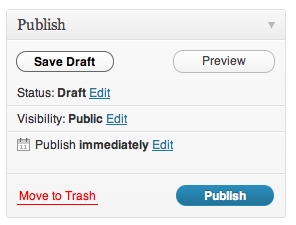
When I blog, nothing else matters if I don’t hit ‘Publish’.

Without pressing the ‘Publish’ button all my intentions and planning and behind-the-scenes work has no effect.

Do you ‘Hit Publish’ in your life?

Similarly, reading personal finance blogs and books are great for getting you more clued-up, but if you do not ‘hit publish’ by opening a savings account or setting up an investment portfolio then you’re not going to building your savings up for the long term.

Hitting publish is scary.

You’re making intentions real. And if they don’t work out, then you open up yourself to the possibility of  potentially made a bad choice.

  • What if I can’t afford to save a certain percentage of my income?
  • What if I pick bad investments and lose money?
  • What happens when I try my hardest to put money away but I have to dip into my savings?

You won’t know until you ‘Hit Publish’ on your plans

I started in investing in October 2007.

cautionYep, the peak of the stock market before the crazy ‘crashes’ of 2008 and 2009.

But I’m so glad I did. If I had waited just a few months I’m sure I would have freaked out as I watched investments around the world go lower and lower. But I had started so I kept going. And, in fact, as I continued to invest into tumbling stock markets I’ve actually come out ahead so far. Four years of investing and my investment accounts are in the positive, and currently value much more than they would have been if they had simply been saved in cash.

I ‘Hit Publish’ on my investing plans. And I have continued to invest and learn.

It’s January as I write this. Money is tight for most of us after Christmas spending. You may be tempted to wait to get your money-game in order because it’s not the right time.

But, it’s never the right time.

There’s always more research we could do, or wait until a more favourable time when we have more spare time or spare money. But that time never comes.

Hit Publish. You’ll learn so much on the journey and it’s easier to tweak your plans once you’ve started than getting started.


Hit Publish.


{ 1 comment }

2011 in Numbers

by Magical Penny on January 5, 2012

2011 was a crazy year to be an investor.


Even someone with relatively small portfolios could have lost thousands of pounds in a month. I know I did!

I recently came across a great info-graphic that sums up the year well, particularly the fact that low-cost funds out-performed higher cost funds. You may think this is obvious but when looking to invest, the higher cost funds are the funds that have advertising budgets and marketing designed to make you pick them over cheaper funds.

There will be more posts at Magical Penny explaining how to invest in low-cost funds so be sure to sign up for updates but, for now, enjoy the info-graphic.

Source: https://www.rplan.co.uk/post/1067/an-investor-s-2011-the-year-in-numbers-infographic

Which figure surprised you the most?

Leave a comment below.


Other Magical Penny articles you may like:

Losing £1000 in the Markets in a Month | How To Invest Profitably and Care-Free

3 Reasons to Open a Self Invested Personal Pension

{ 1 comment }

I’ve found reading personal finance blogs a brilliant way to learn about the best ways to save and invest. But, apart from saving tax-efficiently in ISAs I didn’t really know much about tax strategies until recently.

After talking with a new friend we decided to team up to launch a new website for 2012 on the subject of tax:

Introducing: Tax On Tax Off.

The site will help you understand tax issues, particularly if you’re based in the United States. Filing taxes might not be the most fun thing you can do, but there are lots of opportunities to save money and ensure you are not paying too much tax (or too little).

We launch in the new year and we’d love for you to follow along, ask us your tax questions and we look forward to helping you rock your finances when it comes to tax.

And, oh yes, it will be FUN too.

Put in your name and email and start learning about how to save your money from the Tax Man:


{ 0 comments }

Should You Get A Junior ISA? | Junior ISA Explained

by Magical Penny on December 20, 2011

A Junior Individual Savings Account (ISA for short) is a new financial product available in the UK (I can tell you’re excited already!)

Launching at the start of last month (November 2011) the product allows parents to save money for their children in a tax-efficient way, without needing to use their  own ISA and therefore saving their tax allowance for themselves.

What the UK Government has to say about Junior ISAs:

“Junior ISAs are a great example of a simple, clear and jargon-free financial product that allows families to save and invest for their child’s future,”

Mark Hoban, financial secretary to the Treasury

I wouldn’t exactly say they are jargon free but hopefully by the end of this article you’ll have a better idea about them and know why they are so worthwhile.

Firstly, some context: They were brought in to replace the Child Trust Fund that was introduced by the Labour government and scrapped by the coalition.

If you already have a child trust fund (CTF):

If you already have a CTF then you will not be able to apply for a Junior ISA, but you on’t miss out on the tax savings because the CTF investment limits have been increased from £1200 to £3,600 a year  -the same as the Junior ISA.

If you haven’t got a child trust fund for your child: 

If your child doesn’t already have a trust fund then a Junior ISA is something you should consider (even for older children who did not have the option of CTFs because they were born before 2002. And if your child is 16 years old they can open one themselves, and then convert it to a normal ISA at 18 (assuming they are sensible and don’t spend it on alcohol and parties!)


So what actually is a Junior ISA?

A Junior ISA for children  is, in many ways just like a standard ISA for adults – a savings account that allows you to save in cash or through stocks and shares, and not pay tax on your gains (you pay tax on interest from normal savings accounts but you might not realise it because it is automatically taken out of the interest you receive).

There are lots of advantages to investing in a Junior ISA:

  •  It is tax efficient:  The Junior ISA allows your child to avoid paying tax on the gains from savings, meaning the money grows faster than it would in any other account with the same interest rate.
  • It takes full advantage of the power of time: All money put in a Junior ISA is eventually rolled over into standard ISA at once your child turns 18 – keeping the tax free status…this is particularly brilliant as it means you’ve had more years to put money into the tax-free system for your child. If you had simply saved in a normal account and then wanted to transfer it into an ISA later on, you would be limited by how much you can put in an ISA in any given year. Saving in a Junior ISA consistently every year will allow you to save a substantial amount for your child.
  • It teaches the lessons of saving: Opening a savings account that is not accessible but is transparent (you can see the balance) is an incredibly powerful tool for teaching children the lessons of saving. They will be able to watch the balance grow over time and if you have invested it in the markets you will also be able to teach and show them the power of compounding returns as well as demonstrating the concept of risk and return.
  • It’s easy to pay into:  It’s really straight forward for donors to give. Adults paying into a junior ISA are not subject to full money laundering procedures usually associated to paying into other people’s savings accounts. This is important because it’s likely that the child themselves will not be paying into the ISA because they don’t have an income. But it’s easy for anyone, including grandparents and parents to pay into. What a great Christmas present!
  • It’s possible to switch from Cash to Stock AND BACK AGAIN. Children can hold one cash and one shares Junior ISAat a time, with the maximum £3,600 a year split between them.With a standard adult ISA you can transfer funds from a cash ISA a stocks and shares ISA…but you can’t transfer back into the cash ISA without taking the money out of the tax shelter. However, with a Junior ISA it is possible to transfer between cash and stocks and back again as many times as you want. This is great if you are uncomfortable with the level of risk at any time as you can correct your asset allocation whilst allowing the money to remain the tax-free status of the money in the  Junior ISA.
  • It’s perfect for parents to gift money to their child. In an ordinary savings account, interest exceeding £100 on any amount deposited by the parents will attract tax at the parent’s tax rate. Not so in a Junior ISA -it’s all tax-free.
Despite the advantages, it’s worth knowing the disadvantages too:


Disadvantages:

  • The money is locked into the Junior ISa and cannot be withdrawn until the child reaches 18. And it is always the child’s money once it enters the account. If you wanted more control you would have to skip the ISA, save in your own accounts and then give money to the child once they reach 18.
  • The Junior ISA replaces the child trust fund, which the government made contributions to. But the Government does NOT make contributions to a Junior ISA. All together now: “BOOOOO!”
  • There are ways to get around the tax situation without a Junior ISA. If a normal children’s savings account is funded by a grandparent or other generous relative who is not the parent, interest up to the child’s personal tax allowance – this year a huge £7,475 – can be socked away tax-free….without the restrictions of a Junior ISA.
If you are not using your own ISA allowance completely then you should consider saving for your child that way for the most flexibility, but if you are ARE using all your allowance for your own needs (you should be trying to) then a Junior ISA is a great solution for saving for your children’s future needs.

 It’s a great product for helping you save for a child in your life.

Why not consider setting up a Junior ISA as an amazing Christmas present?

{ 3 comments }