Spending and saving money is mostly about mastering the voices in your head rather than what you ‘know’ about managing money. It therefore makes a lot of sense to take note of how your mind works when you spend money. With this in mind, the article below is a really interesting guest post I wanted to share with Magical Penny readers!
It’s an adage which was probably trotted out every Christmas by an elderly relative as they proudly presented you with yet another pair of reindeer socks. But psychologists have found out it’s actually true: spending money on other people gives us a greater satisfaction than if we’d just bought something for ourselves.
In a study carried out by the University of British Columbia in 2008, participants were split into two groups and given $5 or $20. One group was told to spend the money on themselves, the other group told to spend it on another person. The latter group reported greater feelings of happiness than the former.
The one where…
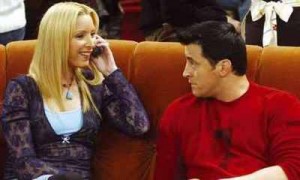 As I write this, I’m reminded of the Friends episode where Joey challenges Phoebe to find a selfless good deed, arguing that there is no such thing. In the episode, Phoebe tries having a bee sting her so “it will look tough in front of its bee friends” – until
Joey points out that the bee would have died after stinging her.
She then pledges $200 to PBS, a channel she hates, thinking that she’s finally found something with no good comeback for her. Yet her donation puts Joey, who takes her call on the PBS telethon, in the spotlight as the $200 takes the channel over their
pledge target for the year. Naturally this makes him happy, which makes Phoebe happy…until she realises that it’s made the deed selfish after all.
Why am I talking about this? Because that was the conclusion behind the study of why we’re happier spending money on other people. It seems that we give to others partly to promote ourselves as generous and kind, and when we feel this way about ourselves we feel happy. Another reason is that generosity helps to promote and strengthen social relationships, and as humans are social beings by nature, having these strong friendships makes us happier.
Experiences or things?
In a separate but related study in 2010, it was found that buying or receiving experiences, such as a day out or concert tickets, were more likely to make us happy in the long term than getting or buying material things.
Why? Well, think back to a happy time when you were growing up; perhaps a day at the seaside or your first holiday abroad. The chances are your brain has filtered out any of the less fun aspects that might have happened (being kicked by a donkey, getting ‘Spanish Tummy’ from the water) and exaggerated the good parts, leaving you with an inflated happy memory which will remain so over time.
Now think of a possession, an item which you really wanted at the time but that you never use now. Perhaps it’s a pair of shoes which you don’t wear, or a longed-for appliance or gadget which is now gathering dust. How many times since buying it have you thought, however fleetingly, “I wish I’d gotten the other pair” or “The new version of it’s much better than the one I’ve got”?
Why?
No matter what the item, it will always just be that item. As trends and tastes change, it will become less valuable or coveted, and eventually it will be just another thing cluttering up your cupboard. And socially, talking about a favourite possession could get you thought of as shallow and materialistic. Yet providing amusing anecdotes about something you’ve experienced is much more socially acceptable.
Negative experiences
Conversely, when purchases go bad, it’s easier to forget about material purchases than experiences. A 2009 study by the University of Texas surmised that if you bought a jacket years ago which bust a seam after wearing it once, you’d probably just exchange it and forget the experience after a while. Yet if you had a meal at a posh restaurant which resulted in food poisoning, you’d likely avoid that particular place for years afterwards.
Conclusion
If you want to be happy, spend most of your money on other people; and when you spend on yourself go for meals out, days out and holidays instead of buying the latest gadget!
Should make Christmas quite easy…
Louise is a writer for MoneySupermarket, a price comparison site in the UK. She writes mainly about personal finance, advising readers on getting the best out of their credit cards, mortgages and savings accounts.
{ 0 comments }
 I recently returned from Maui, Hawaii, where I got to experience the hospitality and awesome facilities of a 5 star hotel.
 Staying in a 5 star hotel was a conscious choice I made to experience living in an amazing venue for a week. I knew the hotel would be amazing but reasoned that the room itself would be less important to me – all I needed it for was to sleep and recover from having a ridiculous amount of fun learning to surf and having the time of my life with new-found friends. By opting to stay in the cheapest room I maximised what I had available to spend on other things.


 To recap the reasons to have a SIPP were:
 You can’t transfer an old pension into a SIPP if it is less than £10000
 SIPPs force you to commit to £300+ a month, or you have to start with a £10k lump sum
 If you are not a higher-rate tax rate a Stocks and Shares ISA would be better
 They are talking about a “no cost refinance” in which you do not have to pay closing costs upfront. Thus the term “no cost”. This, however, does not mean you will not have to pay for those closing fees. It only means that you will pay for them in the long term. In most cases a no cost refinance will end up costing you more for your home over the life of your mortgage.
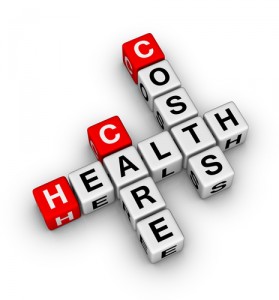 Like all insurance, health insurance is a financial product that protects you from costly medical bills if your health takes a turn for the worse or you suffer an accident. In the United States and other countries where medical care is not handled by the state, health insurance is incredibly important. Without it you are only an accident away from potential financial ruin as medical assistance is costly. In the UK, health insurance, otherwise known as “private medical insurance” is less important as the National Health Service is free to all – the costs are paid by everyone in the form of ‘National Insurance’ deductions from wages. However, despite universal healthcare in the UK, there is still a market for private medical insurance: