Avoid Borrowing by Being Creative

by Magical Penny on March 3, 2014

Millions of people are currently in debt, with the majority of these people owing money to more than one lender. While there are certain times when taking out a loan may be appropriate, such as a home mortgage or to cover the cost of education, most of the time debt is not good. A loan will provide you with the cash you need upfront, but typically you will have to pay back much more than you borrowed.


This leads many people to live in a perpetual circle of debt that they feel they can never get out of. In some cases, people start borrowing more money to pay back the money they already borrowed.  The best way to avoid unmanageable debt is to not incur any debt in the first place.

For those in need of immediate financial assistance there are benefits and non-profit loan options, otherwise, below are some creative things you can do today to help you avoid borrowing money tomorrow.


Reduce Your Spending

One of the best things you can do to avoid borrowing money is to make more money available in your household budget. Look at where you are spending your money and try to find specific areas where you can cut back. Try some savings tricks like using coupons at the grocery store, purchasing items in bulk to save more money, or dine-in more often instead of eating out. You will be surprised how much you will be able to save during the year by just changing some of these basic spending habits.


Use the money that you saved and place it in a special savings account that should only be used in case of an emergency. Make sure this is a separate account at the bank and do not connect it to you main checking account. This will allow you to build up a nice savings account that you can use to make any necessary purchases and avoid borrowing money in the future.


Turn a Hobby into Cash

Naturally, the more money you have coming in each month, the more money you will have available to spend and/or save, and the less likely you are to have to borrow money. One great way to earn some extra money without having to get a second job is to turn a special hobby into cash. Nearly, any hobby can be turned into goods or services that people will pay money to receive.

For example, I love singing and have managed to get paid gigs at weddings and other church services.

Need another example? I have a friend who loves bikes and is good at bike maintenance. He’s now earning good money offering services on people’s bikes to get them ready for the spring weather that just around the corner!


Perhaps, you enjoy making things like jewellery or pottery, or you like painting pictures or can build furniture. Open up a store on Ebay and sell you items there. On the other hand, maybe you have a certain talent like playing an instrument, cooking or dog training. Advertise in your local paper to provide these services or lessons for people. It takes very little time and you get to continue doing the things you enjoy doing and make extra money at the same time. You can use this extra money to purchase things that you want or to pay off some of your bills and avoid borrowing money in the future.


Create a Savings Plan

The most common reason that people borrow money is to purchase something that they do not have the funds readily available to buy. To avoid borrowing money, you are going to have to come up with an alternative method to make the purchase. They best way is to save the money before making the purchase. First, create a goal and determine just how much money you can set aside each week towards this purchase. Now, set up a separate savings account to put the money in as you save it. By using a separate account, you will not be tempted to use it for other things. Post a picture of the item you want to purchase on your fridge, as a constant reminder as to why it is so important to you to save this money. This will encourage you to stick to your plan.


Make Payment Arrangements

One of the worst mistakes you can make is to borrow more money to cover the costs of paying back money you already borrowed. This will only put you further in debt. Instead, contact your current lenders and explain to them your current financial status and let them know how much you can afford to repay on a regular basis. Many lenders will be willing to work with you if you are honest and talk to them before your account is well overdue.


These ideas will help put more money into your pocket so you can purchase the things you want and you need without borrowing money. The most important thing to remember is that you must live within your means. You cannot spend more money then you have coming in, or you will have to borrow money. While it may not seem like it at first, living debt free will actually give you more money to spend in the long run because you will not be paying those high interest costs.


{ 1 comment }

Debt-Consolidation-Explained

by Magical Penny on February 9, 2014

Debt is horrible.

It’s easy to acquire, difficult to get rid of, and often-times, very expensive.

But you can get rid of it, over time, if you have a plan and stick to it.

Why not make paying off your debt a game? Following these debt donsolidation steps laid out by Zopa is a great place to start.


pay off debt

Have you paid off debt?

Share your stories in the comments to help others

If you like this post you might like other posts on this site about debt:


How to Pay off Debt

Paying off debt or saving?

7 Things to Look For in a Balance Transfer Deal

{ 0 comments }

How To Switch Energy Providers

by Magical Penny on February 2, 2014

The cost of your energy needs is something you should keep an eye on, and ultimately I’m writing to tell you it’s easy to switch energy providers if you find a better deal.

This article will show you how.

Learning how to maintain control of your energy bills is easy to do with a little know-how and will likely save you money time and again.

If you live in the UK it’s likely that you currently get your electricity and gas from one of the ‘big 6’ providers. However, there are many other providers offering perhaps better tariffs for energy but people lack the confidence when it comes to switching their energy tariffs

  • Just 4% of householders think that the big six energy providers are working hard to keep prices down for their customers
  • 29% of people expect to switch away from the big six in the next three years
  • But despite this, 17% still say that they would not consider moving to a smaller supplier

(Source)

A smaller supplier may be better for your needs but to be sure you need to do a bit of research (and it’s not as difficult as you may think)

Research Your Options

If you’re reading this it means you already have the means to see if you can save money on your energy!

The tool?

The Internet!

Whilst it is possible to use the phone to call most energy companies to ask about prices, it is worth going to their web sites to see what rate plans they offer. This will not only give you a visual of their pricing structures but also provide you the time to compare several different companies at once. You can also make it even easier  on yourself by going to a price comparison sites such as USwitch or TotallyMoney. These sites are great to learn about all gas and electricity suppliers;. their plans and tariffs; price history, and customer satisfaction scores.

One thing I like about TotallyMoney’s offering is that they give any commission they get from the power companies to charities that help people in fuel poverty . Typically this commission is around £38 for a dual-fuel switch, but whatever the amount received, 100% goes to charity–an absolute win-win for everyone involved.

What Switching Involves

You may think that switching is complicated, but it really isn’t at all. When you go to comparisons sites the first step is to give your postcode and email address. This allows the sites to check to see what energy providers operate in your area to begin searching for the best tariffs.

Once you have put in your postcode you are asked a couple of minutes worth of questions about your electricity and gas consumption, like how much energy you use and who supplies your existing consumption. You can get all this information from your provider, either from written statements or online if your current provider provides that feature. They will also ask you how you are able to pay as paying by direct debit is the power company’s preferred method and therefore can result in the cheapest tariff offer.

After you have put in this information, you can compare across the market and find the best tariff for your needs. If you then click through your new energy provider will sort out all the details meaning you don’t have any other excuses not to change and save money!

Understand Your Needs Vs the Contract

One of the trade-offs that many energy consumers encounter when searching for better service is choosing between lower electricity prices or a more flexible contract. Once you decide which company is best for you, do some extra research (for example, by talking with a supervisor via telephone) to find out what your options are for terms of service. You may be able to negotiate a more flexible payment plan or length of contract if you reach out directly to the company.

What about Green Energy?

Next, you should consider what you want your ultimate energy goal to be. If you are into renewable power, you should definitely research some green energy companies. This is one of the largest growing sectors in the energy industry in the UK, thanks to the aggressive campaign to establish more offshore wind power. Green energy has several advantages, including the chance to have a minimal environmental impact and use some of the newest technology in the energy industry.

Renewable energy may or may not be cheaper than your current supplier, but it could provide you with better service, which is something that many subscribers value just as much as money. This is because many green energy suppliers work on a local level, meaning that they remain close to their customers and take into consideration what these consumers would like to see from their energy service.

Conserving Energy

Once you have decided to switch to the company that offers the best offer for you (financially, service levels or green credentials), you can take your energy savings even further by conserving energy at home. Inexpensive installations such as low-flow shower heads, programmable thermostats, and sturdier insulation will only cost you a few pounds but could help you save hundreds of pounds in energy per year.

You should also consider upgrading your household appliances, namely the refrigerator, dishwasher, washing machine, and clothes dryer. These machines are constantly being improved by manufacturers so that they give better performance and use less energy, so if you have had the same appliances for near a decade, an upgrade can actually end up saving you money in the long run.

So, as you’ve just read, the best approach to take to tackling your energy bill is a multi-pronged one but hopefully you will be inspired to check to see if you are on the best tariff for your needs;

Switching energy companies can help you save a huge amount each year, but the savings challenge doesn’t end there. Becoming more energy efficient at home can also help you keep more of your hard-earned money, so keep thinking of ways to save energy for a fuller pocket and a more stable bank account.

Happy researching!

{ 0 comments }

Five Saving Strategies to Help You Prepare for Retirement

by Magical Penny on January 29, 2014

Maybe I’m strange but I get a thrill preparing myself for retirement.
It’s not that I’m looking forward to those days – I love my life and being in my 20s.  However,  I’m also aware that everything I do during this first decade of adulthood will have lasting effect on the rest of my life – and if I can help my future self by saving for retirement then that’s great.
Retirement is something most people look forward to.
This is often a time where you have more freedom to do what you want, when you want, assuming of course you have made good preparations for it.
In order to make that happen, a number of things need to be taken into consideration. Health and financial independence are probably the two most important. Of course, there are other things to think about, but if you take care of yourself over the years, and are healthy enough to enjoy retirement, then having the money to do what you want becomes the chief concern. In order to prepare for retirement you need to lay a foundation, a basic plan to carry you through to your golden years and help ensure you’ll be able to live like you want to. Here are 5 suggestions to help you prepare for retirement.

1. Start Saving Early

Don’t wait until you’ve been in the workforce for decades to start putting money away for retirement. The earlier you start saving, the more your money works for you. Put together a budget that will help you put a little aside for retirement as soon as you begin receiving a pay check. Consider the type of lifestyle you envision for retirement, then work to make it happen. It may seem foolish to think about how much money you’ll need to live on in 20, 30, or 40 years, but when the time comes you’ll be glad you gave it proper thought.

2. Plan Ahead

If you want to retire early, or merely want to prepare for that day when you can say goodbye to the work-a-day-world, you need a plan…a destination. Where do you want to go? After you’ve decided how you see yourself living as a retired person you can determine what it will take to get you there. When you retire your life will be different than it is now. You won’t have a job to go to and you may have less money coming in. Your investments may still be paying off, but you won’t be receiving a pay check. You’ll have to watch your expenditures; learn to live within a new budget. Your expenses will probably be much less, also, maybe noticeably so due to the fact that you won’t have to worry about going back and forth to work or feeding yourself while you’re there. Many changes will be taking place quickly and having a plan to deal with them will lessen the stress when they actually take place.

3. Invest Carefully

It will probably cost more to live in the years to come–the cost of living tends to go up, not down. With that in mind, you need to carefully consider your retirement investments.
If you are in Australia and have begun working, you should already have some retirement savings in the form of Superannuation. This is a type of compulsory retirement fund which is funded by your employer who pays pays a certain percentage of your salary into.  Many organisations such as Suncorp Superannuation can help you maximise your funds in order to retire comfortably. These organisations take away all the hard work and uncertainty, and return provide solid growth and peace of mind. Although many people choose to self-manage their retirement funds, it is only recommended to those who actually know a thing or two about investing.

If you are in the UK, your National Insurance contributions that you pay each month will mean you become eligible for the state pension and, if you earn enough and are not self employed, you may be eligible for S2P, a sort of second state pension that tops up the basic one.

That said, it’s recommended that you have other pension provisions in the form of private pensions and investments because a basic state pension does not cover anything above the basics. For your own investments it may be tempting to take a chance on a long shot with the possibility of a huge payoff, but if you hope to truly enjoy your retirement years you’re undoubtedly better off taking a slow, cautious approach to investing. Seek out investments that are diversified like ‘index’ or ‘tracker’ funds. You also need to look for ways to ensure you won’t be taking any sudden, unexpected loses that will cripple your chances of retiring on time. This can be done by considering what’s called your ‘asset allocation’ (the mix of different types of investments).

4. Focus on the Long Term

Taking the slow, steady approach to investments means exercising patience. Not expecting to make a gigantic return on a small outlay of cash is simply common sense. Yes, that may happen occasionally but the smart investor takes a long term approach to putting away money for retirement. Gambling with your future is not the way to go. If the person investing your pension funds were to go to a casino and bet everything on black, you would probably not be happy with them, especially if the ball landed on red. The expectation of making quick money is thrilling but unrealistic. Instead focus on long term investments. Putting your money to work in places that ensure a slow, steady income beats finding out you lost everything by taking a chance you never should have.

5. Seek Tax Advantages

As the time approaches for retirement thought must be given as to how you’re going to access the money you will have saved. Depending on how you have saved you may  face tax consequences. Consulting with a financial advisor can help you find the most equitable solution to this problem by coming up with ways to lessen the tax burden and keep more of your money available for you to do the things you want.  It all comes down to planning ahead in order to enjoy your retirement.

Like this article? Keep reading to keep learning 🙂

Four Things to Consider when Buying Unit Trusts or Mutual Funds

Why a pension is like a water-proof envelope


{ 2 comments }

conversation-in-purpose

There’s thousands of blogs on the internet but it’s only a rare few in my experience that make you feel like you’ve found something really special. I felt that way back in 2011 when I first stumbled across Dave Ursillo’s online home.

When I first found some of Dave’s online musings on leadership and creativity, I was struck by his passion and found his writing often-times profound, and written with a  surprising level of finesse in contrast to a lot of my regular reading in the blogosphere.

A little in awe, I didn’t reach out to Dave at the time, but I knew exactly who he was when our paths crossed in Austin, Texas at SXSW in 2012.

Since then we’ve stayed in touch and last autumn I saw an invitation on his personal Facebook page that read:

I want to be a part of 50 conversations on topics that matter, all recorded, all with different hosts, all to go live in January to kick off the new year with a bang. I see them being less-formal, less-promotional, less pointed than interviews — more like “conversations anchored in a purpose.” Nothing prescripted or prepared. Maybe there’s one idea, thesis or story that kicks them off, and 20-30 minutes later, we end up somewhere that we probably didn’t intend.

Dave was also planning a trip to the UK so I thought it would be perfect to record a conversation in purpose, in person!

The topic was my choice: ‘Providing Value.’ It’s a topic I’ve been thinking about a lot, especially over the last few months as I explored what career path I should pursue after leaving my market research job back in 2012. I’m decided to focus on becoming qualified as as financial advisor to add more legitimacy to my work here at Magical Penny, and help me build a career I could be proud of.

I thought Dave would be the perfect interviewee for this topic. As I did when I left my job in my first career in market research, after leaving his job in politics Dave had been wrestling with big issues about how to live a life of service and meaning. He channelled this energy into his first book, Lead without Followers, and has now gone on to build a successful Writers Group with a difference, the Literati Writers.

I’m sure you’ll get a lot out of this interview:

Learn more about Dave here:

http://www.daveursillo.com/about/

{ 0 comments }

What on Earth is Bitcoin?

by Magical Penny on January 26, 2014

You’ve probably been hearing quite a bit about this Bitcoin thing lately. It’s popped up on various media, news outlets and in the online realm a lot over the past few months. But what is it? And will you be exchanging your current account for a Bitcoin one soon?
One site, bitcoin.org, defines Bitcoin as a “consensus network that enables a new payment system and a completely digital money”. So far, so opaque. Perhaps the best way to look at it is: a currency for the internet.

Maybe the simplest way to explain how the currency works and how it shot to prominence is to give you a quick history lesson.

Bitcoin came into being in 2009.

It was created by Satoshi Nakamoto, a mysterious character who has never given an interview. It was trundling along nicely as the preserve of free-thinking libertarian types until last year (2013) when its value suddenly shot up by 1,000 per cent.

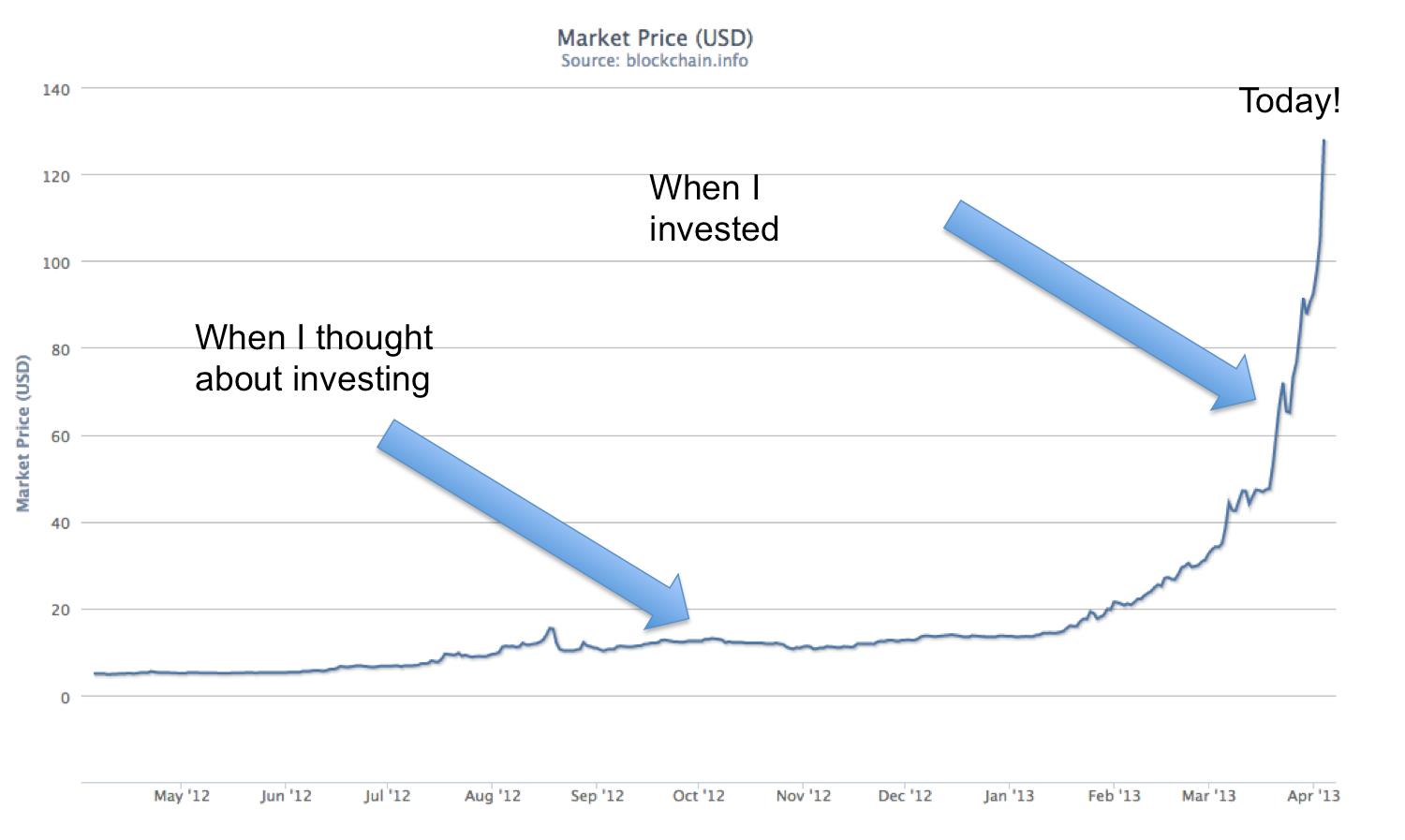
And I actually saw this coming coming and profited!

Here’s what I posted to my facebook account back in April 2013:
bitcoin

In case you’re curious, the value continued going up, crashed, then went on to bigger highs. I got out in October 2013 or so, having doubled my investment (although I wasn’t really investing, but rather speculating!)

Some have the rise in value of Bitcoin was partly down to the global financial crisis and in particular the financial situation in Cyprus. Their economy hit the skids and the Cypriot people were tapped for a few quid. Savers were hit by a government levy in order for their bailout to go ahead.

In light of government interference in individual’s private finances a non-centralised form (i.e. it doesn’t have a central bank) of currency completely free from government meddling suddenly seemed a lot more appealing.

If all this sounds like something you would want to get your hands on, well you can’t, because it doesn’t exist in any physical form.

As stated at the start it’s merely an online thing. If you do want to get some though, there are various ways you can go about getting some.

First you need an online bitcoin wallet

You can go to bitcoin.org and download a ‘wallet’ to your computer and mobile.

Or you can keep your wallet online like I did using http://blockchain.info/ or any other of the multitude of sites that have sprung up. Once you have a wallet you can begin receiving and sending Bitcoin to others using your unique wallet address.

Of course, it is also possible to mine Bitcoin and for this, you will need to invest in some computer store crypto hardware that will enable you to do so effectively. In order to mine Bitcoin, you need to have a lot of processing power, so although it is possible to do so with a single machine, you are unlikely to get very far unless you invest in dedicated hardware and run it 24/7. You can find out more about mining Bitcoin at https://www.masterdc.com/blog/how-to-mine-bitcoin-beginners-guide-to-mining/.

So you now know what it is (sort of) and that it’s hot property (or, data really) right now but what can it be used for? Well the good news is that you can technically buy anything, the bad news is that not every site excepts it. Those that do, include sites like WordPress, Wikileaks and Reddit.

This site documents more comprehensively where you can spend bitcoins.

What kind of advantages does a Bitcoin transaction have over the regular kind?

We’ve already discussed the freedom element, in theory they should be much more secure than credit card and debit card transactions as they don’t contain personal information and Bitcoin payments contain virtually no fees. But as you might expect, there is still risks involved, like if your digital wallet is hacked or you forget where it is stored.

So is it worth investing in then? Economists seem to think that given that its price has fluctuated so dramatically in the last few months, Bitcoin is nothing more than a novelty currency…but there have always been naysayers when new disruptive technologies and concepts are created.

For the record, I’m completely out of Bitcoins for the moment. It was interesting to explore them, and it was a roller-coaster ride watching the value go up and down, but I’ve got other demands on my resources right now and wanted to get off the ride for a while.

{ 0 comments }

Make Some Extra Space, Make Some Extra Money

by Magical Penny on January 13, 2014

 Home improvements can add a lot to the value of your property, if you do them right.

Most home improvements, if tasteful and well done, will add more to the value of your house than they will cost you to do. One of the biggest projects, but also one of the things which can add most to the value, is to create space by extending up into your loft or down into a disused basement. If you have an unused attic or a workable basement room, you may want to consider converting them into new rooms.

Both will greatly increase the amount of space you have in your home, providing you with a new bedroom if your family is growing, or even a second living space or study if needed. The cost is likely to be recouped in the long run. So if you are looking for more space, the cost of extending need not be prohibitive and could prove much more effective and much easier than upsizing in the property market.

View full image

The average loft conversion is likely to cost you in the region of £11,500. This may seem a lot but the average increase in the value of properties which have had loft conversions is 12.5%. The latest figures from the Nationwide show that house prices rose by 8.4% in 2013 (http://www.bbc.co.uk/news/business-25575964). This puts the average price of a property in the UK at £175,826.


According Evolution Money’s Home Improvement Infographic, some home improvements could add more value than others. One of the most cost-effective projects would be a loft conversion. The average cost of this is £11,500, but it could add as much as 12.5% to the value of your property. For an average property, this could increase the price by over £21,000. Converting a cellar, which is only really an option for older properties, would cost around £20,000, but is likely to add 20% to the price (£35,000 for an average property). Many home buyers are looking for larger living space in their new property, so adding a conservatory could be beneficial. On average they cost £6,000, but this could mean an extra 6.7% (over £11,000) when you come to sell.


Extending within the home can be an ideal solution for those who looking for more space, but who do not want to have to move house. The work itself may be expensive, but the rise in the valuation of your home means that somewhere along the line the cost will always be recouped.

{ 1 comment }

The True Cost of Car Ownership

by Magical Penny on January 9, 2014

Out of university and starting my first graduate job, one of the significant ways I found to keep my expenses low enough to start saving substantial amounts of my salary was by avoiding car ownership.

So coming across this info-graphic piqued my interest.

View full image

Now, I have to admit, another convenient reason for not driving in my early and mid 20s was because of repeated driving test failure…and quite a big proportion of savings were lost in that journey (!) but the infographic does make an interesting point about the cost of driving, and those costs can be unexpected for new drivers.

What do you think?

{ 0 comments }

How to get by on a low income

by Magical Penny on January 8, 2014

caution
When on a low income there can be periods between pay checks or benefits payments where things can be very tough, this can be compounded if a financial emergency arises. In many cases those on a low income are very astute at managing their money. When a person or family has a limited income they are generally very mindful on how they spend their money.


Regardless of how well a person’s money management skills may be, there is always room for improvement and tactics that can be used to further improve their financial situation. Below is a list of resource for financial assistance along with practical and proven tips on how to control money and get ahead.


Budgeting

As mentioned before, low income earners are generally very mindful of their daily, weekly or monthly budget as they monitor every dollar closely. That being said, seeing the ins and outs of your spending can help identify areas of improvement.


Savings

One way to stay out of debt is to establish an emergency savings fund. This doesn’t have to be elaborate and whilst you may think you don’t have any extra cash to start, here are some tips on what you can do – find any areas of savings in your budget and then put that cash into a your savings account, sell unwanted items, if you are employed as for overtime, pick up some side work if possible.

By having a savings account, this can help pay for unexpected expenses. This in turn helps you avoid going into debt to through applying for a loan which will end up costing you even more when you add in the costs for getting a loan (fees & interest).


Shopping smart

It might sound tacky, but using coupons is a great way to save extra money. Also, purchasing store brand generic items versus other expensive known brands. Utilising big sales is also another great way to stretch the dollar; end of year sales, Christmas sales, etc…


The Government

Are you aware of all of the different types of government assistance that is available. There are loads of programs and grants that are available, even loans for people collecting benefits. Visit the gov.uk site to see what may be available to you.


Community Initiatives

Visit your local charities or community centres to see what type of services or initiatives they have in place to help low income earners. You may be surprised on the amount of discounts and financial assistance they may be able to provide.


The above is just a small example of how a person or family can improve their financial situation. Using a combination of these tips and resources can provide some great financial gains for those who are looking to get ahead.


Do you have any other tips to share? Leave a comment below.


{ 0 comments }

Is Your Estate in Order?

by Magical Penny on January 8, 2014

is your estate in order

If you are a senior and have not set up a will or checked that status of your estate in a while, now may be the time. Estate planning in crucial to ensure that you assets are distributed exactly as you want them to be in the event of your death.

It will also be easier for your family members if things are effectively planned out prior to your passing. Now that you are in your retirement years, it is very important that you make sure everything is in place.

Here are some tips to help you get your estate in order.


Final Will

A final will serves as an official document that states exactly how you want your personal assets and belongings to be distributed after you are gone. A will can be written by anyone who is older than 18-years old and is considered to be mentally competent. Your will should clearly lay out who gets what property and assets, any amount that you want to have donated directly to charity and details about any trust funds you may want set up for some of your beneficiaries. If you have any dependents, you want to make sure that your will includes who you want to look after your dependents in the event of your death. You can also detail how you want your funeral to be arranged and what type of memorial service you want.


Beneficiaries

Now is also a good time to check through all of your policies to see who you have listed as the beneficiary, and make any changes if necessary. Check your different life insurance policies and your superannuation funds to see who you have listed as your beneficiary. A lot may have happened in your life since you took out your policy or started your fund, so you need to make sure the information is up-to-date. The name listed as the beneficiary on your insurance policies or superannuation fund will take precedence over anything you have written in your will, so make sure it is accurate.


Power of Attorney 

As a senior, it is also important that you think about selecting someone close to you to be the power of attorney in the event that you cannot take care of your own affairs. There are several types of power of attorneys you can decide on, such as a medical power of attorney who is assigned only to make medical decisions on your behalf, or an enduring power of attorney, who only takes control of your finances, and other matters, if you become incapacitated to do so on your own. A general power of attorney is the most common type, and this person only takes over control over a set period of time, such as if you are traveling out of the country. It is important that you have your power of attorney set-up while you are still mentally stable to do so.


Important Papers

It is also beneficial to gather all of your important paperwork and keep it in one specialised location, such as a safe or safety deposit box at the bank. It is best if you keep all of your paperwork together, such as birth certificates, life insurance policies, will, marriage certificate, deeds or titles to property, home insurance, superannuation documents, power of attorney paperwork, prearranged funeral paperwork and health insurance information. This will make it easier for your loved ones to sort through all of the paperwork if everything is at one place.


While no one wants to thinking about dying, it is important that you have things set up properly to protect your assets and your family. You may want to seek advice from an attorney and/or a financial counsellor to determine what is the best way to split your money or how to set up any necessary trust funds. A little work now will ensure that you wishes are followed out after your death.

This article was brought to you be Pensioner Loans Assistance, a financial blog that helps seniors with all things finance. Get great information on money, how to save and stretch your dollars, debt, government benefits and more. 

{ 0 comments }