Was Your Debt Avoidable?

by Magical Penny on May 18, 2018

Can there be anything more stressful and devastating than realising that your debts are getting the best of you?

For anybody who is dealing with repayments and financial management, it’s fair to say that debts are the worst things that could happen. They can, literally, keep you awake at night with worries and anxiety. But, at the core of every negative experience, there is a lesson to learn for the future, a lesson that can help you to make sure that the mistakes of the past don’t repeat themselves. Ultimately, there’s only one question to ask: Could you have avoided your debts?

Consolidate your debts to manage them

So, you’re in debt and trying to sort it out

Admittedly, before you begin to question the path that led you to financial difficulties, it’s essential that you find a strategy to recover your budget. You’ll notice that if you’re struggling with large sums of money with multiple creditors, a solution such as debt 

consolidation with debtconsolidation.loans can transform financial chaos into a manageable situation. It’s recommended to work closely with a professional advisor to get your budget back on track and reduce the risks of increasing your debts in an attempt to pay them back quicker.

caution

Can you learn from the mistakes of the past?

When debts are not the result of an unfair situation that wasn’t under your control – such as the inflation of the economy – they are caused by misguided actions that drive to inconsiderate spending. One of these is shopping, as it is for many, a full-time hobby. Indeed, when shopping is a significant part of your life, such as a regular weekend trip or a coping strategy after a bad day at work, it’s easy to see how it can have catastrophic results for your bank account. So, it’s important to identify patterns for impulsive shopping to control the urge and organise your budget.

Did you compare prices?

Do you know that a majority of British households continue to waste a lot of money on recurring bills? Indeed, for a lot of people, the idea of switching suppliers – whether it’s car insurance or energy – is preposterous. And because they continue to value their supplier, they hope that their loyalty is rewarded through lower costs.

The truth is: It isn’t. You need to shop around and compare prices to figure out the most cost-effective solution for your needs. When it comes to energy suppliers only, you could be saving £200 up to £1000. So what are you waiting for?

Did you have an emergency fund?

Are you saving money?

Do you know that most people don’t even have an emergency fund? Most Americans can’t even cover a $1,000 emergency. The British population is facing similar difficulties. Preparing an emergency fund can help you handle unexpected costs, such as fixing the car or the boiler, for instance. While it can be challenging to save money, it’s worth the effort when you know you can avoid payday loans and their high interest rates.

The bottom line is that a lack of organisation is at the core of what causes a debt. Whether you are unaware of your spending habits or whether you haven’t looked for ways to save money, being organised is what keeps you out of debts!

{ 0 comments }

The Financial Conduct Authority (FCA) has set the PPI deadline for 29th August 2019. All consumers who believe that they may have been mis-sold payment protection insurance need to make their claims before this date.

Arnold Schwarzenegger is the face of the campaign. His robotic head can be seen on adverts and posters around the UK. With the tagline “do it now!” consumers are urged to decide if they want to make a claim.

Despite mixed reactions to the adverts, the message is reaching consumers. The FCA reported a payout of over £400 million to consumers in January 2018. This is the highest figure since March 2016. Since January 2011, over £30 billion has been paid to customers for the mis-sold insurance. If £400 million is paid every month until August 2019, the banks will repay nearly £40 billion by the time the deadline arrives.

The increase in claims is having an impact on the banks. Lloyds is reportedly receiving 11,000 PPI claims a week. Although many banks and lenders have started to recover from the scandal, they are still dealing with an increasingly high volume of claims.

As consumers hurry to make their claims before the deadline, both the banks and PPI claims companies are busier than ever before.

Claims Companies are Handling More and More Claims

The best PPI claims companies are now handling hundreds of claims per day. Many people prefer to use a claims company to handle the case on their behalf, as there are multiple benefits for the claimant. They are able to uncover if PPI was even sold to them in the first instance, as many consumers can’t remember or are unaware if it was sold to them. For those with multiple PPI claims, complex cases and those who are busy, a claims company is an ideal solution.

Only the best companies will be able to handle the dramatic increase in claims as the deadline gets nearer. Companies must have impeccable customer service to stay afloat and increase sales over their competitors.

cautionClamp Down on Rogue PPI Claims Companies

Many people have negative opinions of PPI claims companies. It’s no surprise, as the vast majority of us have received countless text messages and phone calls from companies trying to sell their services. Some of these companies have also left customers out of pocket, due to unfair and extortionate fees. A claims company based in Swansea, for example, were ordered to pay a £570,000 fine for “coercing clients” into working with them. The company was taking money from vulnerable people and not following regulations to push through sales. In another case, one claims company was fined for making 75 million cold calls within four months.

The claims management regulator is aiming to better regulate claims companies by introducing new rules and imposing a fee cap. The new regulations came into force at the beginning of April 2018. These included no fees to be charged to a customer before the conclusion of a PPI claim and a client is able to cancel the contract at any time.

Regulations about a fee cap are also currently underway. The fee cap was expected to be passed through government in March, but was delayed. In the upcoming months, though, it is likely to be approved. The fee cap would mean PPI claims companies can’t charge more than 20% + VAT (24% total) on successful claims. For many companies, this will have a dramatic effect on their profits and overall business.

The regulations are in place so that consumers will only be able to use reputable claims management companies. Using a claims company that clearly states its fees and offers a no win no, fee policy is an excellent choice for those wanting somebody else to manage their claim. Finding a company that works under these terms means claimants can have professionals handle their case with the banks, and only paying fair fees for the service if their claim is successful.

{ 0 comments }

We all want financial freedom, but it isn’t always easy to get.

And it will be increasingly difficult the more debts and credit cards that you are trying to pay off. If you do have a lot of different debts, though, there is no reason to believe that you will never achieve financial freedom. It might just take a little longer and a lot more hard work to achieve.

Before you do start working towards your financial freedom, though, you need to know some of the things that might be holding you back from your end goal. Here are some things you could be keeping you from that all-important financial freedom.

Poor Knowledge

If you don’t really understand the basics of personal finance and money management, you might find that you could be at a big disadvantage. In order to achieve financial freedom, you will need to understand how money works. Think your knowledge could do with a little boost? If so, there are lots of resources online that can help fill in your knowledge gaps. For starters, you should read a few of the posts on this blog!

A Bad Credit Score

If you have a poor credit score, you might find that you really struggle to get on top of your debts. Don’t worry, though; taking a look on https://repair.credit/how-to-fix-your-credit/ should give you some useful tips and let you know the important steps that can help you work on your credit. Once you have an improved credit score, you will find that more lenders will be a lot more willing to offer your consolidation loans that can help you pay off your debt.

Bad Priorities

What are your financial priorities right now? If you have made some bad ones and have prioritized the wrong ones, then you could really struggle in your bid for financial freedom. Your main priority right now needs to be paying off any debt you have. Then you will have all the freedom you want. So, if that isn’t your main priority right now, you might want to think about switching things around.

No Financial Goals

It’s also key to consider what your financial goals are. Don’t have any? That needs to be solved as soon as possible! There are lots of different financial goals that you might want, such as the ones listed at https://goodfinancialcents.com/good-financial-goals/. Once you have some in place, you will feel motivated to work towards them and, before you realize it, you will have succeeded in reaching financial freedom! If you can’t quite figure out which financial goals are the best for you, you might want to discuss some potential ones with a financial advisor (US readers). They will be able to take a look at your current situation and help you evaluate your money so that you can set yourself some great goals.

Financial freedom doesn’t have to remain a pipe dream. All of the tips above will certainly help you achieve it without too many issues!

{ 0 comments }

Invest in the Best: How Property Can Be A Smart Choice

by Magical Penny on March 5, 2018

Property can be a good investment. Compared with other types of investing such as stocks, cryptocurrency, commodities and more- the risks in property can seem relatively low, and for many property seems more tangible as an investment – you can see it!

While there are peaks and troughs in the market, overall property accumulates in value most years and there’s generally a high demand for it. So whether you’re looking to make money by selling or renting, it can be attrative. However there are some things to bear in mind to make sure you’re choosing well and making the most of your money.

Find The Right Property

You need to find the right property to maximise your profits, this all comes down to your budget, whether you want to rent or sell and the area you live in. For example, if you live near a university then buying a large house, splitting it into rooms and renting to students can be a good way to earn money. If you live near a suburb then renovating a large family home and selling for a profit could be the way to go. If you want to make money without getting your hands dirty, you could even invest using a company like Fundrise- you could check out Fundrise review listings online to see if it’s for you. Something like this allows you to access a diversified portfolio of private real estate assets from as little as five hundred dollars. Unlike investing in the stock market, the risks are low.  

Flipping Houses

Once you’ve chosen the right property, next you need to decide what to do with it. If you’re going to go down the selling route then a good option is to ‘flip houses.’ Here you buy an old, run down property for cheap, and using a team of trusted tradespeople bring it back up to scratch. Not only do you make an old unloved and run down property into someone’s dream home which is very satisfying but there’s the chance to make massive profits. You need money upfront to be able to purchase the property as well as pay for the work, but within a few short months you could have it finished, sold with thousands in the bank.

Become a Landlord

If you don’t want to sell the properties you buy, how about renting them out instead? This means you can earn money over the long term, instead as of an instant sum of cash when a property is sold. If you don’t have the money to buy a house cash, what you can do is get a buy to let mortgage. That way your tenants rent essentially pays off  the mortgage, and after it’s paid off you can either continue renting and earning profit or you could sell it. You could purchase a number of properties if you have the means to, and live off the rent that you gain from them each month. If you hire an estate agent to manage them, there’s not even any hassle to you.


{ 0 comments }

4 Questions For The Prospective Bitcoin Investor

by Magical Penny on January 23, 2018

Bitcoin may have crashed back down to Earth a little bit in early 2018, but it’s still one of the most buzzworthy investment assets on the planet. An incredible surge late in 2017 reset the bitcoin conversation, causing some people to compare it to gold, and others to the dot-com bubble. At any rate, a lot of people are considering buying in for the first time. That isn’t necessarily a good or a bad idea – but it’s definitely an idea that requires you to ask a few key questions.

What Is Bitcoin?

We may as well start with the basics, right? The question of what bitcoin is is one we’ve addressed before, but it bears revisiting now that more people tend to look at the cryptocurrency as a commodity than a currency. Bitcoin, technically speaking, is a new form of online currency, created, held, and transferred entirely digitally. As an investment asset, however, you can truly think of it as a digital commodity. The comparisons to gold can be overdone, but in terms of how it’s traded, you can think of it similarly. You basically buy and sell quantities online through secure platforms and based on the latest trends and price movements.

How Is It Stored?

This is a hard thing to explain to people who haven’t held bitcoin before, or at least read about it extensively. A Canadian gaming news platform might have actually done the best job of explaining the process, in the interest of educating people on bitcoin’s utility in gaming. As they put it, you need to get a bitcoin wallet, which is the loose equivalent of a bank account. You can learn about the underlying processes by which bitcoins are electronically stored and transferred, but it’s the bank account idea that’s most helpful. Your electronic wallet protects access that you and you alone have to your bitcoin. Alternatively you can use a hardware or “paper” wallet that stores access codes offline.

How Much Do You Need?

With bitcoin being essentially brand new to many of us, it’s hard to know how exactly to value it. That is to say, it’s difficult to know how much you need to make an investment worthwhile – and the price of bitcoin itself is changing dramatically day by day. The best tip in this regard is to think of bitcoin in dollar amounts (or whatever currency you use). With the best wallet apps, you can input a dollar amount of bitcoin you’d like to buy, and actually buy tiny fractions of a single bitcoin, given that one bitcoin can be well over $10,000. No one can tell you how much you specifically need to make the investment worthwhile – but with the asset so volatile, it’s helpful to think of it in monetary terms.

Where Is Bitcoin Going?

No one can say for sure where bitcoin is going. It’s one of the hottest topics in investments, but also one of the hardest questions to answer. One way to look at it might be to anticipate either extreme. For instance, one analysis said bitcoin could hit $60,000 in 2018, but that another crash is coming. This represents both common interpretations in a single prediction: that bitcoin is in a bubble, and that it still has lucrative potential. Unfortunately, again – no one can tell you for sure.

{ 0 comments }

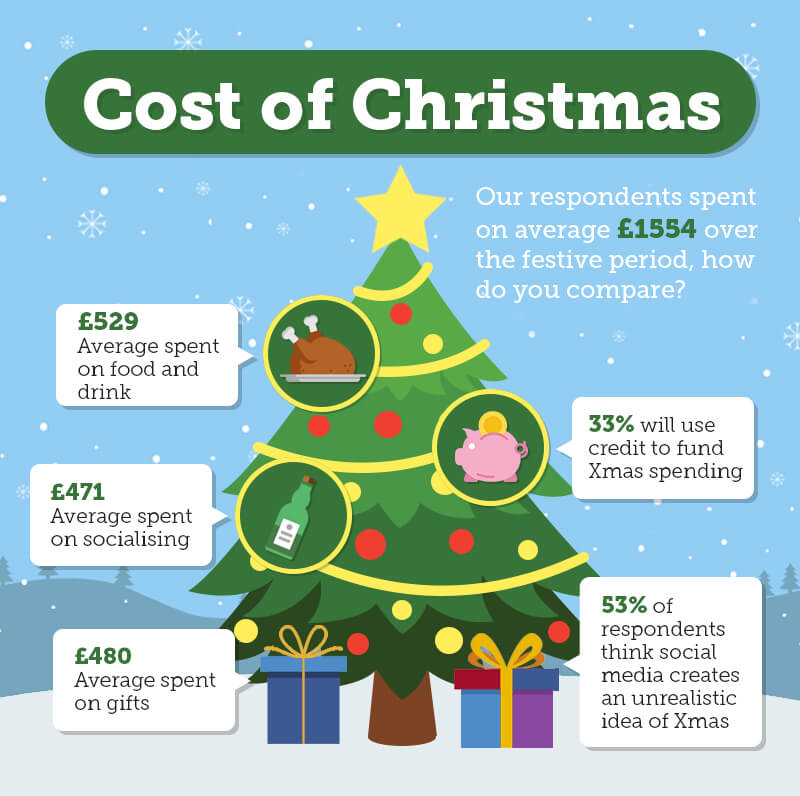
How Much Does Christmas Cost?

by Magical Penny on December 21, 2017

Christmas can be an eye wateringly expensive time of year, and you may need to take a swig of your chosen Christmas tipple before you read the results of this survey.

The team at 247Moneybox decided to take a look at the true cost of Christmas in the UK by conducting a survey and creating an infographic with the results.

The infographic reveals that on average UK families that took part in the survey spent a not insignificant £1554 over the Xmas period.

The infographic also showed that one third of people surveyed had to use credit to cover their spending.

View the full infographic below.

Infographic Source

Have you been saving all year for Christmas? 

Do you have any penny-saving tips for other readers? Leave a comment below.

{ 0 comments }

If you are getting started in the world of investing, it may all seem confusing, but if you take the time to learn the basics, you can build your own investment portfolio easily.

Your first portfolio doesn’t have to perfect, you can always tweak it later, but getting started is important and once you’ve got a portfolio up and running, it can incredibly empowering – it certainly was for me when I first built a portfolio almost exactly 10 years ago. Better still, technology has come on leaps and bounds since then, and it’s now easier than ever using modern online investment platforms.

ImportantStep 0 – Are You Ready?

Make sure you have some savings tucked away before you start investing. The aim for your investments is for the value of them to go up but this is not guaranteed and you don’t want to feel forced to sell an investment that has fallen in value because you need your money back for whatever life has thrown at you.

A good rule of thumb is not to invest any money that you think you might need for at least the next 5 years.

But if you have worked out you can put money away for the future – for retirement, a dream house, or your children’s education – then I’m excited to walk you through the steps to building your investment portfolio to grow your pennies and save them from the threat of inflation– helping people start investing was the original reason why I set up this site, Magical Penny.

Step 1 – Choose an Account

A Stocks and Shares ISA is often the best place to start, growth is tax-free and you can save up to £20,000 in a standard ISA each year. If you’ve used your annual allowance, a general investment account is fine for now, although you will need to pay capital gains tax if you take money out again that has grown more than the allowance each year (£11,300 for 2017/18 tax year). risk

There are many providers of ISAs and investment accounts, but it’s important to pick one that will allow you to put good quality and inexpensively managed-investments in them, which is why Vanguard, one of the biggest investment fund managers in the world, is a popular choice.

Step 2 – Working out your asset mix

Investing in equities, the name for stocks and shares in companies, is a good place to start because unlike other investments like direct ownership of property, you can invest in much smaller amounts, it’s much cheaper, and the investments are very liquid which means you can buy and sell them quickly, should you need or want to.

For novice investors, investing in individual stocks and shares might be the only thing that comes to mind –we’ve all heard the stories of someone’s uncle who invested in a stock and it either made them rich, or they lost everything!

But investing in individual company shares is only one kind of investing, and is one of the most risky too.

world for saleDiversifying, putting your eggs in more than one basket, is therefore a much less risky way of investing. For easy diversification investors use investment funds.

There are many different types of investment fund– some buy fractions of every company on a certain list, or ‘index’, like the FTSE 100, the top 100 companies in the UK, whereas other investment funds have managers who look for companies in a specific industry or region. Other funds move beyond equities and invest in commercial property or government bonds which pay interest known as a ‘coupon’.

By owning some equity funds and some bond funds, an investment portfolio can be designed to be more or less volatile. Investors can choose to accept a bumpier ride of up and down prices with the hope that the investments grow faster, or they may be more comfortable with a little more certainty in the fluctuating values, but might have to accept a smaller investment return.

Working out the right mix is a personal decision but a higher bond allocation might be more appropriate for those with less time before the investments are needed to pay for something – a child’s education or a retirement age goal for example, because in those instances investors cannot afford the time to wait for any equity investments to recover after a stock market decline.

Step 3 – Selecting the investments

It’s time to pick the funds.

A diversified portfolio typically includes a bit of everything, with UK equities the most popular choice for UK investors (to avoid currency risk). As the funds themselves are diversified, for most investors it is not worth investing in more than a 10 funds (my own portfolio is a mix of global equities, commercial property and natural resources for example), but there are some investors who achieve their goals with just two funds, an equity fund and a bond fund.

Click here for an Asset Allocation Master class from Vanguard

As with any shopping exercise, looking at the prices, or rather the expenses that the funds charge is important. Anything over 1% a year is expensive, but some funds, such as those offered by Vanguard, charge only 0.22% or even less. Not only is Vanguard the cheapest fund provider BuyingI’ve found, but they also have ‘Life Strategy’ funds that offer 5 different combinations of equities and bonds, depending on your goals and time horizon. This makes investing so easy and the ongoing charge is only 0.22% a year, leaving more of your own money to grow.

Step 4 – Press the purchase button – the easiest and hardest step

If you’ve chosen to open an investment account online you can invest at the click of a button! But it can be scary parting with your hard earned money and sending it into the markets. Investment returns are not guaranteed and you may see the value fall over time. But over the long term investments tend to go up and protect your savings from the ever-present threat of inflation.

It can be entertaining to watch the values fluctuate each day by logging onto your investment account, especially when the numbers are going up,  but if seeing the numbers change makes you nervous then it can be best to try to forget about the value and only check your investments once a year.

Setting up a Standing Order from your bank account into your investment accounts to consistently invest over time is also powerful as it removes the emotion out of the investing process. Investing automatically on a consistant basis means you are buying at lots of different prices. This allows you to ‘pound cost average’ which helps further to reduce the risk of investing at any one particular time (if prices are particularly high for example).

To get started investing with Vanguard, read their ‘How to Build a Portfolio’ article series and take the first step in growing your savings  through investing.

**This post is in collaboration with Vanguard**

{ 0 comments }

drivingRecent statistics show that motorists are beginning to make the switch from petrol and diesel to Alternatively Fuelled Vehicles, but this has only recently started to occur and electric vehicles have been somewhat of a rarity on roads up until this point. The Government’s clean air plans certainly play a role in this, but it is also because electric vehicles are just beginning to overcome a number of hurdles that have stopped people from switching before.

Infrastructure

According to OVO, the main reason why people have been hesitant to make the switch is the lack of charging points. Whilst it is true that previously this has been an issue, the survey from OVO revealed that people underestimated just how many charging points there are. On average, it was thought that there were only 2,812 charging points but there are actually well over 13,000. Additionally, the number is rapidly rising each month and it is thought that they will outnumber petrol stations by 2020.

Battery Life

Battery life has been another issue that manufacturers have overcome. The technology has come on leaps and bounds in the last few years, and now these vehicles can travel much further on a single charge. The range is around 90 miles for a smaller battery, and all the way up to 335 on a large one. Additionally, the increasing number of charging points makes this less of an issue.

keysCost

Cost is the final issue that has stood in the way. These vehicles can be very expensive to buy, but there are many new models on the market which are more affordable. The most affordable is around £14,000, but it is worth keeping in mind that motorists can benefit from a grant of up to £4,000 for making the switch.

Value

Electric automobiles will prove to be good value for money in the near future too. You will pay around quarter of the price per mile, which will see motorists make huge savings on running costs. In addition to this, motorists will benefit from having no road tax and no congestion charges if you drive in the capital. This means you can quickly recoup the costs spent on the vehicle and save a vast amount over the years.

Electric vehicles have had to overcome a number of hurdles in recent years, but it seems that they are now beginning to do so and motorists are starting to make the switch. This electric car revolution will help motorists to save money, but it will also help to save the planet.

{ 0 comments }

What Influences the Value of the U.S. Dollar?

by Magical Penny on December 11, 2017

Saving moneyTo take advantage of upward and downward movements on currencies, it’s crucial to use foreign exchange brokers such as the well-known online platform, UFX. It enables you to trade on major pairs such as the EUR/USD, minor pairs like the GBP/CAD, and ‘exotics’ such as the USD/SEK, whose availability depends on current levels of liquidity.

The U.S. Dollar (USD) is the most used and traded currency in the world, as confirmed in the last “Triennial Central Bank Survey” from the Bank of Settlement (BIS): “The US Dollar remained the world’s dominant vehicle currency. It was on one side of 88% of all trades in April 2016, up slightly from 87% in April 2013”.

To make sure you are fully prepared to trade the USD, you first need to know what factors influence its value.

#1 Fed Decisions

 Central Banks are the most influential actors in the FOREX market, as they are the ones determining the cost and availability of money in national economies. The US Federal Reserve, known as the Fed, is the U.S. Central Bank, which decides on monetary policy that is applied across the country.

When the Fed tightens its monetary policy by increasing interest rates, reducing quantitative easing programs, etc., it means that the value of the U.S. Dollar is likely to increase. This means that more foreign investors will be attracted to the greenback, as it will provide higher interest rates than those offered in most other developed countries.

 sell buy small#2 Important Economic Statistics

 Key economic and financial statistics also affect the USD in relation to future Fed decisions. The Fed has a dual mandate of price stability (a PCE index of about 2%) and full employment, meaning a median unemployment rate of about 4.6%, both of which are crucial factors in the country’s growth.

Consequently, figures which demonstrate how close the Fed is to achieving its objectives are seen as vital for investors, as they provide clues about its future decisions. Among the most important to follow are the GDP, the ICP and PCE, the monthly employment report, and the JOLTS.

 #3 Market Sentiment

 Finally, market sentiment and psychology play huge roles in how a currency evolves. If a majority of traders believe that the U.S. President or the Fed Chair is struggling to deliver on their objectives, this often affects growth outlook, making traders more likely to sell the USD and buy other currencies with more potential to generate profit.

When trading the USD, keep these 3 points in mind, stay on top of news announcements, and choose a broker that gives you great market opportunities to take advantage of in order to trade successfully.

Note: Trading requires a very different skill-set to simply investing over the long term, and is much more risky. If you’re interested in learning about investing more generally, you can read other investing articles here on the site)

{ 0 comments }

investing for the futureAre you thinking of investing some money in a small business?

It can be a good way to get started as an investor and eventually see your money multiply but it won’t be plain sailing. It could even turn out to be a complete disaster for your business if you make the wrong moves; that’s what you should be looking to avoid. Before you decide whether or not to take up an investment opportunity, there are a few things you should be considering and looking into.

Find Out Whether the Market for the Idea Truly Exists

There needs to be a market for the products or services that a business is offering to the world. This is the most fundamental aspect of assessing a business so make sure you consider it carefully. Without a clearly defined market and target demographic, the business clearly won’t go far at all. Don’t just listen to what the company itself is saying about this; take it upon yourself to asses the market too.

Consider the People

When all’s said and done, it’s the people who make a company what it is so you shouldn’t invest in a company if you don’t believe in the people who are currently in charge of running it. Meet them and speak to them about what their aims are for the business and assess how competent they are at what they’re doing. The human touch always matters so don’t underestimate it.

Look at Their Production and Distribution Processes

You can tell a lot about a company by how it produces and distributes the products it sells. You want to see strong and efficient processes already in place because these kinds of things are the foundations on which successful businesses are built. Look for lean manufacturing processes and up to date distribution methods. The business needs to be able to cope with the demands of the modern world.

What Are the Requirements?

What will you be expected to contribute when you invest? Or more accurately, what will the company need in order to succeed? There is no sense in getting involved with a company if it needs the kind of vast sums of money and expertise that you aren’t able to offer. It would be best to leave that kind of investment to someone who is better suited to it. Know what your limits are and stay within them.

Stay Away From Novelties

If something seems like it’s nothing more than a nice novelty that could be popular now but maybe not in six months time, you should think twice about investing. Novelty products are inherently short-term and your investment strategy should always be long-term. It’s easy to get caught up in the popularity of a certain idea or type of product but always ask yourself whether it has a future before investing.

Every business is different and whether or not you should invest in a given business will depend upon many different things. You can’t expect your investments to turn out well if you don’t assess them properly.

{ 0 comments }