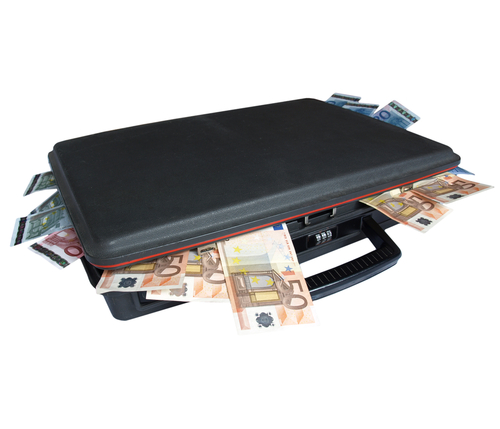
Banking for Expats in the UAE

by Magical Penny on October 12, 2012


The shimmering steel beacon of Dubai often beckons to business travellers.

The region has a myriad of financial possibilities for entrepreneurial Britons, especially in the capital of Abu Dhabi, arguably the political and economic heart of the United Arab Emirates. Certainly I know a few friends who have moved to Dubai to make their magical pennies grow!

This city is also a big draw-card for Britons branching out with overseas business operations.

However, there are important banking differences between Britain and the UAE. And all business travellers should know about them, before embarking on the adventure of relocation.

Before Getting On the Plane

It’s a good idea to bank with a British institution that has a branch presence at the chosen destination. Plenty of banks from home do have offices in central Abu Dhabi or Dubai: this will be a godsend when trying to get urgent transactions attended to, in the early days.
It’s also important to compare several UAE banks for the best deals in regards to fees, a low interest rate and benefits like an overdraft. While HSBC current accounts are a safe bet, the fees and quality of service will vary quite markedly between different UAE bank accounts, so it pays to get the best deal before boarding the plane.

Getting A UAE Current Account

After touching down, one of the initial shocks to the senses will be the new currency. The Dirham in the UAE is abbreviated to AED or Dhs. Denominations include: one thousand, five hundred, two hundred, one hundred, fifty, twenty, ten and five notes. Coins in the currency come in a one dirham, fifty and a quarter. To get the most accurate and up to date exchange rate, download a free currency converter app for iPhone and Android. This will give up to the minute exchange rates. In the early days, this can help with the teething problems of adjusting to the new currency and avoid overzealous spending.
Certain international banks such as HSBC and many others offer offshore accounts. This can be an effective and streamlined way for expats to manage their money while in the UAE.
Opening a UAE current account is relatively simple, but you will have to bear in mind that the account will remain in a half-active state until a valid visa is sighted and verified by the institution. During this half-active stage most functions like making cash or cheque deposits are not permitted. However, it is permitted to make credit card transactions in the meantime, before the visa is sorted out: just be wary of getting too slap-happy with the plastic, as British banks will charge international fees for doing so.

Old Fashioned Banking

The level of service for online facilities for UAE banks vary wildly. Generally, the preferred method to make transactions is in person. Also remember that banks follow different times from the homeland: UAE opening times go from 8 am to 2 pm weekdays apart from Friday, when branches are closed. However, some of the larger and central banks will be open for longer hours, so it pays to get online to check. All in all, there are plenty of well-known benefits for expats wanting to move to the UAE, such as no tax and high income expectancy. But before starting your new life under Dubai’s sun you will have to be aware of the stark differences in the business environment: as you get to know more about these, a plethora of opportunities will open up in front of you.

{ 0 comments }

Paying off debt or saving?

by Magical Penny on October 4, 2012

Focus is important when it comes to growing your pennies. But how do you stay focused on savings goals that typically require you to stay the course for longer than a year, like a newer or a deposit for a house?

Debt + Other financial goals = Wrong?

Firstly I’d like to address the controversy: For some, having any other financial goal when you still have debt is the foolish thing to do. Debt is costly, risky and if you’re struggling to keep focused when paying off debt there’s no room in a budget for other financial goals.


Some personal finance personalities say that in order to make progress with your debt you need to focus on it completely –focus intensely on paying off every last penny as quickly as possible.


But, is this the right strategy?

Certainly from a purely mathematical perspective most debts are costly and it’s unlikely that any money saved is earning more interest than the interest paid on a debt. By saving the money instead of paying off debt the choice comes at a cost. However, you should consider beginning to save for medium term goals like a house deposit even if you do have debt. Whilst you definitely should be focused on paying off your debt, allocating some of your pennies each month to medium term goals has many benefits in helping you stay focused on growing your pennies.

Staying Focused on Medium-term Goals


Extra Emergency Fund

Before you begin paying off debt it is very wise to build up a small emergency fund to stop you having to resort to more debt in the event of a financial problem. But if you’re saving for medium term goals. those savings can act as an extra fund to help bolster your emergency pot of pennies, giving you more security (until you spend those medium-term savings of course).

For me my house deposit savings are acting as an emergency fund because I do not plan to buy a house for another few years. I’m still focused on the fund though:  I found that it was easy to focus on saving because I knew that every penny saved has a double purpose: the potential to help me in an emergence, and as the first steps towards my medium term goal of owning a house.

Medium-Term  Becomes TODAY Quicker Than You Might Think

Sometimes ‘medium-term goals’ quickly become today’s needs: your car might break down beyond repair or an amazing opportunity might come up unexpectedly.  I hate debt as much as the next personal finance blogger but by making a start on your medium term goals today rather than waiting to pay off all debt you will have flexibility: for example you could replace your car take advantage of an opportunity that you might not have otherwise have been able to if you had sent all your extra pennies to tackle your debt. That said, remember to find the right balance and don’t leave your debts completely unpaid for fear of losing your flexibility because there are benefits to being debt free too!

Psychological Boost

Saving for medium term goals has an immediate psychological value: it makes your wishes and dream more real. You may not have a house, but you can work towards having the money for 1% of it, then 2%; You may not be on your round-the-world adventure but you’ll soon have 5% of what you need sitting in a bank account. A few fledgling medium-term savings accounts are amazing at helping you maintain your focus because they give you direction and vision. They can even help you keep focused on paying off your debt because the medium-term saving accounts have begun to make your future debt-free life seem more real. And you know that the sooner you pay off your debt, the sooner you can grow your medium-term savings accounts further!

Ultimately saving for medium term goals is the easiest way to stay focused on growing your pennies:  Thinking along this time horizon can help you remain focused on paying off the debt that is getting in the way of your dreams. It can also make the idea of growing your pennies seem more worthwhile because the future that you are saving for is so soon: medium term savings are only 1-5 years away. Yes, it is true that it would be cheaper to put every penny towards your debt and then start from scratch on medium term goals, but this underestimates the psychology of money management.

Am I wrong? Should you pay off all of your debts before saving for anything else?

Thankfully I’ve never had debt apart from student loans so I’ve not felt the burden of debt yet I have felt what it’s like to begin saving for medium term things and know how great it feels to gain traction on my goals.

What are saving for in the next 1 to 5 years and what helps you stay focused? Let me know in the comments!

{ 9 comments }

A Fresh Start | Do you have a plan for your money?

by Magical Penny on October 3, 2012

It’s the start of the month and it’s likely your bank account is looking better now than it’s going to look all month. But do you have a plan for your money?

The start of the month can feel good because it’s when a lot of people get paid their monthly salary. It’s a fresh month and a fresh start. You might have intentions to make this month better than last month in terms of making your money last, or you might even be starting to think about Christmas – it will be here before we know it!

But how can you make your good financial intentions future-proof for the months and years ahead?

You should ask yourself these two questions:

1) Have you asked your bank to set up automatic transfers from your day-to-day account to your savings?

Here’s the why:

You might be feeling confident about  your income or the money in your account today, but life can change fast and our state of mind can change even quicker. Good intentions are often short-lived. Why not take the will-power out of the equation and set up some automated electronic transfers?

Here’s how to do it:

If you have online banking it’s as easy as setting up a ‘standing order’ (if you’re in the UK) from your current account to your savings account. Setting up an automated transfer today will help you emotionally disconnect from the process of trying to save money so you’ll be stashing it away for your long-term future.

If you don’t have online banking then it is well worth a quick visit to your bank to set it up – get it set up for shortly after you’ve been paid so you are making a commitment to save every month, not just when you have money left over (as if that ever happens!).

What if you don’t have enough money to set up automatic transfers?

If you’ve living paycheque to paycheque, you might not feel you can afford to save anything each month because there’s hardly any money at the START of the month! In this case, it’s time for you get intense to give yourself a much-needed ‘buffer’ of money in your account.

You can do this by working extra hours, cutting back on your spending further, or consider selling any valuable items you might have lying around. With gold prices so high right now, it could be worth selling any old gold jewelery or items you have in your house to give you that much needed boost in funds. You can get money for gold with 62 Days, so in two months time your money plan could be looking much better funded!


The second question everyone should ask themselves is:


2) Have you thought consciously about your spending and created a ‘spending plan’ ?

Here’s the why:

It’s easy to tell yourself that you want to spend less on something you enjoy, but if you don’t write it down and put some thought into what you are spending money on, then you might end up spending more than you think. Having a ‘spending plan’ might seem restrictive but once you’ve tried it you’ll find it actually is immensely freeing –you can spend money without guilt as you know you’ve got everything covered (especially if you’re saving consistently and automatically at the start of each month).

Here’s how to do it:

Think ahead into October and make a list of everything you need or would like to spend money on and try to stick to it.  You definitely won’t stick to it 100% but doing so will raise your consciousness about your spending. And don’t try to make a ‘perfect’ list – make it realistic.  Take the time to *think* about what you’d like to spend your pennies on and you are likely to make some wiser choices this month.

Once you’ve got your spending plan you might even find yourself being able to afford more things than ever before!

Don’t let your spending just ‘happen’ to you.  Rather, take the time to consciously plan how you can construct your best life with the funds you have available.

The start of the month, right after pay-day can feel great but make sure you lay the groundwork to prosper throughout the year!

It’s never as good as today to make that fresh start with your money! Good luck! 🙂

{ 1 comment }

I checked my online investment accounts the other month and I got a bit of a shock. My investments were ‘worth’ £1000 less than they were worth just 30 days previous.



But after the intial shock of seeing a smaller figure,  I closed my browser window and got on with my day.

Nothing to See Here People

When you think about the stock market, what do you think?

  • Computer screens flashing with green and red numbers?
  • A complicated system of trades and options, dividends and capital gains?
  • Just pure indistinguishable jumble?
For many, investing is perceived as gambling, kind of like playing Fidelity.  Sure, both can be a bit of a thrill, but investing is very different.

Investing can seem crazy at times, but when it comes down to it, it can also be pretty simple…

Investing involves buying pieces of companies with the hope that those pieces grow in value over time

The value of a company is always fluctuating depending on the hopes and fears of  investors looking to buy or sell the shares of a company.

You only lose or gain money when you sell

This is a really important fact to keep in mind, particularly if you are young and don’t need to sell your investments. When investing for the long term you are not looking to make a quick buck -you are looking to buy small pieces of companies, that over time will grow in value. If you see your investments lose value, assuming you have invested in a broad ‘index’ of companies (more on how to do this below) and don’t need to cash in your investments, then it should not bother you at all -because over time the average market return is positive.

The Gradual Accumulation of Value

Over time, the stock market gains value.  Certainly different time-frames produce different periods of return, and there are no guarantees in anything, but markets do tend to go up over long periods of time. Every day people wake up, head to work, and create ‘value’. If not enough value is being produced companies go out of business, certainly, but the average performance of most businesses that you can buy a proportion of is positive. Investing in these businesses through the stock market means you get to enjoy a share of the value created by the business.


How To Invest Profitably and Care-Free

One of the easiest ways to grow your savings over the long term is by buying ‘index’ funds – buying such an investment allows you to buy a tiny piece of every company in a particular ‘index’ – for example, buying a FTSE 100 index fund allows you to own a small piece of the top biggest companies in the UK.

  1. Always invest with money you don’t need and won’t need in the event of an emergency. You don’t ever want to be forced to sell your investments due to circumstance as you can’t guarantee the value of your investments at the time you will need them. To make money in the stock market you need to control when you sell, not be controlled by circumstance.
  2. Put your investments in a Stocks and Shares ISA (or a Roth IRA if you’re in America). This protects your investment gains from tax. I use Fidelity because I think their ‘fund supermarket’ is really clear and it’s easy to set up (and I’m not getting paid to say it I just love them!)
  3. There are lots of unit trusts to fill your investment accounts with, but ‘index funds’ or ‘tracker funds’ are arguably the best, because of their low fees that match the market (rather than mutual funds with larger fees that historically lag the market on average). In terms of fees 1.5% is typical for funds, but most trackers should be less than 0.75%, although it depends if you want to invest in domestic indexes or internationally…hint: both is best!
  4. Invest consistently – don’t let emotions or market – panic influence when you invest. The easiest way is with a regular monthly contribution when you get paid…automatic contribution is automatic wealth! Most companies allow you to invest with small amounts – Fidelity for example allows you to invest with just £20 a month.
  5. Enjoy the ride. Some months your investments will be up, some months they will be down, but over time they will grow and grow and secure your financial future.


Get started today and harness the power of compounding returns and feel happy inside! Let me know how you’re getting on in the comments.


Want to know more about how YOU can start investing? I’m working on a special course to show you how, via video tutorial.


{ 6 comments }

Are you Life Aware? | Life Insurance In a Nutshell

by Magical Penny on August 22, 2012

What would happen if you died after reading this post?

Quick! Watch the video before it’s too late.

Are you LifeAware? from Magical Penny on Vimeo.

Pretty serious stuff, right?

The idea of untimely death is the the trigger the latest financial movement, #LifeAware, over at another personal finance blog: Good Financial Cents.

As a personal finance blog, it’s a passion to make sure people are making financial empowered choices, including making sure you have life insurance if you need it.

Do I need life insurance?

What would happen if you died and couldn’t provide for your family? For many, life insurance is all about solving that potentially major problem.

But not everyone needs life insurance…. for example, I don’t have any because:

  • No one is relying on my income except me
  • I have no debt (including not having a mortgage) so if I were to die my estate would not owe anything to anyone
  • Well..I have student loan debt, but that doesn’t count as student loan debt in England and Wales is excused upon death (may be different in other countries)
  • I have enough savings to pay for my funeral and any other associated costs
  • I am not earning so much money that I’ve run out of tax-advantaged places to put it…for example my ISAs and pensions

If you are the same as me in all of these points, then you may not need life insurance either. If you die tomorrow it would be a terrible tragedy but no-one is going to go hungry. However, if you are planning on taking out a mortgage in the near future or have a family relying on you as a breadwinner then life insurance should definitely be on your financial to-do list.


Ask yourself: What would happen if YOU died today?

Would your family be OK financially if you didn’t make it home tonight?

It’s fun thinking about all the amazing things we want to do in life. But as much as we avoid the subject, accidents happen every day and can quickly end our plans.

For our cars we must have car insurance to cover bumps and crashes; for our houses buildings insurance helps address the risk that our homes may go up in smoke, or collapse to the ground. But what about our life itself?

No one likes to think about their own death. Our eventual death is hopefully a long time in the future, but for some unlucky people, life can be cut short.

Life insurance is shunned by some people because they view it as expensive or unnecessary. But for the majority of us, it doesn’t have to be expensive and it’s likely to be one of the most financially responsible things you do.

What Kind of Life Insurance do you need?

The cheapest and best type of life insurance is called ‘term insurance’ -where you pay a fixed amount every month for a fixed ‘term’ -typically 20 or 30 years.  The point of life insurance is to help support your family should you die during the term period. Having it in place means you won’t leave your family in financial trouble if you’re no longer around. Whilst it’s not compulsory for everyone, you must have life insurance if you have a mortgage as the bank will require you to pay off the amount you owe them, regardless of whether you’re around to pay the bills.


How much does life insurance cost?

The monthly cost depends on the size of the policy –the amount of money your estate would receive should you die during the term period-  but most polices are not more than a few pounds a month.  Typically you should take out enough to cover any mortgage + several years of your salary. Some financial advisers recommend 10 years worth but you should decide yourself how much cover you want to take out.  As for the length of the term, many people choose a time frame that takes them to an age in their life when they will not need coverage -when they think their children will have moved out or when they will have paid off their mortgage.

You might not know the exact amount of coverage you need just now but it’s worth getting something in place. Accidents can happen at any time so  it’s  worth looking into term insurance to make sure money is not a worry for the people you leave behind should the worst happen. The best part is once it’s in place, you can go back to thinking about more fun things, safe in the knowledge you’ve got things covered.


Hopefully this post has provided some food for thought so you can plan things to make sure your family are in as good a position as they can be!


Be sure to check out #LIFEAWARE at Good Financial Cents for more great information on life insurance!

{ 0 comments }

Coming to terms with emotional and financial separation

by Magical Penny on August 22, 2012

Divorce can be a trying time, even for partners that split amicably.

There are several major details to be sorted in the process of dividing financial assets and deciding where children should go, so it is important to keep an open mind and a willing attitude with your spouse during this time.  The more you can work together, the easier, faster, and less expensive your divorce will be. To get started, here are some discussions that you may want to have with your former partner.

Paying for the divorce

On average, a divorce in the UK will cost anywhere from £100 to £400, depending on how much help that you get from family law solicitors. However, if your divorce is contested or involves particularly complicated interactions between you and your spouse and your solicitors, the potential for a more expensive bill rises. Of course, money is only one factor in coming to an agreement that you can both live with, but it is one of the primary reasons why it is always better to maintain a good relationship with your former spouse.

Who will keep the kids?

If you have children together, this is the most important piece of your divorce settlement. It can take a heavy emotional toll on both parents as well as the children, which is why it is best to try to come up with a custody agreement either between yourselves or through a mediator. Financial matters must also be considered. Does the ex-spouse who assumes primary guardianship of the children receive financial support from the other? If so, how much support? It may be necessary to leave this decision to an impartial court official.

Making a new home for yourself

In many cases, one spouse chooses to leave the home. Or, if the family home is too expensive for one person to maintain, both may consider leaving and downgrading to smaller home. Among these costs, you will have to factor in first and last month’s rent, or, if you are buying a home, a down payment, closing costs, and other real estate fees. It is important to make the move go as smoothly as possible, so it may be a good idea to stay with a family member or friend while you save money for this transition and search for a place where you (and possibly your children) can be comfortable.

 Dividing assets

 Next to deciding who gets guardianship of the children, this divorce aspect has the most potential to cause (even more) discord between spouses. The easiest way to do it is for both parties to come together to provide a written account of all of their financial assets. This includes those that they possess jointly as well as those that are individual. Then, each person can make a copy and turn it in to his or her solicitor to use in divorce proceedings. Many people may try to get away with not listing all of their financial assets for fear of being left with nothing after divorce; this is never a good idea. If you are caught hiding financial holdings intentionally, you may have to pay a hefty price ordered by the court.

Just because you no longer wish to be married to each other doesn’t mean that you can’t be great partners in working through your divorce. Leave it on good terms, and the emotional and financial impact will be far less for both of you.

{ 0 comments }

Saving for Retirement Reimagined Through the Lens of Beer

by Magical Penny on August 20, 2012

Compound interest blows my mind.

A little bit of money with a lot of time can work wonders for helping you reach your savings goals.

But the problem for many is that it’s really hard to imagine the future and make sense of the impact that time can have on the size of your retirement accounts.

So when I came across this info-graphic about beer and retirement planning, I had to smile. It really puts compound interest in perspective!


The RothIRA.com Awesome Tower of Beer

From: The RothIRA.com Awesome Tower of Beer


Note: The Roth IRA is an tax-advantage account only available in the US.

If you’re in the UK, like me, you can save in a Stocks and Shares ISA instead, and take advantage of the stock market’s higher returns over the long term.

If you don’t know where to start when it comes to opening a Stocks and Shares ISA you’re in luck, as I’m currently working on a video series that will show you exactly what you look out for and how to open one, step by step!


You’ll Need More Than Beer

While its fun to think off all the beer you could buy with a tiny daily saving plan, there will always be lots of things you’ll need to pay for when you are not working so get to it, one pound or dollar at a time.

{ 1 comment }

The 95% Mortgage is back!

by Magical Penny on August 15, 2012

Nowadays many people struggle to save up enough money to invest into the UK’s property market.

This has caused problems for many first time buyers looking to invest as the normal loan-to-value mortgages can range between 70-80%. This has resulted in buyers having to save up colossal amounts of 20-30% for just the deposit alone which on a £160,000 property could range from £32,000 to £48,000.


Five years ago there were more than 800 different 95% Mortgages available in the UK for first time buyers which meant that buyers only had to save up for a 5-10% deposit. This meant more people were buying because it was more affordable to do so and rentals increased due to this.

As the financial crunch worsened the 95% Mortgage disappeared off the face of the earth due to lenders not being able to risk giving away mortgages with such a low deposit. This resulted in an increase in rentals and a decrease in property sales for first time buyers.

In March 2012 the British government decided that it was important to get more first time buyers investing into the property market so introduced a scheme called the NewBuy Scheme.

The NewBuy Scheme aims to team up with builders in creating new properties for the 95% mortgages. The scheme aims to help first time buyers find a place within the troubling housing market.
Since then it is expected that there has been success in over 600 reservations and an increase in employment within the building and construction industry. The NewBuy scheme is expected to create a further 50,000 jobs within the building and construction industry over the coming years.

The 95% Mortgage will help tens of thousands of people reach the goal of owning their own home and hopefully 95% mortgages will continue to grow.

5 Reasons why a 95% mortgage is a good idea!

  1. Applying to be part of the NewBuy scheme is a life changing choice that moves you away from rental and allows you to own your first property using a 95% mortgage.
  2. The 95% mortgage gives you the opportunity to obtain a mortgage with a low deposit.
  3. 95% Mortgage will allow you to purchase a new build up to the value of £500,000 still with a 5% deposit.
  4. There are loads of 95% Mortgage Deals out there and you can speak to expert mortgage advisors that can get you the very best deals
  5. 95% Mortgages are aimed at new build properties so you can get your first brand new property that you’ve always dreamed of at an affordable price.


Remember:

  1. When applying for a 95% Mortgage make sure that you apply with an experienced specialist company that knows the market well.
  2. Make sure that you understand the NewBuy Scheme and how it works
  3. Make sure that you’re eligible to apply for the NewBuy Scheme.
  4. Be sure you are buying for the right reasons. Buying a house is not always the best thing to do, even if it feels like something you should be doing to make ‘progress’.

{ 0 comments }

Can Taking Out A Loan Be A Good Idea?

by Magical Penny on July 6, 2012

Should You Take Out a Loan?

Ask any number of personal finance writers about taking out a loan and the most common answer is likely to be “No, don’t do it”. There are plenty of stories about people spending more than their income and resorting to loans to plug the gap. The stories hardly ever end well. The conclusion many come to is to avoid loans wherever possible. However, using loans can be a great way to achieve your goals -as long as you understand the consequences and weight up the benefits and costs.

Immediate cash for a reasonable price

Loans allow you to buy things with money you don’t have. For a price.  Some sites, like jaguarpaydayloans.co.uk offer services for short-term lending, whilst others allow you to get a loan with a longer period of time to pay it back. The cost of loans leads some people to avoid them but that doesn’t automatically mean that loans are not worth considering. Whilst you could save money by simply delaying your purchase until you have saved enough income from other sources, you may deem the cost of the loan to be worth it as taking out the loan allows you to benefit from a purchase earlier. For example, saving up for a car will not help you in the short term if you need personal transport every day. Essentially a loan allows you to buy “time” -the time it would have taken you to save up for what you want.

Emergencies

Life doesn’t always go smoothly and sometimes people resort to loans to recover from emergencies that happen in people’s lives. It is wise to save for such emergencies so you do not have to resort to loans, because loans always have a cost. However, if the emergency demands it, a loan can be tremendously helpful and valuable, by helping move things along in the way that only money can. Ultimately people are more important than money so if the situation requires it- like buying a plane ticket to spend time with a dying family member- a loan can be worth its costs.

Education

One of the most popular reasons to take out a loan is to cover the cost of an education. Using a loan for this purpose is a clear example of how to use loans to your advantage. For many of us it is impossible to fund an education early in life as we have not had a chance to earn enough to pay for it. Loans therefore give students the opportunity to develop their education which will then allow them, if things go to plan,  to earn enough later to pay back the loan and continue growing their earnings into the future.

In summary, whilst living beyond your means is definitely is not helpful to the pursuit of growing your pennies, loans can have a place in successful financial plans. Indeed, they do have a cost attached but if you take the time to assess the costs and the benefit for your situation and make an informed decision, then personal loans can be a useful tool for helping you achieve your goals.

Have you ever taken out a loan that you found helpful?

{ 1 comment }

Consumer Savings Increase Thanks to PPI Refunds

by Magical Penny on June 29, 2012

A guest post by Simon Thompson…could you be entitled to a refund?

Consumer pockets have gained a little extra weight during the first quarter of 2012, which many economists believe has been helped by retrained consumer spending and assisted by large compensation payouts due to the payment protection insurance (PPI) scandal.

That is according to the banking group ING Direct, which released a consumer saving report in May. The findings revealed an unexpected 18 per cent in the first three months of the year, with median savings balances rising by £284 to stand at £1,858. This is also the first consecutive quarterly rise in savings since 2009 and could be the beginning of the three-year trend of falling saving levels.

PPI reclaims (done by companies like ppiclaims.uk.com ) have certainly helped the savings of ordinary Britons to rise significantly. According to the report an estimated two million people remain in line for a PPI payout, with each estimated at an average of £2,600 this year totalling £5.6 billion in refunds. One third of these refunds are likely to go straight into saving accounts, the equivalent of £1.9 billion by the end of the year, with as much as £480 million already channelled into savings in the first quarter of the year.

The first bit of positive financial news I have heard in recent months is no doubt causing many people who know they are still entitled to compensation want to know how they might proceed in claiming PPI back as soon as possible.

Legitimate claims management companies still clearly seem to be one of the most hassle free routes in order to receive the maximum possible payout from the financial institutions which caused this financial mess.
However I must stress it is important you chose a reputable claims specialist. Many companies will offer an excellent and reliable service, however due to their popularity with so many customers there are a few companies whose practices are substandard.

The faster customers make a claim, the quicker the money is back into their arms to either save or spend. I am sure that as a result of the surge in PPI payouts over 2012, retailers and possibly the economy overall will benefit from the news with an estimated £1.5billion of PPI cash to be spend on consumer goods over the year.

Simon Thompson is the Managing Director of Precision Claims, who are specialists in helping customers to make claims for mis-sold PPI against banks. Click here to see what is defined as mis-selling.

{ 0 comments }