As a property investor, you will need to communicate with your tenants. Unfortunately, many landlords are not great at this. But that relationship between tenants and their landlords is very important. When the relationship is good, problems and disagreements can be averted. So, here are some of the steps you will need to take in order to build that relationship in the right kind of way.

mortgageStart on the Right Foot

First of all, you need to start things in the right way. If you don’t get off to a positive start, this could set the pattern for the future relationship between the two of you. So, think about what you can do to show your tenants that you care from the start. Some landlords help with the moving process. If you work with moving companies, you might be able to get them a discount or cover the costs for them. This can really show that you want to build a relationship because it’s such a positive gesture to make. That’s just one example. But what’s most important is your ability to communicate well with them.

Keep Your Distance

Once the tenant has moved into your property, you need to keep your distance. The truth is, no one likes an overbearing or ever-present landlord. If that’s how you come across to your tenants, they won’t like you at all. So, stay away from them and the property unless you have a specific reason for visiting the property. When that’s the case, always let the tenant know in advance that you need to see them. Turning up unannounced is not going to be seen positively by your tenant, so don’t do it. Keeping your distance is best for everyone.

Address Any Problems Rapidly

When your tenant contacts you with a particular problem, you have to deal with it as quickly as you can. If you don’t, the problem will get worse, and the tenant will be left to live in unsuitable circumstances. Every landlord has a legal obligation to their tenant, so it’s up to you to get repairs made. If you are able to respond rapidly and take the right course of action when something does go wrong, your tenant will really appreciate this. And that can only be a good thing for the relationship between the two of you. It will show that you’re not just there to make money.

Be Fair and Realistic

Finally, you should always aim to be fair and realistic with your tenants. This starts with setting the price. Of course, you want to make a profit on the home, and your rent pricing will have to take this into account. But continually forcing up the rent at every opportunity is never going to be taken well by your tenants. Be fair with them and charge them an amount that is reasonable and that they’re realistically able to afford. If they have problems regarding the rent, meet with them and talk things through. That’s always the best way to conduct things.

{ 0 comments }

house mortgage UKSometimes we all have to bite the bullet and accept a job a little too far away from home. Maybe you’ve struggled to pay your bills, and this new opportunity will provide you with a better income? Whatever your reasons might be, relocating is always a real pain. There are so many things to consider that you are almost guaranteed to overlook something important. With that in mind, I wanted to offer some tips and advice today that could make all the difference. Just don’t feel too disheartened if you get something wrong. It happens to use all, especially when we’re dealing with the stresses of moving. My advice should help you to make sure it’s nothing too drastic.

Know how much you can afford to spend

Before you do anything else, you need to take a look at your borrowing options. Experts from Mortgage Solutions say that’s easy these days thanks to online services. So, you just need to sit with your laptop for a few hours and perform some research. You could either contact different banks yourself and arrange meetings, or use a third-party. In most instances, it makes sense to use a mortgage specialist because they understand the market. They are much more likely to spot a deal you’ve overlooked. Also, they don’t tend to charge that much for their services. So, you can keep as much cash in your account as possible while getting the best rates.

Research potential locations thoroughly

It’s vital that you don’t just purchase a new property because it’s cheap. In most situations, there is a genuine reason for low prices. Perhaps the home is in a less than desirable neighborhood? Maybe you have to travel miles to the nearest school? There are lots of reasons properties might look perfect upon the first inspection. However, without performing a lot of research, you run the risk of getting things wrong. Researchers from UK Crime Stats offer some great statistics and advice you should use. That is especially the case if you have children in your house. You need to make sure there are at least a couple of good schools in the local area.

Consider a house swap

House swapping has become a widespread practice during the last few years. It’s much easier than buying a new property, and sometimes you’ll earn from the action. For instance, you might find someone who owns a more expensive dwelling, but who still wants to trade. In that situation, you could make a tidy profit when it comes to selling the house in a few years time. Some people will expect you to cover the price difference in cash, but others won’t. Whether or not a home swap is a good idea for your family is down to you to decide. I just wanted to make you aware of the opportunity. It’s not the ideal solution for everyone, but some people experience many benefits.

Whatever you do, I hope you manage to relocate without too much hassle this year. Just remember, there is lots of useful information on this blog, and so you should take a look around before you leave. You can also subscribe to stay updated with the latest tips and advice.

{ 0 comments }

Blogging Your Way To Riches

by Magical Penny on January 8, 2017

When I started writing Magical Penny I wanted to share my experiences of investing and encourage my friends to start investing too. I built up a readership of people interested in what I had to say about money topics and within a few months I started receiving emails from companies wanting to pay me to write about them. This was my first taste of earning money from a website, rather than websites costing me money to develop and keep running!

I have continued to earn money from my blog, and for a a couple of years, I lived off the income from this blog before and during my career transition into the financial planning profession. I have continued to earn money from this and other blogs but compared with a lot of other ‘probloggers’ my blogging income has been relatively small. There’s a reason for this – the blog world moves so fast and is always changing and adapting.

What worked well to attract readers, advertisers and sponsors in 2010 and 2011 might not necessarily work today in 2017.

That’s why a new book, Blogging your way to Riches, is such a great read. It’s current, relevant and is written by two bloggers who are actually doing (successfully) what they are writing about.

The book has been written to give you the formula you need to turn your blog into a profit-making business. The real-life examples of both the good and the bad of blogging for a living were informative and entertaining.

Personally, I’ve enjoyed about flexible blogging can be, and experienced first hand how surprisingly profitable it can be. Creating and maintaining a blog can also be empowering and it’s satisfying to see how a little work in the present can grow over time into something that impacts thousands of people through the power and potential of the internet.

If you want to take your blogging game to next level I can highly recommend Blogging Your Way To Riches

{ 0 comments }

Make These Good Money Habits Your New Years Resolution

by Magical Penny on December 16, 2016

FocusThe move from one year to the next gives us a chance to draw a line and create a boundary. Of course, most New Year’s’ Resolutions are abandoned pretty quickly.

But that’s because they don’t have a real strategy behind them. When it comes to your money, it’s not that difficult to create that strategy at all. Here, we’re going to look at the options you should start adopting through the year so you can keep that promise to yourself of being better with your money.

Know where your money is going

From the very first day of the year, it’s time to start tracking your expenses. Whether it’s on a notepad that you carry absolutely everywhere or using a free expenses tracking app, you should start looking at your costs in the most possible detail. Check your bank accounts and credit records to account for any you don’t make yourself. Create a budget, using the 50/30/20 rule as a baseline and compare it to your expenses. Figure out where your money’s going, where you could stand to put a little more and where you really need to spend a little less. If you want to be good with your money, the first step is finding out just how bad you are with it already.

How to pay off debtMake savings the first thing

The ‘20’ part of the 50/30/20 budget is savings for financial health improvement. It could be paying off debt or finding investments. One of your savings goals should most definitely be starting an emergency fund to take care of life’s little problems. But the problem that a lot of people have with savings is that they put it off. They decide to leave themselves some extra money, only to find that they don’t have the money to leave at the end of the paycheck. Pay out your savings first, then your essentials, then consider the rest free money. That way, you’re never neglecting your strategies towards better financial health and leaving your piggy banks perpetually empty.

Get the insurance you need

An emergency fund can be a good protective barrier against some of the problems that life can throw your way. But it’s not the best way to deal with all of them. There are some assets and preparations that can be better made with the right choice of insurance. We’re not just talking about the mandatory kinds like auto insurance. For instance, you need to be well aware of the risk of disability or injury taking you out of work beyond what your worker’s compensation can provide. For that, disability insurance needs to be considered. Then you need to think about your family and dependents. If you were to die, do you have life insurance in place to help them make it through it?

percentage growthGet real returns on your savings

Whatever your savings goals are, they’re going to get met a lot more easily if you’re using the right savings methods. It’s not enough to just sit on your money. You want it to experience some sort of growth, especially since the risk of inflation catching up to bank interest is always a possibility. For real gains, you want to consider getting into some investment opportunities. But if you’re not ready to take that plunge just yet, just find the best savings return accounts. We’re talking about options like savings bonds and peer-to-peer lending. These terms might sound intimidating to new wealth builders, but they’re nowhere near as risky as investments like getting on the stock exchange.

Move your debt to your advantage

Being in some form or amount of debt isn’t something to be overly ashamed for. Most of us deal with debt at some point, it’s just a fact of life. Ignoring it can only compound the problem. Taking a proactive approach isn’t just cautionabout paying it off as quickly as you can. It’s about paying it off realistically without having to go to dire straits to do so. To that end, moving the debt around to a deal that’s better for you is often the wiser option. Sites like LendingTree can help you formulate strategies using debt consolidation that can reduce your monthly payments to make them a lot more manageable. If you’re in the position to pay debt off quick, great. If not, then focus on making it achievable above all else.

Talk to your family about money

This is a biggie. We know that it can be difficult to share the ins-and-outs of money difficulty. If you don’t explain why you’re cutting certain expenses, it can lead to arguments. If you’re feeling ashamed, you might not want to say anything. But talking about money is important. If you have a partner, then they can be a great asset in helping you. If you have kids, then it’s a valuable lesson they could take with them, rather than picking up bad habits that get you and them into financial difficulty in the first place. The best way to talk about money with them is by looking together at the strategies and steps you’re using to get in a better financial position. It keeps the conversation positive while being realistic about the risks.

Max out your retirement savings

No matter what your situation is, you want to be contributing to your retirement. Even if you’re paying off debt, just sneak a bit here and there into your long-term preparations. Over time, every little bit contributes to a much greater whole. They can contribute even better if you max out your retirement contributions. A lot of employers offer 401(k) options. If they do, then try to contribute as much as they’re willing to match. You don’t know how long you’ll have the opportunity to capitalize on a benefit like that.

Automate your payments

We mentioned right up at the top that the best habit to maintain is to pay towards your savings strategies first. There’s no doubt about that. But it’s even better if you ensure that all your bills are going out first, too. Automating is a good idea to make sure your expenses aren’t chewing into your essentials. A lot of people have a problem with automating because, as they say, out of sight is out of might. But it’s easy enough to keep track of all those bills with a bit of a visual reminder to help. Draw yourself a financial network map that changes with every added bill and paid off debt. That way you can automate without worrying about forgetting it.
Using credit cardsTake a once over of your expenses

As for those expenses, you can stop them from chewing away too much by simply creating a few rules to deal with them. For example, set reasonable boundaries for how much you’re willing to spend on an item. Do you need to buy a pair of baby shoes that costs more than $15? These boundaries get you thinking a lot more frugally. Then look at your bills, as well. Every now and then, every year or six months, you should take the time to look over them once more. Using sites like Billfixers to see if you can’t negotiate with your service providers to see if you can’t haggle them down a bit. Don’t assume that the bills that were best for you two years ago are still best for you now.

It might seem like a good deal of effort, but it’s easy to maintain good money habits once you get into them. Even better, it really improves your understanding not only of how your money works but how your mind works with it.

 

{ 0 comments }

How to Set Up a Cracking Home Brewery

by Magical Penny on December 16, 2016

Positive ISAAfter a long day (or let’s face it, a short one) there’s nothing better, for some,  than the first, thirst-quenching sip of a freshly pulled beer, but when that brew is one you’ve made yourself, that sip can taste like you’ve simply died and gone to beverage nirvana.

And, apart from first-slurp bliss there’s plenty of practical reasons why self-respecting drinkers should have a home brewery too (just in case you need to justify your reasons for wanting one!); it’s cheaper than heading to the local alehouse, far more convenient and learning the craft is good for the soul.

Best of all, with the right bits of kit and a good dose of patience, anyone can do it.

So what do you need? Well, that depends on what you want to achieve.

There’s all sorts of ready-made beginners’ kits out there but if you’ve been inspired by the microbreweries that have been popping up all over the UK and want to set up something a little more substantial yourself at home, you’ll need some quality equipment.

Here’s the homebrew essentials:

save early, save oftenThe Homebrewer’s Kit

The actual pieces of kit you need to make a basic homebrew are pretty simple, so you can start small and build your brewery as you go.

The minimum bits of kit you’ll need for a basic beer include:

  • Fermenting bin with a tap or syphon tube
  • Beer bottles or a keg
  • Hydrometer
  • Sulphur dioxide or chlorine based sterilising products

Plus, a safe space to store your fermenting brew that has a stable temperature of around 20˚C.

If you’re ready to take things up a notch and try your hand at extract brewing, you’ll need to add:

  • Stove top or electric element boiler
  • Hop strainer
  • Grain bags
  • Thermometer
  • Brew paddle

However, if you’ve fallen in love with homebrewing and are ready to really craft some quality ales through grain brewing, then you’ll need all the above, plus:

Master the Cleaning

Any equipment or utensils you use must be free from micro-organisms that could affect the quality and flavour of your brew or even put your health at risk. Use a suitable steriliser and always, ALWAYS rinse everything thoroughly with fresh tap water before use to remove any traces of cleaning products.

Select Your Ingredients

Almost all beers are a blend of hops, malt, yeast and water but the way those ingredients are combined and then mixed with other stuff like honey, citrus oils or even bourbon means you have limitless opportunities to make unique creations that suit your own personal tastes.

Explore different recipes and experiment with flavour. You can find some great homebrew recipes online from Brew Engine or join the community of fellow home brewers who swap recipes, tips and insider tricks online at Jim’s Beer Kit.

Whatever recipe you choose, always select quality ingredients and follow the care instructions for them carefully.

success goal buildingManage Your Expectations

Getting to sit down with that first delicious homebrewed ale means first sitting down to a lot of seriously below par beverages and doing a lot of lifting, cleaning, disinfecting and tinkering in between. This is not a hobby for anyone seeking instant gratification.

Craft ales are exactly that, a craft. Making them takes time, patience and some creative flair so if at first you don’t get the mouth-watering sip you seek, brew again. Tweak your recipes, adjust your timings, fiddle with your equipment and simply enjoy the process.

{ 0 comments }

How to Teach Your Children to Save Their Pennies

by Magical Penny on December 14, 2016

Why Being Bad can be GoodSaving money can sometimes feel like a bit of a heavy subject to bring up with your children, but by following these tips and putting money away can be an exciting experience for the whole family. The team at Strawberry Children, think there are plenty of practical ways to make saving less of a chore and more of a rewarding mind-set that can help children transition into adulthood with confidence and security.

Don’t Be Scared to Talk About Budgeting

Introducing the concept of budgeting early on makes it more normal and less of a daunting concept. Bringing in everyday examples is a great start. Sharing how you manage expenses can be a fun experience for your kids that gives them responsibility and teaches them about price comparison and prioritising. An easy way to bring this into your routine is by planning the weekly shop together.

Focus on Goals

Having set targets to aim for can make the whole process feel more achievable to you to your kids. Once your child has identified what they most want to save for, you can discuss with them how to budget towards these goals and realistic time frames to aim for. While it’s great to aim for long-term goals, it’s likely that your child that will want to spend as well as save. Saving for the possibility of university may seem a long way off to a seven-year-old, but you can encourage an awareness of both short- and long-term goals. A good method of separating goals can be to split money into different envelopes or jars. You can additionally label the goals by writing them down and sticking pictures up to add motivation and anticipation.

save early, save oftenPiggy Banks and Bank Accounts

Piggy banks are an effective way of children seeing the results of their savings and how they can aim towards their goals. All those extra pennies lying about can build up to an exciting total and inspire further saving.

Once the piggy bank hits a certain level, you may want to move it into a bank account. You might already have a bank account open for your child, but it can be a valuable way of helping them to prepare for the adult world of banking. Speaking to an advisor and being involved with how their account works will ease kids into systems which they will have to deal with as adults and can make it seem less scary. For a good mix between saving and spending, your child could always put half of their piggy bank into the account every month and put the rest for shorter-term goals.

Give Them Control

Letting your kids make their own purchases promotes independence and an awareness of how quickly money can be spent. Using their money for a meal out or a trip to the cinema can give them satisfaction while building an awareness of how much things cost. You could also let them plan out the budget for their clothes or leisure activities to see what they can afford. By doing chores like washing the car and gardening, children can gain valuable skills which will last a lifetime.

IncentiveReward Saving

Showing your children how proud you are of their saving can reinforce a positive attitude towards being thrifty. You can do this by matching what they spend or providing treats like extra play time or a fun family day out. With such good saving habits, they may even have enough to treat you!


Any other ideas? Leave them in the comments.

{ 0 comments }

When Unexpected Finances Arise, Here’s What To Do

by Magical Penny on December 13, 2016

It’s pretty unlikely that we’ll all go through life without any unexpected money problems arising. Out finances can be going great and then suddenly, a massive bill or unexpected payment comes in, and we start to struggle. The key is not to panic. You can immediately start to worry about how you’re going to afford to pay everything. Instead, take action.

When you own a car, things can pop up when you’re least expecting them. It can also happen with your house, or even the financial associations with having children, such as when they’re in school. When a surprise bill comes through the letterbox, rather than struggle, think about the things you can do to tackle it head on.

By looking at your current financial situation, considering your payments and talking them through, you might just be a little better off than you think. Just make sure you don’t ignore the situation you’re in, and you should come out okay.

Watch What You Spend

The first thing you need to do when you’re trying to make an extra payment work is take a look at what you’re currently paying out. By getting a grip on your spending, you can start to understand exactly where your money goes. When you do that, you can consciously try to cut back. Sometimes, we stretch ourselves too thin by trying to keep up the lifestyle we’re used to. When you’re trying to make an extra payment or gather extra money together, you have to make lifestyle changes that reflect your new financial situation.

Get An Advance

Depending on the size of your unexpected payment, you might be able to get an advance on your salary to cover it. If it’s something your boss or the company you work for can allow, it might just solve your problems. It will mean that your next salary will be lower, so you will still have to have a frugal month. But if it means that you don’t default on any payments, it will be worth the sacrifice.

Get A Part Time Job

Say you work Monday to Friday, 9 am to 5 pm. You come home, and you watch TV, eat dinner, go to bed and do the very same thing the next day. Until it gets to the weekend and you watch a lot more TV and maybe even eat out. Instead, you could be utilizing your evening and weekend to earn extra money. If you have an unexpected payment, getting a part time job could be the answer to getting it paid.

Bridge The Gap

If the bill you’ve gotten is manageable, but still a little too much for you to make in one go without it affecting the other monthly payments you have to make, you might consider a form of financing. You could choose to pay with your credit card, but if you can’t immediately pay it off, the fees could be astronomical. You can also get a loan, or pay day loans direct lenders, if you know you will have the money on time to pay it off.

Borrow From Your Savings

If you have savings, you might want to think about borrowing from them. If the unexpected bill you’ve gotten in for an amount that can be covered by your savings, and might not take that long to put back, go for it. If it saves you from defaulting on any payments or getting further into debt, it will be worth it. Just make sure that you only ever borrow from yourself, not savings that you’ve made in somebody else’s name.

shopping tips for supermarketsSell Things

Another idea for raising the cash to pay the bill would be to sell things. You might be able to find unused items around the house that other people would pay money for. It might be that you sell your car and buy a cheaper model, or even auction off any antiques that were left to you that you never liked anyway. There are so many ways to raise extra bits of money by selling online.

Earn Extra Money

Along with selling items online, you could also think about the ways you might be able to make extra money online. You might have the skills and experiences to turn yourself into a mini-entrepreneur. From becoming a virtual assistant in your spare time to creating an ebook on a topic that you know and love, there are a bunch of different ways to get an extra income online. It could give you the money to pay off your unexpected bill and even make some savings in case it happens again.

{ 0 comments }

Saving moneyExchange rates have been in the news recently, particularly as a number of surprising economic and political events have continued to wreak havoc in the forex market. From the fall out of the surprise U.S. election result to the Brexit vote, we have seen huge fluctuations across various currency pairs while even typically strong entities such the U.S. Dollar have experienced a decline. While this has created a challenging environment for financial traders and investors, it has also made it difficult for businesses and individuals who wish to transfer money overseas.

What Can You Learn from Forex Traders When Exchanging Currency?

While there may be a world of difference between exchanging money in time for a holiday and trading on the most volatile markets in the world, there are some universal factors that unite both practices. With this in mind, it may be possible for individuals and business-owners to learn from currency traders when completing international transfers and exchanges.

One of the first lessons to heed is the importance of real-time knowledge and analysis, as financial market traders have their finger on the pulse of the latest, breaking trends. They often utilise online trading platforms and live newsrooms to gather this information, before using it to determine which currency pairs they should back in both the short and the longer-term. More specifically, they can identify the prevailing exchange rates and determine how they are likely to fluctuate over time, and this is a process that also offers value to everyone from holiday makers to international entrepreneurs.

So, by monitoring the latest exchange rates and understanding how various economic trends an upcoming event may impact them, you can time your transaction exactly and get the best possible value.

Think Like a Trader and Minimise the Cost of Transactions

This type of foresight embodies the principle of thinking like a forex trader, but there are also other steps that you can take to achieve a better deal when exchanging currencies. Professionals often reduce the cost of trading by using innovative platforms and vehicles, for example, while individuals who are looking to exchange one currency for another can access affordable resources like Foreign Exchange.

This is accessible to both personal and professional users, while it also allows for low-cost and real-time transactions.

Clearly, the logical and professional approach taken by forex traders can serve as inspiration to every single one of us, particularly as we look to exchange currency and achieve the best possible value for our money.

{ 0 comments }

Online safety, the rise of cyber-crime

by Magical Penny on December 7, 2016

To think of an offline and online world as separate entities is already old hat, same too for the way criminals operate.

Increasingly committing crime in the real world is fast taking a back seat to virtual acts. On a daily if not hourly basis we are giving up our personal information, including sensitive financial data, with another entity, virtually. With each of these sharing interactions we increase the chance that a cybercriminal could pounce.

With Black Friday and Cyber Monday behind us, the relentless pressure to spend spend spend in the run up to Christmas is on. Much of this pressure will manifest itself to shopping online using our banking information. If we are increasingly putting ourselves at risk what can we do to mitigate this threat, get savvy and stay safe (both personally and financially)?

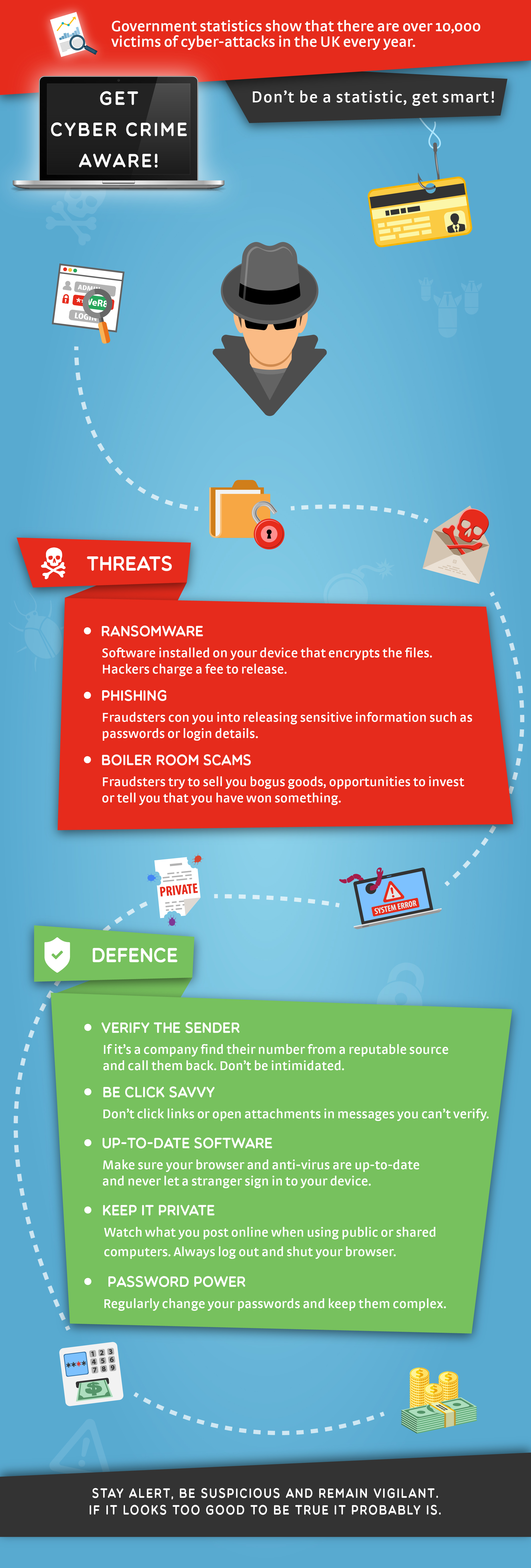
This is what online finance firm 247Moneybox.com asked themselves and then set about pulling together some hints, tips and strategies for countering the major cyber threats as well as explaining what they are. You can see this in the handy infographic they have put together.

With just a few simple ideas we can get virtually clued-up and protect ourselves online, making the life of a cybercriminal just that bit harder.

cyber-crime-infographic-06

{ 0 comments }

stamp duty change 2016Commercial property is a very different ballgame from residential property. There are far more factors to consider, and the location is of utmost importance. However, unlike investing in residential properties, you can buy existing businesses and invest in improving something that already runs smoothly.

Buying an existing business is usually quicker and easier to manage. It’s far more accessible than starting from scratch, and assuming you have a large amount of money to invest at the beginning; it can be far more profitable in both the short and long term. Instead of investing in a property and building it up from scratch, you’ll see instant results because the business you purchase is already established and making a profit. Here are some things to consider when scouting out a potential business to invest in.

Are They Well Equipped?

No matter how established a business is, you need to assure that they can survive the next couple of decades. The most important factor of sustained growth is being well-equipped. You can’t run a business that lives in the now and doesn’t plan for the future. Are they using software and hardware that is scalable? Are they using credit card machines to allow customers to use a variety of payment methods? Do they have a recruitment team that’s capable of pulling in more talented workers?

Consider all these points and make sure that the business you invest in won’t die out after a couple of months. Fortunately, it’s not hard to analyse the business and discover flaws in the system. Patch these problems, and draw up a plan on how to improve the company.

Value the Business

Investing in a business from scratch is far cheaper than purchasing an established business. To make sure that you’re not getting ripped off, consider looking into some of these points to gauge how much a business is worth:

  • Financial situation – are there any outstanding debts?
  • Current performance – how many sales are being made? How much profit?
  • The history – is this a new business, or does it have roots in the local area?
  • Future plans – are there planned improvements already? Have these started?
  • Competition – is this business highly ranked?
  • Employees – how many are working currently, and what are their salaries?
  • Why it’s being sold – if a business is running perfectly, why would it be sold?

Consider these points and hire a professional to help you value the business and its assets so that you can make a good judgement on how much you’re willing to spend. Keep in mind the golden rule: if a business is running smoothly, there’s no need to sell it. Make sure you understand why it’s being sold before investing so that you don’t run into nasty hidden surprises after the ownership passes to you.

Dealing with Employees

Once the staff find out there’s a new boss, get ready to answer a slew of questions. Why was the business sold? How does this affect our pension? Will our pay change? Will we get fired? There are a lot of legal issues that may arise if you decide to cut staff or replace existing workers with your own. Be sure to have a legal team ready for any situations that you might get into, and be sure to consult them before making a decision that will impact an employee.

{ 0 comments }