Renovations Without Breaking The Budget

by Magical Penny on April 19, 2017

house questionAre you still paying off your mortgage and unable to afford those much needed renovations?

Renovations can be an expense that can get shoved to the side and often forgotten about. It can often become a burden having to move somewhere else when building is taking place, and the rising cost of renovating is only a deterrent to hopeful house owners. What if there was a way to renovate without having borrow more off your mortgage?

Renovations don’t have to be a burden on your time or your pocket with these simple renovations. Before going ahead with all your upgrades, ensure they are in line with local building regulations. Saving money doesn’t mean the job has to be done in haste, so ensure you check out some of the ways to renovate without burning a hole in your pocket.

Front Door

The front door is one of the first features visitors will see when arriving at your home. Too often, run down doors can make your home look shabby. A touch of paint can do wonders to the entry of your home, but have you ever thought about actually replacing the door completely? For anywhere between £100 to £1000 you can choose from a variety colours and styles to compliment your home effectively whilst securing your property with a new door. Source

Walls

Tiles can often become shabby, cracked and worn over time. Some people dislike their bathroom or kitchen tiles from the day they inhabit their house. There’s no denying having the right look in the kitchen can make cooking dinner that much easier. Ikea aims to make renovations simple, by providing wall panels from as low as £25. Don’t have tiles? Try a splash of paint to spruce up the bedroom or living space.

waterShower

There is only one thing worse than a shower where the warm water only covers half your body, and that’s running out of hot water half way through washing your hair. These two things can easily be prevented. A hot water system can easily be replaced for under £1000 by most local plumbers. Still worried about the lack of cover in the shower? New shower heads can be picked up from most hardware stores and are quite easy to replace on your own.

Shelving

Are you running out of storage space and sick of plastic storage boxes taking up all that extra space under the bed? DIY shelving is easy to do, and adds an extra design element to your home. Adding alcove shelving is easy with the purchase of the right timber, screws and brackets to hold them into place. Not only is it a stylish addition to your home, it is also the answer to all those storage issues. Source

Upgrading the quality of your home no longer needs to be a dream, but rather a reality. These tips will help in successfully bringing the cost down of renovations while carrying out the building works of your dreams.   Have a look at some of the ways to spruce up your house without breaking the budget.

For more Property-related posts, click the Property category here on Magical Penny


{ 0 comments }

The Essential Steps In Preparing Your Financial Future

by Magical Penny on April 19, 2017


While life expectancy is on the rise, the result is that our retirements are also getting longer.

We now expect people to live upwards of 10, if not 20 years into retirement, and that’s no small fry. With cost of living at an all-time high, the costs of retirement have also boomed. That means that more older adults are now on the breadline because they’ve not been able to go into retirement with the financial security that they needed or deserved. So, whether you’re 20, 40, or 60, there is no time like to present to start planning for your retirement.

retirementPay into a good scheme

In your adult life, it’s wise to pay into a pension scheme. You might work for a government organisation which pays and contributes significant amounts towards your pension. However, if you work for a private firm, it is not yet mandatory for some companies to make contributions, although this is something which is changing across the country this year with auto-enrolment. Many people choose to pay a proportion of their earnings into a private pension, which, in essence, acts as a long-term savings account which also benefits from tax relief. Finding a pension that works for you, if it is not available through your employer or you’re self-employed, is the first step towards ensuring your security in old age.

Build up cash reserves

Not only will you want your pension to draw on, but a bit of cash in the bank for emergencies. While this might come in handy as you age, especially if you need to take time off work on a partial salary for illness or the like, it’s especially useful to offer you a comfort blanket once you get to the age of retirement. When you retire, it is usual that your income is significantly less than throughout your adult life. While this is ordinarily fine due to reduced costs and governmental support, there are still times that a chunk of money could come in handy. Require a new roof, a new car, or just fancy a once in a lifetime world trip? You’ll be grateful for those savings! It doesn’t have to be thousands of pounds – just whatever you can afford throughout your adult life.

investingGet your head around investments

For many people heading into older adulthood and retirement, there is a sense of security in knowing you have a few, well-placed investments and shares which will pay small amounts. A cash ISA is a good start for cash savings as they are relatively secure and benefit from tax relief, but a Stocks and Shares ISA is most likely better for more long term savings. If you do choose to invest in equities through a Stocks and Shares ISA you should expect some up and down fluctuations and ensure you invest a mixture of funds for diversity, rather than relying on just a few companies or sectors.


Understand your mortgage

It is often advised that people who are taking out a mortgage should aim to have it paid off in full by the time they hit 65 years old, the common retirement age. This is because owning a property outright can offer great financial security and a sense of belonging to older adults. However, it is becoming more often the case that people can take out mortgages which will last well into their 70s, if not 80s, if they can prove to their mortgage lender that they’ll be able to keep up with the repayments. How you choose to do it is entirely up to you and your family, but there is a lot to be said about paying off your mortgage before you’re 65. The key part here is to know what you’re getting yourself into. As long as you’re happy and confident paying off your mortgage, either in full or as interest only repayments after retirement, there are no issues. Some people even choose to remortgage their house on the brink of retirement in order to help it work better with their new cash flow situation.

Cut debt

Going into retirement with debt can be seriously bad news. According to thisismoney.co.uk, nearly a third of all retirees are still paying off loans, credit cards, and mortgages. These debts equal money which retirees are unable to spend on themselves – on food, housing, or quality of life. On the lead up to retirement, or even as an adult in your 30s or 40s, you owe it to yourself to deal with any debt head-on. These debts aren’t just going to disappear once retirement hits, after all. If you’re struggling with debt, and especially if you’re worried about how it will affect you in later life, speak to an advisor about consolidation and repayment, and secure your financial future.

Find an independent financial adviser

As you start to near your retirement, you’ll have quite a lot of assets to organise, and money in all sorts of places. At this point, it’s great to seek professional help. This help can enable you to streamline everything, consolidate pensions, and they’re especially important to speak to if you plan on signing up for an annuity. An annuity essential means you hand over your pension to an annuity provider, and they’ll give you regular monthly payments for the rest of your life. There is also an increased popularity for ‘drawing down’ your pension, which allow the owner greater flexibility and control over their own finances, but this is more complex than an annuity and requires careful planning. That said, it’s usually the most appropriate option and if properly considered and managed can really pay off long term. This isn’t without risk, so it should only be a decision undertaken with the help of an independent financial adviser.

Make retirement plans

Before you retire, it’s obviously a good idea to have plans in mind for both your budget and your lifestyle after your retirement. For example, do you plan on downsizing to a smaller home? Do you ultimately want to end up in sheltered accommodation, a care home, or with a nurse visiting you in your own home? Ensuring all of these desires are written down and discussed with family members can help to put your mind at ease that, as you start getting older, your life and wishes will still be respected. It can also really help to write a retirement budget. Predictions of your income
and outgoings and how they compare can really help you to make decisions based on your pension and your lifestyle.

retirementMake post-retirement plans

Obviously, retirement can’t last forever, and there are some costs which need covering after you pass too. While these costs usually fall to the immediate family, many people prefer to leave money in their will or take out life insurance to cover these costs. Finding a life insurance plan, especially once you’ve reached retirement, can be slightly more difficult, although not impossible. The people at Lifeinsuranceforseniorsover80.com are full of great advice for finding life insurance at this point. It’s also essential to ensure your will is updated, especially as your financial position changes into your retirement. This will can also specify funeral arrangements, and leave money to the proceedings. You will also want to choose the Executor of your will. This person will be in charge of dealing with taxation and distribution of assets. Many people choose to go with a close family member or friend who they believe will act in their best interests throughout the process.

Preparing for retirement isn’t just as easy as paying into a pension plan from the age of 30. There are all sorts of living costs, end of life plans, and debts to pay off. Many people find it best to speak to a financial adviser as they reach retirement age to ensure everything is in place to go off without a hitch, and to put their mind at ease.

 

{ 0 comments }

Making Monetary Amends

by Magical Penny on April 13, 2017

today is soon the past, the future is foreverIt’s no secret that money is in bad shape for most of the world.

Countries have had bailouts from other nations in recent times. And, even national banks are struggling. But, the true difficulties are felt by th
e people. They money that big companies and governments move around is vast. Most people don’t have these resources. And, the consequences can be much worse for an individual without money. When life gets hard and difficult things are thrown at you; it’s easy to give up and simply accept the life you have. But, making amends in the face of financial disaster doesn’t have to be as hard as you think. To help you out, this post will be going through some ways to recover from issues with money.


Recovering from bad credit

It’s easy to slip into bad credit and debt. A lot of people end up in this position through circumstances that they don’t feel they can control. But, the only person with true power over your money is you. And, acknowledging this will help with the first stage; saving and budgeting. These areas are not only important to people with bad credit but also critical for anyone who want to live a financially stable life. When you start your budget, you should be aiming to spend as little money as possible. This will mean that you should only buy the absolute essentials in life. And, for the more expensive essentials; you should look for cheaper options. This will give you the ability to start saving and making the most of what you have.

The Budget Will Set your Free

Along with saving some money, budgeting will also give you the chance to start paying off some debt. Balancing the amount you should save and the amount you should pay back is hard. But, a lot of the time, the bank will take this out of your hands, anyway. Most people don’t plan the way that they want to pay back their money. But, this will make it hard to know when it’s time to consolidate your loans into one bigger one. Moving your loans like this can lower the rates that you have to pay back. And, it will make it possible to spread the loan over a longer period; freeing up some of your money. For those with bad credit, you can find out more at Cigno Loans. Companies like this offer loans for people who have had money trouble in the past. For some, this could be the only way to get some help.

As you start to make these changes, you will notice the freeing effects after just a few weeks.

ImportantYour bank will start to fill up.

And, the debt will disappear.

Of course, depending on your situation, it could be many years before you’re completely free. So, it’s important to do things that keep your driven in this area. Building up the drive to do something like this will almost always be hard, though. But, it can be achieved through some simple assessment. You should always be aware of the balances of your bank and debts. This knowledge will be a great driving force to help you to keep on the right track.


Recovering from bankruptcy

Bankruptcy is a lot more serious than debt and bad credit. Finding yourself bankrupt means that you have no money at all; and, no means to find help. Usually, this will be because you can’t take any more loans. Or, because your debt is far too large to recover from. Thankfully, recovering from something like this doesn’t have to be hard. Much like recovering from bad credit, you have to start with some serious saving here. But, this will be more than just making things right. You will need to teach yourself new habits. And, you’ll have to avoid spending at every turn. The will probably be setbacks along the way. Unexpected bills and big repayments can make things hard. But, at this stage, you will have the power to overcome these issues with renewed vigor.

Now, you will be well on your way to your new way of life.

Money will be a keen focus of your daily existence.

But, it won’t be stress that overwhelms your feelings. Instead, you will be feeling confident. And, the thoughts you have about money will be more structured and controlled. To make this into your new way of life, you have to embrace the need to save money. A lot of people find it easy to disconnect themselves from the reality of their debts and other issues. But, in most cases, this will only lead to difficulty. Be aware of the money that you spend and earn, without letting worry take over.

preparing the roadStaying on the right track

Once you’ve gotten to a comfortable stage with your money, you’ll be feeling much more at ease. At this point, you will hopefully have your debt under control and will be paying it off without difficulty. Long with this, you should be saving all of the money you can. This money doesn’t just have to sit around, though. Instead, you can start making some more off of it. Investing your money is the next step in taking full control. To start with, you should be splitting your money up and putting it into small investments with high-return and risk factors. When investments fail, you should invest double what you put into it. But, this time, into one that has proven to be successful. After some time, you’ll find that you have a great deal of money being made. And, this will mean that you’re ready to move on to investments with less risk. Now, you’ll be putting all of your money into one pot.

Hopefully, this will help you when times get really tough. Figuring out what needs to be done if you find yourself in this sort of dilemma can be very hard. Most people will panic and make bad decisions.

But, it’s best to be cool, calm, and collected.

{ 0 comments }

Recovering From A Major Financial Setback

by Magical Penny on April 12, 2017

financial newsFew things in life cause us more stress than a serious financial setback.

When the world revolves around money as it can often seem to do, and when everything costs quite so much, a lack of money can be seriously worrying. You may find that you respond in ways you did not expect, such as with extreme anxiety, or you could even spiral into a depressive state. Try not to panic too much about these kinds of reactions. They are normal responses to money worries, and many people experience them at some point in their lives. You need to put yourself first and make sure that you are getting the help you need to improve your emotional and mental state – whether that is by visiting your doctor or confiding in a trusted friend or family member. Once you are feeling better and more relaxed, you can then take action to sort out your money problems once and for all. Being productive and coming up with solutions will also help you to feel better about things, and will fast-track you to getting back in the black. If you are currently in the middle of some pretty messy finances, read on to see if any of the scenarios below paint a familiar picture. Sometimes life deals us a rough hand, and it can set off a spiral of financial problems – but there is always a way out of it, providing you make the right decisions.

life insuranceThe dodgy deal

It’s safe to say that most of us could all do with a little more money. Whether it’s to tide us over after a big purchase, or simply because we want to treat ourselves (who doesn’t?!), very few people would turn down the opportunity to make a little extra cash. Things get worrying, however, when people forget to check if the means by which they are making said money are legitimate. It’s sad that it has come to this, but unfortunately, there are a lot of people out there who seek to exploit other people’s need to supplement their income, by enticing them into unsafe schemes and deals. A top example of this would be the pyramid scheme, which has only grown in popularity since the world went digital. It is now easier than ever for these scammers to prey on vulnerable individuals and persuade them to put money into a scheme, with the eventual promise of a huge return. However, it is very, very rare that any of these schemes actually pull through and deliver the goods. Usually, the person or company running the project will try and get as much cash out of you as possible, and then they will simply disappear without a trace, leaving you penniless and confused. Another example of losing your money to a dodgy deal could be investing in a business idea with someone you don’t entirely trust, or someone you don’t even know that well. It can be very easy to kick yourself after the whole thing has come crashing down, but beating yourself up about it won’t get you anywhere. The best thing to do is to be very mindful of the finances you do have left and to take responsible action. Gather all the evidence you have about your involvement in the scheme and take it to a court of law, or claim your losses for previous tax years. Being a victim of a Ponzi scheme can be devastating, but it doesn’t need to define your whole life.

Becoming ill/having an accident

Even the biggest control freaks among us can’t always stay in complete control of our health. Sometimes, illnesses can creep up on us when we least expect it, or we might suffer an accident that it was impossible to foresee. This can be upsetting and stressful at the best of time, but if you have to take time off work or even give up your job completely, it can be particularly devastating. However, just like with losing money to a Ponzi scheme, wallowing won’t do you much good or bring that much-needed cash into your bank account. The first thing to do is to accept your situation, as this is what will allow you to move forward in the best possible way. Then, you will be able to take a look at what your options are. If you have been in an accident that wasn’t your fault, make a point of contacting your insurance company, as you might be eligible for compensation. Or, perhaps you have battled a chronic illness all your life which has recently rendered you disabled. This, in particular, can be quite hard to accept, but try not to despair – there are options out there for you.

One would be to seek legal advice from a company such as Brown and Crouppen, who specialize helping disabled people claim the benefits and financial support that they need. Many programs also help those of us who can still work despite our illness, but who are part-time or on a low-income. This kind of support can be invaluable when you have medical bills to pay for, so take the time to see what you could be owed.

Overspending

We all probably know a handful of people who repeatedly insist that they are ‘bad with money.’ This probably means that they tend to impulse buy, or that they have a slightly dubious looking credit score. There is, however, a huge difference between being bad with money in this respect, and getting yourself into severe financial difficulties. For some of us, overspending can be a real problem, to the point that it can become an addiction of sorts. When we spend money and buy something we really like (such as an item of clothing), we get a dopamine rush, similar to the feeling an addict gets from using a drug of their choice. It might sound extreme, but it’s true: shopping can easily become an addiction, especially if you feel as though you have an image to uphold. The majority of people with bad spending habits tend to bury their heads in the sand and ignore the gravity of where their finances are heading. For example, they may ignore bills and warning letters, apply for multiple credit cards and use overdrafts recklessly. Or, on the other hand, they may turn to questionable methods of money making to fund their habit, such as gambling. All of this amounts to some pretty destructive behavior and can lead to major turmoil unless you do something about it. In order to take back control of your spending, first, confide in a trusted friend. You may not even realize the severity of your problem, so by speaking to someone else you may be able to gain perspective on the issue at hand. Then you will need to come face to face with the harsh reality of your spending habits. Sure, looking at all the debts and bills might be painful, but you need to have it all laid out in front of you so you can organize yourself properly. Visit a financial, advisor who can help you put a repayment plan in place so you can gradually clear your debts off one by one. The feeling of being back in the clear can transform your life, so by facing up to your spending, you can change things for the better.

waterDivorcing

Getting a divorce or separating from your partner can be a hugely stressful time, emotionally. The fact that it can also impact on your personal finances definitely doesn’t help things, and it’s a lot to take on at once. But as painful as it might be, spending some time sorting out your money in those early stages can save you a lot of heartache in the long run. Work out what is in your name and what is in your partner’s name, then try to come to some agreement on how you are going to split things. If your split is not unanimous and you fear that there will be a lot of conflict within these discussions, hire a lawyer or some other kind of independent mediator who will be able to act as a middleman for the two of you. Bear in mind that certain things will make this process more complicated, such as if the two of you own a business together, or if one of you has considerably more assets than the other. But providing that you approach the issue in a mature fashion, and that you don’t make any impulse investments or decisions relating to your finances, there is no reason why you can’t have the money distributed fairly and easily.

These are just a few examples of the curveballs life can throw at us regarding our personal and financial lives – so by being aware of the risks and what to do, you can make sure you run your finances, not the other way around!

{ 0 comments }

The New Lifetime ISA is Launched

by Magical Penny on April 12, 2017

lisa lifetime isaOn April 6th, the start of the new financial year, a new ISA class was born.
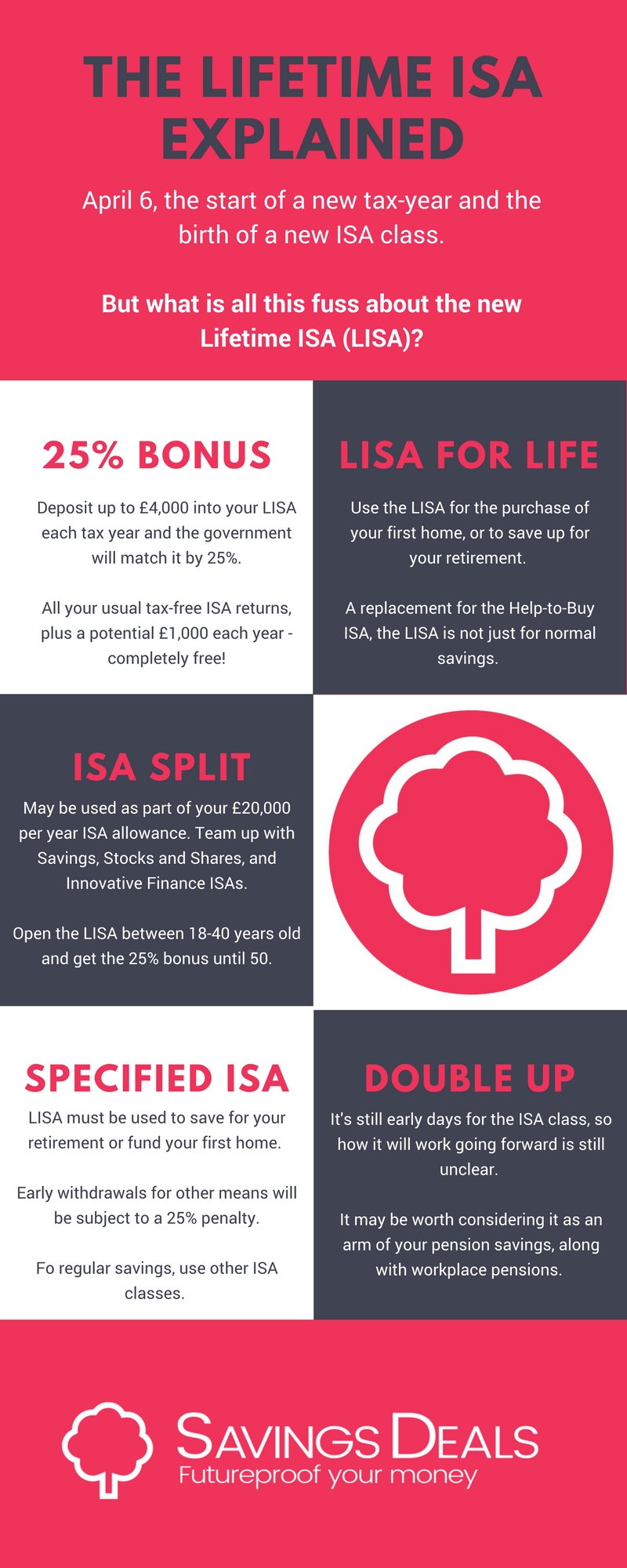

The Lifetime ISA, known as the LISA has been launched to help first time buyers and retirees save up for life’s uncertainties.

A alternative to the Help-to-Buy ISA, the LISA allows for tax-free returns on deposits up to £4,000. Where it really stands out however, is that the government will also match your deposit up to 25%, meaning you could get up to £1,000 on top of your deposit – and get returns on the whole amount.

Another advantage is the possibility to invest in stocks and shares within the ISA. With the Help-To-Buy ISA you are limited to cash rather than investments.

Available for savers between the ages of 18 and 40, the LISA allows you to get a 25% match of your investment every year until the age of 50 years old. So long as you keep your money in the ISA until you’re 60, unless you’re withdrawing to fund a first home, you’ll continue to get the reward. You will also be able to use the bonus as part of your deposit, unlike the Help To Buy ISA which only gives you access to the bonus after you have completed on your house transaction – useful for home furnishing and redecorating but less useful for increasing the size of your deposit.

So the LISA is better in many ways. That said, those that withdraw from a LISA for other means will be liable for a 25% penalty on the whole amount, which could render the ISA pointless. Therefore it may be said that the ISA is ideal for use as part of a long-term pension strategy so long as you know the risks.

Ultimately, it depends on your situation particularly as the government’s auto-enrolment pension scheme also offers a good return for pension savers and is more stable. Also if you’re a higher rate tax payer  you are likely still better off with saving in a pension. So it may be worth considering the LISA as just part of your pension and long term savings plan, rather than the entirety of it.

Savings Deals Infographic Final

Credit to Savings Deals

{ 0 comments }

Cut Costs – Not Quality – On Your Next House Move

by Magical Penny on April 12, 2017

winter houseOne of the biggest purchases you could possibly make in your adult life, is that of a house. It may be a bucket list item, but it’s one that comes with many dollar signs, some of which you simply cannot foresee. Most people think it’s a case of saving a deposit and the bank will give you a mortgage for your dream home – sadly, that’s not the case.

Buying a house comes with a lot of considerations, and not just the location you want to spend the rest of your life. There’s no other lifetime cost that compares with buying a house and no other purchase that requires you to put thousands of your own money into it, as well as borrowing more. There’s not much you can do about the climbing costs of buying your own home, but there are a lot of ways you can change your expenses and reduce costs.

Deposit:

It is common knowledge that a deposit for a house is 20% of the total value, right? Nope. You can get a mortgage with 5 or 10% of the money and there are many government-backed schemes that allow a lower deposit amount so that you can get on the property ladder faster. Your monthly repayments may be higher, as you have to pay an insurance premium on the mortgage but if it means spending less on a deposit, it’s attractive.

Spending and saving moneyComparison:

You need to shop around for as many costs as you can that are involved in your mortgage. Use companies like Conveyancing Direct to get more than one quotation for a property solicitor to help you with your house buy. You should also shop around for your actual mortgage, taking into consideration fees like stamp duty and interest rates. Gather as many quotes as you can for this, as you may find a bank that isn’t yours is far more favourable to you in their terms than your own bank.


Negotiate:

Closing costs can eat up a ton of your budget, but you can talk these down with the seller. Research the condition of the current real estate market in the area and use that as your bargaining tool. One of the best negotiating factors is how long the property has been on the market for and how desperate the owner is to sell up. If it’s been on the market for an extended period of time, you may be able to negotiate them paying all of your closing costs so that you can move in faster. It’s a winning situation all round, as the seller can finally shift their house and you’ve just saved some of your budget.

House-buying isn’t an easy process and it does take a lot of research. You don’t have to cut the quality of the services you get when you compare costs of mortgages or solicitors, but you should look at cutting your costs where you can so you get the best deal for your budget.


{ 0 comments }

Saving Time As A Busy Landlord

by Magical Penny on April 11, 2017

house mortgage UKThe life of a landlord is often a very busy one. A lot of people in this position find themselves having to dedicate far more time than they expected into this role. Of course, the time will often be worth the money that you get from it. But, if you were spending less time on it; the money could be even more valuable. For some, saving time in this area will be the only option. So, to help you out, this post will be going through some of the ways that you can make sure that your investment dreams are coming true. It just takes a little bit of work; but, once it’s done, you could be saving loads of time.

One of the very best ways to have your property investment handled is by someone else. This will take all of the work out of your hands. And, will leave you with just a few small things to be doing. Professional property management companies can be found everywhere. They can handle finding new tenants for you. And, they can even take the rent. But, best of all; they will handle maintenance and repairs on the property. So, all you have to do is pay them. This will be a fraction of the money that you make from the investment. So, if time is your concern; this would probably be the very best option. Some people won’t like the idea of putting their property into someone else’s hands, though. These people will need some other options.

remortgage house loanBuy Properties Nearby

There are still a couple of tricks that can save you a lot of time with your property investments. For one, having your properties close together can make a big difference. This will limit the time that you have to spend traveling around to get to them. And, it will also save you the hassle of learning new rules or laws. A lot of people also find that communicating between estate agents and tenants can be difficult. So, it’s best to make sure that you have multiple ways to contact people. Little tricks like this can end up saving loads of time. And, usually, the things that take time will also be a surprise. So, it’s worth preparing for them.

The people that you choose to occupy your property will also make a big difference to the time that you spend on it. If they are bad tenants, they will likely leave you with a lot of work to do when they leave. And, some people will even make it hard for you when they’re in the property. Having to chase up rent or deposits can take loads of time. Choosing good tenants won’t be easy, though. You have to talk to their older landlords, to find out how the were in the past. And, even talking to their employer can give you a good idea of how reliable someone will be.

Hopefully, this will give you a chance to start saving loads of time on your property investments. It’s hard to make sure that something like this doesn’t dominate your life. But, once you’ve put the work in, you’ll notice the job getting much easier.

{ 0 comments }

Getting Your Mortgage Right

by Magical Penny on April 10, 2017

house questionIt is estimated that every day, each person makes roughly 35000 decisions. These can be as minor as what to have for breakfast or what TV channel to watch, or they can be really important, such as deciding to propose to the person that you love. Managing your personal finances is no different.

Every day represents a new set of decisions that you have to make about money. Again, they can be rather small like buying a chocolate bar at a supermarket checkout on an impulse, or major, such as deciding to take out a mortgage so that you can buy your own property. In that case, there are many more decisions that you have to make. What property you choose to purchase can depend on whether you intend to live in it, to rent out, or simply add it to your portfolio. If you are buying it for yourself, you have to calculate what money you have and then try to make it go as far as it can. Do you want three bedrooms as well as a downstairs toilet and a big garden? Perhaps your finances won’t stretch that far, and you need to consider something that has as many of these things as possible. But which combination would you be most satisfied with? In any case, every decision, however big or small, counts towards the health of your personal finances and you should weigh the consequences before rushing into anything. When it comes to getting a mortgage, there are so many different options (including add-ons and extras) that the decision of which one is right for you could quickly become overwhelming. If you are finding that you do not know where to look to get the best deal, here are a few tips to point you in the right direction:

houseFirst, you should carefully calculate just what sort of mortgage you will be able to get. Many banks will not offer you any deal if you do not have a sufficient deposit. The standard was once 25%, but many banks expect around 40% now to get the best rate. Either way, the bigger deposit that you are able to scrape together, the better deals that you will be offered. It makes good financial sense to put off the decision to get a mortgage for a few years if you have a small deposit at the moment. While it may be frustrating, it will save you money in the long run.

On the subject of saving money, there are lots of facets to a mortgage, and if you are going to get the best deal, you need to make sure that you check all of the small print. One lesser known feature of mortgages is the insurance you have to pay on behalf of the bank in case you are at some point not able to meet your payments. To figure out how much you are likely to pay, use a cmhc calculator. Being prepared will impress potential lenders and make it more likely that they will trust you with their money.

It is often said, but it remains the case that purchasing a house is likely the most substantial financial decision that you’ll ever make. While we make around 35000 of decisions every day, this one requires a great deal of time and attention to get right.


{ 0 comments }

It’s easy to feel very alone and isolated when you have troubles with your money, but that’s not necessarily the case. If you feel isolated, it might be because you have chosen to isolate yourself rather than get help with whatever troubles you currently have. There are always places, people and organisations that you can turn to for extra assistance and help with getting back on track.

life insuranceHere are some of the places you might want to turn to and the people you could speak to. Each of these options will help you with your money troubles, and possibly ease the burden you’re experiencing a little. Read on to find out more right now.


Negotiate with Your Creditors

Sometimes, your creditors will be more willing to help you that you might imagine. It’s in their interests as well as yours to get their money back. If you are genuinely struggling to pay back the money you borrowed in the repayment deal’s current form, they might be willing to restructure it. But this will only happen if you ask. What’s the worst that can happen? They might say no, and then you’ll have to find another way around the problem. But it’s still worth trying. You might be given a gentler deal that allows you to pay the money back a little more slowly.

Don’t Hide Your Problems from Those Around You


Your loved ones usually just want to help you out when you have a problem. But if you just hide all of your problems from them, they won’t be able to do that. So, that’s why you should never be too proud to turn to those around them and confide in them when you’re in financial trouble. Even if they can’t help you out of the situation you find yourself in, they might be able to offer you the moral support that can often be just as important and just as valuable. It always makes sense to get all the support you can. And hiding away never solves anything.

Online Support from People Experiencing the Same Problems

One of the best things about the internet is that there is a lot of support out there for people who are experiencing major problems. It might feel like your situation is unique and that no one understands what you’re going through, but that’s probably not the case. There are plenty of people who have been through or are going through the things that you are experiencing right now. By logging onto financial forums and speaking to people, you might be able to get some helpful tips, advice and support that will help you to turn things around for the better.

warning explanationDebt Consolidation Options

Debt consolidation loans are not fully understood by everyone. When you have a financial problem and you have lots of debt to contend with, the idea of taking on another loan can seem like the exact opposite of what you should do. However, you shouldn’t dismiss the ideas so quickly. If you’re stilling asking yourself ‘what do debt consolidation companies do?’ you’re not the only one. But to put it simply, they help you out by giving you a lump sum that can be used to pay off all of your other debts. So, instead of having a tangle of different debts, you will have one larger one.

Independent Financial Advisers

If you’re tired of being pointed in the wrong directions by companies, creditors and banks that don’t have your best interests at heart, you should find an independent financial adviser instead. They are not tied to other companies, so they are able to offer you help and financial guidance that you know you can trust. That’s a pretty big deal when you want to dip yourself out of a whole and become financially stable again. It’s definitely something to consider if you haven’t tried it already.

Advice and Support from Debt Charities

Getting the right level of advice and support doesn’t have to mean spending lots of money either. You can also get this support from debt charities. There are a number of different charities out there that aim to help people who have got themselves into debt for one reason or another. Because they are non-profit organisations, they can help you out and give you support for free. And, just like if you choose to use an independent financial advisor, you know you can trust them because they are not working for other companies or trying to make money.


{ 0 comments }

The Financial Risks You Should & Shouldn’t Take

by Magical Penny on April 5, 2017

Most of us take financial risks every day, even if we don’t always recognise them as such. Choosing to spend money on something or not spend money on something can have an impact on our finances further down the line. Those are examples of minor financial risks. But there are also much bigger ones that we can choose to embrace or ignore as well. Some of these can help you, but others are more likely to leave you with nothing more than regrets.

homeowners-insurance-resourcesBelow, you will find all you need to know about the risks that are always worth taking, as well as details of those that you should stay away from. There is no way of being 100% certain about which risks you should and shouldn’t take. But on balance, it’s possible to predict which risks will pay off and which won’t.

The Risks to Take

Paying for Higher Educational Attainment

Spending money on education always seems very risky because there is no guarantee that by spending that money, you will make yourself more employable or more like to earn a large wage. However, you can never know for sure until you try it. And most of the time, this is a worthwhile gamble. It’s still the case that employers are willing to pay people more when they are more highly educated. As long as you are able to impress at interviews and demonstrate your talents, you can earn a lot, so this is a good risk to take for most people.


Investing Rather than Saving

Saving your money away in a bank account is not particularly useful if you want your money to grow. Sure, maybe you could do this successfully in the past. But that’s simply not the case anymore. Because of the low interest rates that now seem immovable, the only way to get ahead and make enough money is to invest rather than save. If you are willing to trade stocks and shares, your money can grow rather rapidly, which is surely what you want to happen. It’s tricky to get the hang of it at first, but in the end it’ll be worthwhile.

Making a Big Move That Could Improve Your Career and Income

Making a move can take the form of moving to a bigger city where there are more career opportunities. Or it could mean moving into a new job entirely. These kinds of moves can be pretty daunting. It means completely changing your current approach to life. And that’s never an easy thing to do. You might have to live in an area you’ve never lived in before. You will have to meet new people and work in a new environment and do new things. There is no guarantee that the move will go well, but if you have the chance to improve your career prospects, you’ve got to jump at the chance.


The Risks Not to Take

life insuranceListening to Tips and Propositions That Are Too Good to be True

If you invest a lot and you have friends who invest, you probably get give a lot of tips and recommendations. Let’s face it; every investor thinks they’re an expert, but that doesn’t make it true. You should be careful when listening to tips offs from people who claim that they have inside information and that you can make a lot of money if you invest now. These people often have ulterior motives; they’re not most interested in you making money. And if something sounds like it’s too good to be true, then you can bet that it most probably is.

Living Without the Backup of Insurance

Insurance is easy to dismiss. It’s an added monthly cost to pay, and no one likes the idea of adding even more things to their pile of regular outgoings. But it’s all about spending a little money now so that you don’t have to lose out big time later on. Insurance backs you up and provides with the safety net you need when something does go wrong and your life alters dramatically through no choice of your own. Places like the Smart insurance company can help you find the kind of solution that’s most suitable for you if you need assistance. But don’t rule out the idea of getting insurance entirely.


Failing to Diversify Your Income and Your Investment Portfolio

If you were to lose your job tomorrow, and you couldn’t get a new job for whatever reason, what would you do? It would be much easier for you to answer that question if you had a more diversified income. It’s not ideal that you have to do this and think about these things. But with automation taking over, there will certainly be job losses in some sectors. You should try to make sure that you have a plan B if this problem strikes you. The same applies to your investment strategy. If you choose to put all your eggs in one basket, you could find that you lose all your money if the investment falters.

cautionHaving No Emergency Fund

Assuming that you won’t need any money to fall back on in the future is risky. You can’t tell what will happen tomorrow. And if you don’t have an emergency fund to call upon when your finances are in bad shape, it won’t be long before you find yourself in a very trick situation. I’m sure that’s not what you want, so you should think twice about this. Yes, I know I said that you should invest rather than save. But that applies to general saving only. You can create a separate account that you slowly begin to funnel money into, and this will be your emergency fund. You can then sleep easier knowing you have more financial security in place.

Keep the things you learned in mind when you’re making decisions and deciding which risks are worth taking. Ultimately, it’s up to you to make the judgement that is going to be right for you. But some risks pay off more commonly than others, so be aware of that.

{ 0 comments }